The EU Building Directive (EPBD) sets ambitious goals: by 2050, all buildings in Europe are to achieve climate neutrality. In Poland, this process requires significant changes, as up to 75% of buildings are energy inefficient. A key support tool is the "Clean Air" program, offering substantial funding for single-family homeowners.
EU Regulations – What Changes Will There Be in Construction?
The EPBD Directive aims to reduce greenhouse gas emissions in the construction sector, which accounts for 40% of energy consumption in the EU. It includes, among other things:
- Zero-emission new buildings: From 2028, all new buildings of public institutions, and from 2030, all new buildings must meet this requirement.
- Gradual phasing out of fossil fuel boilers: By 2040, the elimination of these devices is planned.
- Solar installations: The obligation to install photovoltaic panels in new buildings, public buildings, and properties being modernized.
- Classification of buildings into energy classes: From 2026, properties will be rated from class A+ (high efficiency) to G (the least energy efficient).
Poland's Modernization Strategy
The government’s Long-term Renovation Strategy for Buildings aims for 7.5 million buildings in Poland to undergo thermal modernization by 2050. Efforts will focus on elements such as: improving thermal insulation, replacing heat sources, and installing renewable energy sources (RES). The goal is to reduce energy consumption and lower carbon dioxide emissions, contributing to the achievement of EU climate goals.
"Clean Air" Program – The Key to Change
Since 2018, the Clean Air Program has supported single-family homeowners in modernizing their buildings. So far, nearly a million applications have been submitted, and contracts for project implementation amount to over 13 billion PLN. The program includes:
- Replacement of heat sources: The possibility of obtaining subsidies for eco-friendly heating systems, such as heat pumps, electric heating, gas boilers, or biomass.
- Thermal modernization: Funding for insulating walls, roofs, and floors, as well as replacing windows and doors.
- Installation of RES: The possibility of installing photovoltaic panels or systems for heating domestic water.
- Income-adjusted subsidies: Depending on financial circumstances, support of up to 66, 99, or even 135 thousand PLN can be obtained.
How to Prepare for Modernization?
A well-planned modernization is key to success. It is essential to conduct an energy audit that will identify the largest areas of heat loss and propose appropriate solutions. It is also important to choose certified devices and materials that meet EU standards. When applying for funding for investments under the "Clean Air" program, it is also advisable to check the ZUM list – a list of devices and materials covered by funding.
The Role of Modern Technologies in Thermal Modernization
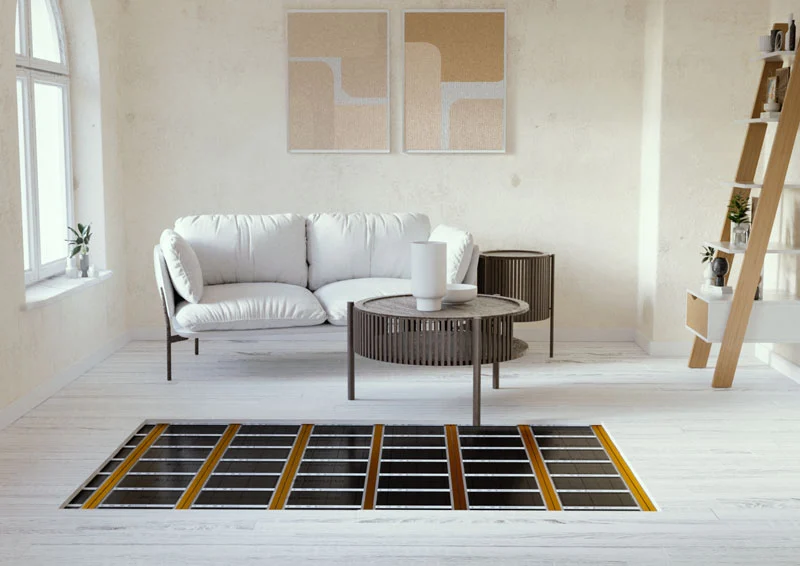
Underfloor heating systems, advanced temperature controllers, and high-quality insulation are investments that bring tangible benefits. Lower heating costs, greater thermal comfort, and increased property value are just some of them. Appropriate solutions also allow for better utilization of renewable energy sources, e.g., energy from photovoltaic panels, which further reduces the operating costs of the systems installed in the building.
Summary
Modernization and thermal modernization of buildings in Poland is a process that will impact the lives of millions of residents, reduce energy costs, and contribute to environmental protection. With support from the "Clean Air" program, homeowners can transform their properties into energy-efficient and eco-friendly spaces. This is not a requirement, but an investment in the future.
 +48 12 376 86 00
  Downloads
  biuro@termofol.pl


 Blog Termofol
 Published: November 20, 2024
  Reading time: 3 minutes
 General information