Many of us dream of a comfortable, warm floor on winter days. Solutions such as infrared heating are becoming increasingly popular, promising both efficiency and energy savings. However, when we plan to complement the comfort of a room with a soft carpet, questions arise about whether it is safe and whether it will negatively affect the heating system's performance. It turns out that this should not be underestimated, as a regular carpet can pose a threat to the infrared heating system. Why? The answer lies in the specific construction and operation of this type of heating. Let's take a closer look at why it is not always advisable to lay a carpet on a floor with infrared heating to enjoy the full benefits of both solutions.
Modern heating technologies, such as infrared underfloor heating systems, are gaining popularity due to their efficiency and energy savings. Infrared heating provides comfort by eliminating the feeling of cold floors on chilly days. However, before investing in this innovative system, it is worth knowing that there are certain guidelines to follow to ensure proper operation and safety. One of the frequently asked questions is whether you can lay a carpet on a floor with infrared heating.
What carpet is suitable for underfloor heating?
A carpet, as a soft and warm surface, is a popular addition to interiors, adding character and comfort to a room. However, when dealing with infrared heating film, it is essential to understand how a carpet can affect the efficiency and operation of this advanced heating system.
Thermal insulation: A carpet acts as an insulating layer between the heating film and the surface that needs to be heated. The insulating properties of the carpet can hinder the transfer of heat to the room. As a result, the infrared heating system may take longer to reach the desired temperature or may not be able to heat the room efficiently.
Choosing the right carpet: It is important to choose a carpet that will not impede the transfer of heat from the heating film. Carpets with a dense structure or those that have a rubber, plastic, or rubber backing can restrict heat flow and reduce heating efficiency.
Carpet thickness: A thicker carpet may pose a greater barrier to heat transfer from the heating film, so it is advisable to consider choosing a thinner carpet that allows for better heat transfer to the surface.
Safety: If the carpet is too thick or too densely woven, it may cause the heating film to overheat and, in extreme cases, pose a fire hazard. It is advisable to avoid covering the entire surface of the heating film with a carpet and to monitor the temperature to prevent such situations.
Therefore, there are certain guidelines to follow if we plan to combine a carpet with infrared heating film:
- Choose a thin carpet with good heat conduction properties.
- Do not cover the entire surface of the heating film with a carpet, leaving free spaces for the heating system to operate.
- Monitor the temperature on the surface of the carpet and ensure that it does not overheat.
Laying a carpet on a heated floor also has its advantages during the summer months when we usually turn off the heating. When we do not have a carpet in our home, we often have to walk on a cold and uncomfortable floor covered with hard material, which is particularly bothersome when walking barefoot. For this reason, placing a carpet on a heated floor can prove to be an excellent solution. However, it is essential to choose the right type of carpet that will be compatible with underfloor heating.
What to pay attention to?
When selecting the right carpet for underfloor heating, it is essential to pay attention to the technical specifications available on a special card or paper tag located on the underside of the carpet. To check whether a particular carpet is suitable for use with underfloor heating, several important elements must be considered.
First, ensure that the carpet is marked with a special pictogram. It usually depicts a white heating spiral on a black background, with black arrows pointing upwards on a white background. This marking guarantees that the carpet or rug will not be damaged by underfloor heating. However, to choose the ideal carpet for this purpose, one must pay attention to specific technical parameters.
The first important parameter is thermal resistance, denoted by the letter R. The lower the thermal resistance of the carpet, the better it conducts heat, which is a desirable effect for underfloor heating. The resistance should be less than 0.17 K/W (Kelvin per Watt) for the carpet to effectively transfer heat and not cause significant energy losses.
The second important parameter for underfloor heating is the weight of the pile. The lighter the pile weight, the better, as a denser carpet allows less heat to pass through. This weight should be less than 2 kg/m2, which will allow for optimal operation of the heating system.
Selecting the right carpet with low thermal resistance and light pile weight ensures effective operation of underfloor heating, minimizing energy losses and providing user comfort. It is worth paying special attention to these parameters to enjoy efficient and safe heating along with an aesthetic carpet choice.
What else to consider when choosing a carpet?
Other important features of a carpet for use with underfloor heating include several other aspects that matter when selecting the right carpet for underfloor heating. First and foremost, the material used for the carpet or rug backing is crucial; it is best to choose synthetic heat-conducting materials that mimic jute fabrics, marked in the technical specifications as "action back". It is advisable to avoid carpets with felt backing, as this can restrict heat flow, hindering effective heating.
Another important factor is the surface of the carpet. For underfloor heating, carpets with short piles or even completely pile-free carpets are a better choice. Such carpets heat up faster and transfer heat more effectively, allowing for pleasant and economical heating of the room. The material used for the carpet's warp, or its upper layer, is less significant. Both carpets made from natural wool fibers and those made from modern synthetic fibers can be suitable for underfloor heating. However, synthetic fibers are often more economical and have better thermal properties.
When making a choice, it is worth considering the described features to ensure optimal operation and efficiency of underfloor heating while adapting the carpet to your preferences. A properly selected carpet will contribute to creating a pleasant, warm, and comfortable interior without negatively impacting the efficiency of the heating system.
 +48 12 376 86 00
  Downloads
  biuro@termofol.pl


 Blog Termofol
 Published: July 27, 2023
  Reading time: 6 minutes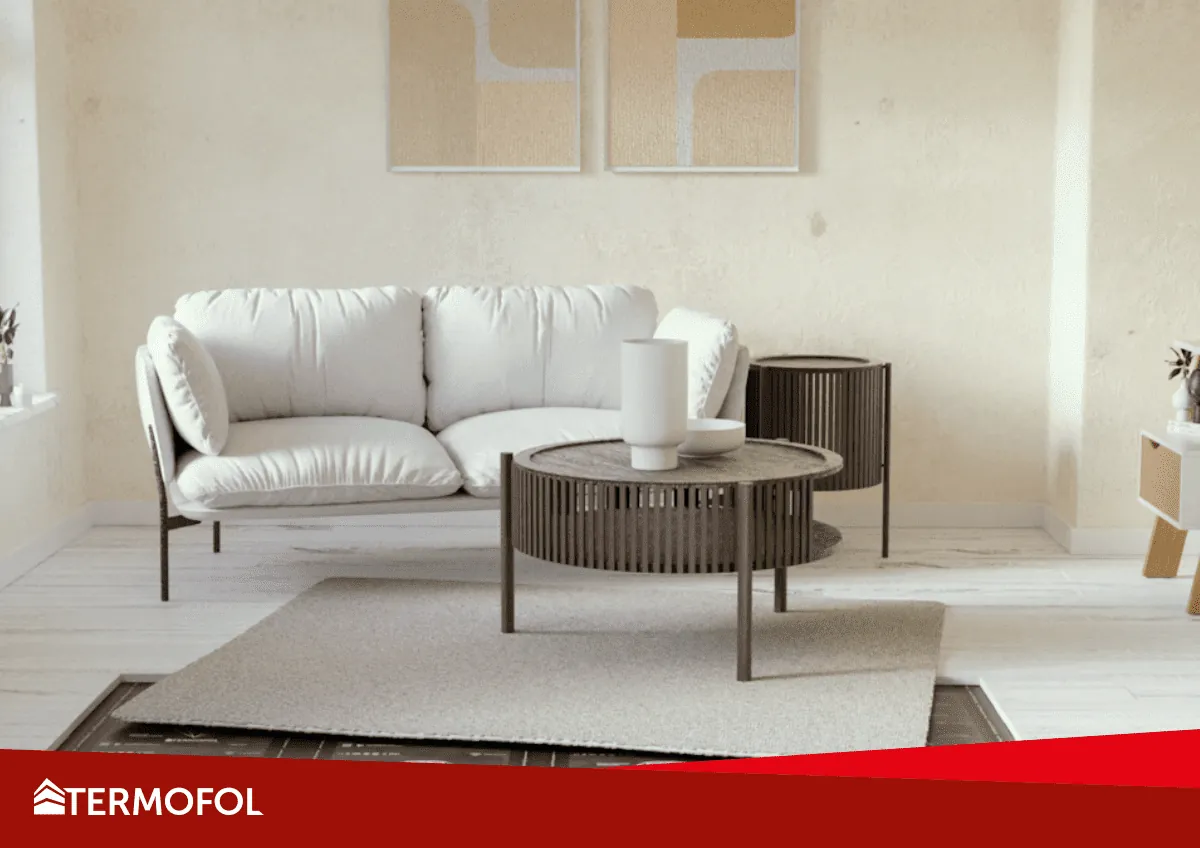
 General information