In 2027, a new EU directive ETS2 (Emissions Trading System 2) will come into effect. This is an emissions trading system that will include, among others, the construction sector. This means that using fossil fuels for heating – gas, coal, or heating oil – will become more expensive. Operators will have to purchase CO₂ emission allowances, and these costs will be passed on to end users.
In practice, heating bills for fossil fuels will rise by as much as several dozen percent. At the same time, zero-emission systems, such as electric underfloor heating, will gain an advantage. Solutions based on heating films and Termofol mats, especially when combined with photovoltaics, can provide almost free heating.
Lower Investment Costs of Electric Heating
Building an electric underfloor heating installation is much simpler and cheaper than traditional water systems.
- No boiler room – there is no need to allocate an additional room, buy a boiler, or organize space for fuel.
- No chimney and exhaust systems – this saves several thousand zlotys already at the construction stage.
- No pipes and radiators – electric heating eliminates the need for complicated water installations.
- Faster installation – heating films and mats can be installed within hours, not weeks.
As a result, investors reduce construction costs and speed up the commissioning of the building.
Stable and Predictable Bills
The most important advantage of electric heating in the context of ETS2 is the absence of additional fees for CO₂ emissions. Unlike gas, coal, or heating oil, electric systems, such as heating film, do not generate local exhaust gases, and thus are not subject to ETS2.
How Much Will Heating Costs Increase After ETS2 Is Introduced?
- Natural gas: price increase of 0.40–0.45 PLN/m³, which is about 1000 PLN per year for a typical house.
- Coal: an additional 500–550 PLN per ton, which amounts to 2000 PLN per year for a household burning 3–4 tons.
- Heating oil: +0.55–0.60 PLN/liter, which is about 1000 PLN per year.
- Pellets, electric heating, heat pumps: no fees.
👉 Electric heating does not generate ETS2 costs. Bills are predictable, and with smart thermostats, they can be further optimized.
Photovoltaics and Heating Films – The Duo of the Future
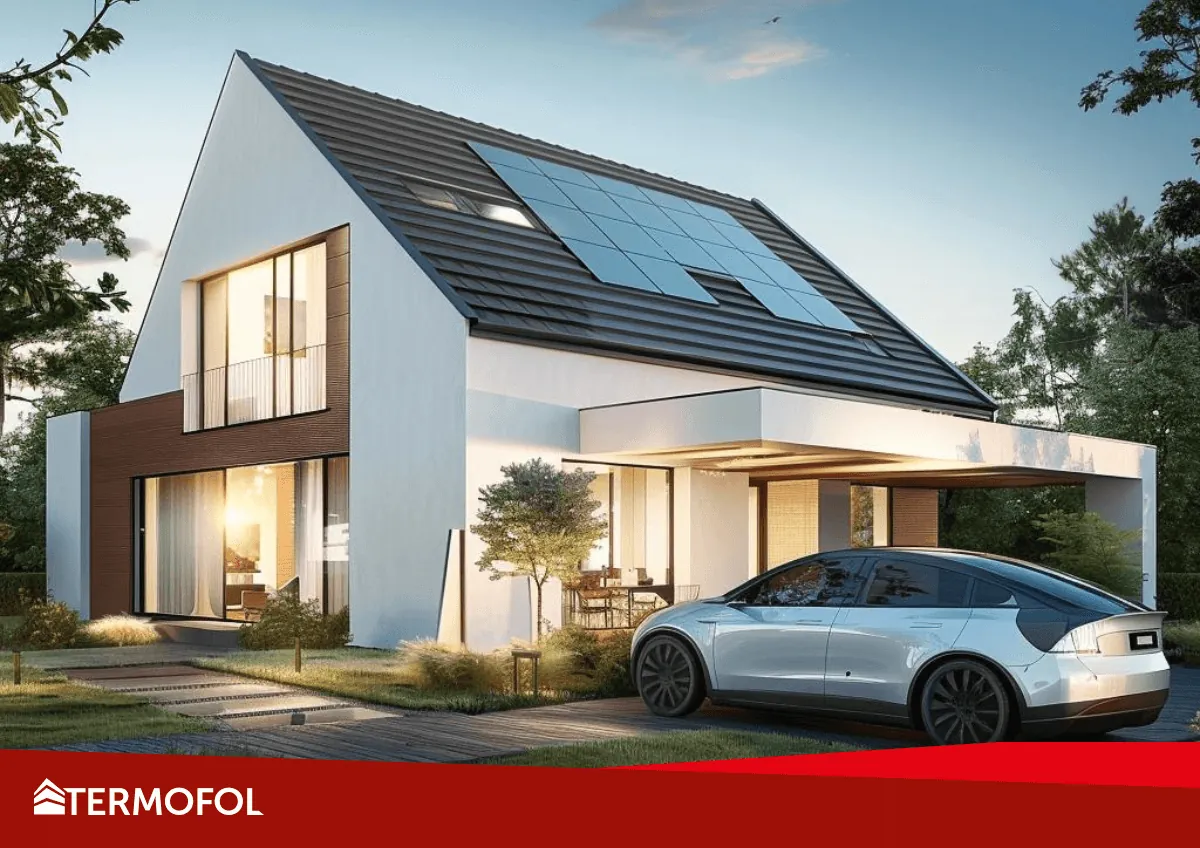
The combination of Termofol heating film with a photovoltaic installation is a solution that can almost completely eliminate heating costs.
- Surplus electricity from summer can be settled in winter within prosumer systems.
- The homeowner becomes independent of fossil fuel prices and climate policy.
- The PV installation + heating film is a clean, zero-emission, and maintenance-free combination.
- The absence of the risk of increases from ETS2 makes such systems financially predictable for decades.
Comparison of Electric Heating with Other Heat Sources
Gas – relatively low installation costs, but high operating costs after ETS2 (+1000 PLN per year).
Coal – cheapest when buying fuel, but most burdened with emissions (+2000 PLN per year).
Heating oil – expensive installation and high operating costs (+1000 PLN per year).
Pellets – no emission fees, but higher investment costs and fuel storage management.
Heat pump – no ETS2, high efficiency, but investment costs can reach several tens of thousands of zlotys.
Heating film + photovoltaics – no emission fees, low investment costs, quick installation, stable operating costs.
ETS2 is a regulation that will radically change the heating market in Europe. Traditional systems based on fossil fuels will become more expensive, and users will bear the costs of CO₂ emissions.
Electric heating, especially when combined with a photovoltaic installation, is the answer to these challenges. This solution:
- is cheaper to install,
- maintenance-free,
- zero-emission,
- financially predictable,
- in line with future energy trends.
Termofol, as a leader and the only manufacturer of heating films in Europe with its own production line, offers proven and certified solutions for modern homes. Thanks to them, you can avoid additional ETS2 fees and enjoy comfortable, healthy, and cost-effective heating.
 +48 12 376 86 00
  Downloads
  biuro@termofol.pl


 Blog Termofol
 Published: October 12, 2025
  Reading time: 3 minutes
 General information