Among various heating systems, underfloor solutions are particularly popular. Modern technologies for producing heating mats and cables offer numerous advantages that cannot be overlooked. Comfort, health, and financial savings are the three main features of an effective electric underfloor heating system. We present a comprehensive guide for those considering installing such a system in their property. Discover what electric underfloor heating is and what benefits it brings.
What material for underfloor heating?
```json
{
"translated_html": "
Before we proceed to purchase components for the target installation, we face the dilemma of which material for underfloor heating will work best in a given room. The floor must meet a number of technical criteria: resistance to higher temperatures, excellent thermal conductivity parameters, and low abrasion class of the outer coating.
\n
We should choose only those products that ensure a low R-value. This letter represents the thermal resistance coefficient, which directly affects the efficiency and energy savings of the entire system. Even the best heating mats will be of no use if an inappropriate material for underfloor heating effectively sabotages their operation. Our goal should be to achieve the lowest possible R-value in the product specifications.
\n
It should be clearly noted that the R coefficient is cumulative. The calculations concern the sum of R for the floor and the underlay. EU standards set the upper limit of this value at 0.15 m²K/W, which has its roots in reducing energy consumption. Optimal thermal resistance parameters improve the efficiency of the mat and heating cable systems.
\n
Natural stone, panels, tiles, wooden parquet, carpet — what should we choose for the floor finish? The lowest thermal resistance values can be attributed to ceramic and stone tiles. These are extremely impressive flooring materials that can be used both in rooms with increased humidity (kitchen, bathroom) and in the living room or bedroom. Ceramic tiles turn out to be somewhat cheaper than their stone counterparts. However, they maintain excellent thermal conductivity properties. We recommend them for large homes where cost reduction is one of the priorities in the interior finishing process.
\n
Since ceramic or stone floor finishes meet the needs of most investors, what about the other options? Some consider covering the floor with heating mats and carpet. While it is hard to deny the comfort and coziness of such a solution, the structure of the carpet becomes an additional layer of insulation. The heat generated by the underfloor heating system will not be able to penetrate into the room and efficiently raise the temperature. However, thin polypropylene carpets turn out to be an interesting option. The disruptions in thermal conductivity remain at a minimal level.
\n
\n

\n
If we are thinking about wood, we should carefully review the information from the manufacturer. The decision on which flooring material will deliver the expected functions must result from an analysis of the thermal resistance coefficient. Exotic wood, although more expensive, will perform better for users of heating mats. Its low shrinkage and resistance to frequent temperature changes ensure that parquet made of iroko or teak wood will last for many years.
\n
Which panels for underfloor heating?
\n
The quality of the underlay has a huge impact on the efficiency of the installation. When installing floor panels on a storage system, a special underlay must be used that will not act as a heat insulator. In our analysis of materials for underfloor insulation, panels deserve a separate mention. Their low price and ease of installation have garnered them a large following, and their manufacturers are adapting their products to meet user expectations. Which panels for underfloor heating should we consider?
\n
There are two types of products that we can particularly recommend: laminated and vinyl panels. Vinyl flooring costs more, but provides a thermal resistance R of around 0.020 m2*K/W. This is an excellent result. The small thickness of the vinyl board and the convenient click system on one side facilitate the distribution of heat throughout the rooms, while on the other hand, they increase resistance to user deformation.
\n
If you want to maximize the benefits, choose SPC panels with a hard core. Pay attention to the usability class of the vinyl models. We suggest purchasing solutions with a class of 23 or higher.
\n
Contact specialists who will advise you on which underlay for panels for underfloor heating will be the best in your situation.
\n

\n
How to prepare the substrate for underfloor heating?
\n
Before we start laying the heating mat or heating cables on the designated surface, we must carry out preliminary activities that will ensure the proper functioning of the installation. Preparing the substrate for underfloor heating involves leveling, smoothing, and cleaning it. The future user makes a number of technical decisions at this stage regarding the thickness of the screed and the placement of electrical wires in the wall. An extremely important step is to create an opening for the installation box and determine the location for the floor temperature sensor.
\n
We must also consider the technology of thermal insulation construction in the floor. We will discuss which styrofoam for underfloor heating is worth using in a house or apartment later in the text. In addition to insulating material, investors can choose a substrate made of extruded polystyrene or mineral wool. Polyisocyanurate (PIR) foam is also an excellent insulator.
\n
Remember that the substrate for underfloor heating must provide the expected strength against overloads and frequent temperature fluctuations. These features result from the structure of the insulating material and the cross-section of the layer. The thickness is determined by the local parameters of the floor in a given room. If it is located directly on the ground, it is better to slightly oversize the thickness of the insulation. For ceilings above heated rooms, this value hovers around 5 cm.
\n
We recommend installing insulation boards in a mixed arrangement. This means that the joints of the first layer of insulation boards should not align with the joints of the boards from the next layer. Condensed gaps in the insulating material would serve an undesirable function as thermal bridges and would limit the efficiency of the heating cables.
\n
What thickness of the screed?
"
}
``````json
{
"translated_html": "
The installation of heating cables under the screed has deep practical justification. This modern technique of electric underfloor heating installation resembles the actions of a storage heater. Heat spreads evenly throughout the rooms and is characterized by high inertia. Unlike the water version, electric heating allows for a significant acceleration of the first stage of the entire process. Trapping heat in the floor results in its long-term release into the interior. This gives the user the ability to reduce energy bills.
\n
There is a lot of information circulating about screeds for heating cables. The experience of most users leads to a clear recommendation. For electric underfloor heating, anhydrite screeds, also referred to as self-leveling, work best. In addition to their undeniable ease of application and perfect smoothness, this type of substrate has another key advantage — excellent heat conductivity.
\n
To fully enjoy the proven benefits of an anhydrite screed, a decision must be made regarding the coverage scale on the insulating material. What thickness of screed for underfloor heating is optimal? The technological process resembles a compromise between thermal resistance and overload strength. A layer of about 7 cm seems to be the golden mean in this regard. In the case of less frequented rooms, it can be reduced to 4-5 cm.
\n
What polystyrene for underfloor heating?
\n
Traditional facade polystyrene does not meet the strict quality criteria for systems consisting of heating cables in the floor. The problem lies in its too low compressive strength. Knowledge of how to prepare the substrate for underfloor heating includes a number of guidelines for polystyrene boards. The optimal insulation becomes the so-called hard polystyrene, designated by the symbols EPS100, EPS150, or EPS200. The higher the value, the lower the susceptibility to overload deformation. For domestic applications, EPS100 polystyrene is completely sufficient.
\n
The roof-floor polystyrene substrate takes on another component for its specification. This refers to the lambda coefficient, which pertains to the degree of heat conduction. The lower the lambda, the better the insulation parameters. It is not worth saving on polystyrene. Investing in the highest quality product pays off during subsequent use.
\n

\n
Underfloor heating scheme — where and how should it be laid?
\n
One of the advantages of electric heating cables is the ease of installation. Simple installation tasks result in reduced labor costs and faster system activation. When laying individual sections of wiring, several rules must be remembered.
\n
First of all, under no circumstances cut the wires. Before installing the system, it is necessary to properly select its power. This will optimize the heating time. It is essential to mark on the laid substrate the places where fixed installations will be built in the future, as these areas should be avoided during cable laying. Heating cables should never be placed under items such as wardrobes, refrigerators, or washing machines, unless the cables are laid on the foundation slab. In that case, the cables are covered with a thick layer of concrete.
\n
Before we start laying underfloor heating, it is better to submit the scheme for evaluation by specialists. The complexity and accuracy of the project determine the future efficiency of the heating cable system in the floor. Energy-efficient technologies require appropriate conditions to operate. If we do not provide them with an environment consistent with the manufacturer's recommendations, the underfloor heating may lose its attractiveness.
\n
The layout scheme for underfloor heating in the living room, kitchen, or bathrooms is a fundamental document for the investor and the execution team. It allows for a better understanding of the entire installation and making thoughtful adjustments depending on changing conditions. Read on to learn more about the methods of installing underfloor heating in the living room and other rooms.
\n
Kitchen
\n
One might ask whether underfloor heating in the kitchen makes sense? Or is it better to limit costs and redirect financial resources to the purchase and installation of heating cables for a larger number of rooms? Nothing could be further from the truth. In the kitchen, we perform a significant portion of our daily and evening activities.
\n
The installation rules we mentioned at the very beginning also apply to kitchen spaces. Finishing the floor with ceramic or stone tiles perfectly complements modern heating mats and cables, allowing them to operate at full capacity. The installation scheme should take into account the layout of kitchen equipment and avoid placing the system directly under furniture and the refrigerator. Heating in this room significantly improves thermal comfort in the winter season. It is also safe for people suffering from allergies and respiratory diseases.
\n
The system installation in the kitchen can be planned already at the stage of building construction. However, there is nothing to prevent the floor from gaining new functionality during a renovation in an older property. Installing electric mats under kitchen tiles guarantees long-term benefits from an energy-efficient and effective temperature control system.
\n
Underfloor heating in the kitchen – read more\n

\n
Bathroom
\n
The modular nature of heating cables fits perfectly into the challenging conditions of the bathroom space. Limited space free from installations does not pose a challenge here. Electric heating components placed on the anhydrite screed and covered with tiles provide unmatched comfort for residents.
\n
For underfloor heating in bathrooms to operate at maximum efficiency, it is worth finishing the floor with a material that has good conductivity parameters. Materials made of stoneware, terracotta, or natural stone are excellent for bathrooms.
\n

\n
Living Room
"
}
``````json
{
"translated_html": "
The installation of electric mats in large rooms has perhaps the greatest practical justification. When installing heating cables, it is important to maintain a distance from each wall – 10 cm should be more than enough. Of course, the previously discussed principles also apply here.
\n
For underfloor heating in the living room, it is worth considering finishing with vinyl panels. The wide range of colors and patterns (combined with low thermal resistance) makes this type of product an optimal solution for electric heating systems.
\n
The floor in the living room with underfloor heating becomes exceptionally comfortable. It is an ideal solution for families with children and for those struggling with periodic upper respiratory infections. Insulating the parquet in the living room with efficient mats is valued for its reliability, lack of maintenance requirements, thermal efficiency, and energy savings.
\n
Room
\n
The thermostat is the heart of the electric heating installation. It is responsible for interpreting data coming from sensors and controlling heating parameters depending on the prevailing conditions. Underfloor heating in rooms should be planned with particular attention to heat demand. Automating settings translates into savings and allows for achieving the required thermal comfort.
\n
We primarily recommend the installation of heating cables in rooms designated as bedrooms. Health issues play a significant role here. After all, we spend several hours each day in bedrooms. It is worth ensuring a favorable temperature distribution and limiting the spread of household dust. The nature of electric heating installations in the floor allows for achieving these benefits with minimal effort and resources.
\n

\n
How much does underfloor heating cost?
\n
There is no doubt that the installation of underfloor heating systems in the electric version entails certain initial costs. However, the investment has a profound justification and results in improved daily comfort for residents. So how much does underfloor heating cost? How do prices vary depending on the type of property?
\n
As is often the case with such questions, providing a definitive answer is impossible. The establishment of a heating system in a house versus an apartment determines the value of how many pipes per m2 (or heating cables) we will need to purchase. The larger the area, the higher the installation cost, of course.
\n
In addition to the electrical wires themselves, the property owner must consider purchasing an efficient thermostat. The total expenses must also include fees for professional installation. Each additional square meter of usable area covered with heating cables increases the installation cost.
\n
However, we do not want to leave the reader without specific numbers. Planning expenses before making purchasing decisions is a crucial step. Let’s assume the market average. As our experience as a manufacturer of heating films and mats for underfloor installation shows, estimated investment costs range from 100-250 PLN per square meter. The mentioned range assumes the complexity of the process and includes all expenses before launching the underfloor heating system.
\n
If you want to know exactly how much it costs to install underfloor heating in your property, contact the experts at Termofol. After providing specific data about the location and power of the system, the professionals will be able to develop a personalized cost estimate.
\n
Cost of heating installation in a house vs. an apartment
\n
The discussed heating technology allows for installation during the construction of a new building and during renovation work in secondary market properties. Therefore, it seems reasonable to ask about the cost of installing underfloor heating in a house vs. an apartment. Will we encounter significant differences here?
\n
The good news for investors is that, in principle, it does not matter where we carry out the installation of the heating system. The mere fact of installing the heating system in a single-family home or an apartment does not affect the increase in the price per square meter of the system. Of course, the larger the area to be covered, the more the total cost increases. However, how much does a meter of underfloor heating cost primarily depends on the quality of the components and the complexity of the installation, rather than the nature of the location itself.
\n
Manufacturers of heating devices offer attractive discounts for large investors. Ordering a large quantity of heating mats may slightly change the answer to the question of how much does the installation of underfloor heating cost in a house. It is worth engaging in individual negotiations and taking advantage of periodic promotions. Government funding programs also enable a reduction in the final price.
\n

\n
How many pipes per m2 of underfloor heating?
\n
In our guide, we focus on electric systems that rely on efficient and energy-saving resistance cables. The question of how many pipes per m2 of underfloor heating needed pertains to traditional water systems, which are rapidly becoming obsolete. Final decisions regarding the amount of heating material required depend on the installation scheme. The project should anticipate the future placement of equipment and show the optimal distribution of heating wires in the house or apartment.
\n
Controlling underfloor heating
\n
The control of electric underfloor heating is managed by a specialized thermostat connected to a sensor installed in the floor. The adjustment of the amount of heat occurs in full accordance with the settings entered by the users.
\n
Modern thermostats have a built-in air temperature sensor. Additionally, they monitor the floor temperature through an external floor sensor. This eliminates the possibility of overheating the floor.
\n
The investor's intervention is limited to setting the operating mode and determining the heating power. The development of the smart home concept has contributed to increased interest in wireless solutions. Wi-Fi technology has spread to smart home equipment and centralized management systems. The installation wires are slowly being replaced by a dedicated mobile application. Through it, users gain complete control over the operation of the heating system from anywhere in the world, without the need for physical presence in the apartment.
\n
Wireless control of underfloor heating
"
}
``````json
{
"translated_html": "
The magic of wireless systems lies in their unparalleled convenience and flexibility. Remote control of electric underfloor heating mats ensures greater energy savings. Heating operates only when it is actually needed. Residents can increase the heating power just before returning home from work to enjoy pleasant warmth. At the same time, during periods when household members are away from the property, it is advisable to turn off the system and reduce energy consumption.
\n
Home automation devices enable proper wireless control of underfloor heating. Individual modules are responsible for maintaining the set temperature in the rooms. There is an option to change temperature parameters according to preferences. Considering the individual needs of household members is one of the reasons for the widespread recognition of modern heating systems.
\n
For example, reducing the heating power in the kitchen makes practical sense. Cooking activities generate additional heat, which should be taken into account in energy calculations. Lowering the target temperature on the thermostat by 2-3 degrees Celsius will noticeably affect the bills. Savings can then be redirected to improve comfort in the bathroom space. Here, heating with electric mats should maintain the air temperature at around 23 degrees.
\n
The zoned heating installation in a single-family home fully benefits from the advancements of IoT (Internet of Things) technology. Wireless control based on Wi-Fi adds an extra dimension of functionality and accelerates the return on investment. We encourage you to purchase a Wi-Fi thermostat and gain access to the full functionality of the described mats.
\n

\n
Underfloor Heating Control Set
\n
The wireless system proves to be an excellent idea for the heating mat system in properties undergoing thermal modernization. The need to drill numerous holes in the wall to run control wires significantly increases the investment cost. Meanwhile, control of underfloor heating via Wi-Fi completely eliminates the requirement for installing a complex cable network.
\n
Contact Termofol experts and discover proven solutions for residential construction. Complete Wi-Fi systems for managing heating systems guarantee convenience and safety during long-term operation. A natural feature of the zoned system is also flexibility and reduced energy consumption costs, which are fundamental characteristics for every homeowner.
\n
How to Bleed Underfloor Heating?
\n
The even distribution of heating pipes should generally ensure uniform heating of the entire surface. If this is not the case, specific corrective actions must be taken. It is worth noting that the question posed in the title of this section concerns only traditional water systems. It is hard to suspect air locks in electric heating systems... Heating cables offer thermal stability throughout their long operational cycle and relieve investors from tedious maintenance tasks.
\n
Safety, efficiency, and maintenance-free operation are among the main factors that have contributed to the popularity of electric solutions. However, due to frequently asked questions from users of water systems, we will present here a few tips on how to bleed underfloor heating in an apartment.
\n
All new water installations should have an automatic air vent. If we notice disturbances in heat transmission through the floor, we should go to the location of the manifold and carry out the standard procedure for removing air from the pipes.
\n
The first step is to block all valves on the return manifold. Next, we open a single valve to selectively bleed the system. We realize that for extensive installations, such actions take some time. This is another reason to seriously consider installing an electric heating system during the next renovation.
\n
In the next step, we need to open the water flow in each loop until all air bubbles are completely removed. Only then can we proceed to close the given valve and repeat the entire process for the next loops. Flushing water through the installation can take up to several minutes (for a single loop). However, this is an effective method for bleeding the system on the same floor.
\n
But what to do if the manifold is located at a lower level than the pipe system? How to bleed underfloor heating in a multi-storey building? It is worth noting that the method described earlier will not work here. Air cannot move down the system. Therefore, here we need to carry out the operation by draining the water into the sewage system and refilling with new fluid while simultaneously bleeding each individual loop.
\n
The level of complexity increases directly in proportion to the complexity of the heating system. With a significant number of rooms spread over several floors, removing air from the pipes can sometimes take an entire day. It is worth considering the reasons for air entering the system. Bleeding will not help if the source of the problems is a hidden defect in the water installation. In some cases, support from a service team will be unavoidable, which naturally leads to increased operating costs.
\n
How to Effectively Bleed Underfloor Heating?
\n
We advise against excessive haste and the resulting inaccuracy. Attempts to bleed the underfloor heating system can lead to a considerable amount of understandable frustration. Therefore, we strongly encourage new investors to change their approach and turn to electric underfloor heating. Its advantages fully compensate for the incurred expenses. Mats generate savings on repair and service activities, which remain a common headache for users of water-based underfloor systems.
\n
Instead of wondering how to bleed underfloor heating, it is better to sleep peacefully and enjoy maintenance-free electric heating.
\n
Is Underfloor Heating Healthy?
"
}
``````json
Heating mats have established their position in the market and confirmed their effectiveness. Despite this, many myths about their efficiency and functionality still circulate on the internet. Health-related issues also raise many questions. Is underfloor heating healthy? Is it suitable for families with children or individuals diagnosed with allergies or respiratory diseases?

Scientific research clearly demonstrates the positive impact of electric underfloor heating on users' health. Why is this the case? The heating cables are evenly distributed throughout the room. This arrangement creates a kind of large surface heater that evenly radiates heat. Thermal energy spreads from the floor to the ceiling.
The heated air in the lower part of the room improves circulation. However, at the level of an adult's chest, the temperature becomes noticeably lower, which helps reduce the drying of the mucous membranes in the throat and nose. A beneficial side effect of the temperature distribution in rooms with mats is also the maintenance of humidity at a higher level.
Traditional radiators tend to dry the air quickly. The winter season is a challenging time for the respiratory system. Underfloor heating reduces discomfort caused by the heating season and creates a health-promoting environment in the apartment.
One of the most important advantages attributed to heating with mats and electric cables is also the reduction of airborne dust. How is this possible? Wall-mounted radiators offer a small heating surface. To heat a room in a reasonable time, they must heat themselves to a high temperature. This, in turn, causes increased air circulation and the lifting of dust from the floor.
Ubiquitous dust particles contain many substances that irritate the nasal mucosa. Meanwhile, underfloor heating significantly reduces this adverse phenomenon. The floor becomes a large heating plate that provides thermal comfort and limits the movement of loose particles.
Is underfloor heating recommended for allergy sufferers?
The electric heating system in the floor helps reduce symptoms of allergies, asthma, or chronic cough. Keeping dust and mites in check is one of the most important conditions for people suffering from various respiratory ailments.
Among all heating systems in modern construction, underfloor heating stands out with the most favorable health parameters. This is one of the main arguments justifying the investment in heating mats.
Is underfloor heating suitable for bedrooms?
If the budget allows, we recommend installing electric mats in bedrooms as well. Underfloor heating not only works great in the bedroom but also provides the same health benefits that are so important in other rooms. Of course, we do not recommend maintaining the heating power at the same level throughout the day. Remember that the optimal sleeping temperature is considered to be around 16-19 degrees Celsius. It is worth considering automating the settings on the thermostat and defining the hourly schedule for activating the system.
Is underfloor heating unhealthy?
Heat transfer from the floor occurs through radiation, not convection (as with radiators). Therefore, the myth about the potential harm of electric heating mats can now be debunked. The health-promoting properties of heating systems hidden in the floor result from the even distribution of temperature, the reduction of air drying, and the minimization of dust lifting. Both healthy individuals and those struggling with allergies should consider installing modern heating solutions with proven health benefits.
Summary – is it worth investing in underfloor heating?
We have provided a lot of technical information about preparing the substrate, designing, and the functionality of electric heating systems in the floor. It's time to summarize these considerations and think about whether investing in electric underfloor heating will be beneficial in every case.
In contrast to wall-mounted or freestanding radiators, underfloor heating radiates heat over a much larger surface area. The operation of heating mats and cables has positive consequences:
- energy-related,
- financial,
- efficiency-related,
The heat emitted across the entire floor space prevents the phenomenon of convective dust lifting and protects allergy sufferers from exacerbated symptoms during the winter season.
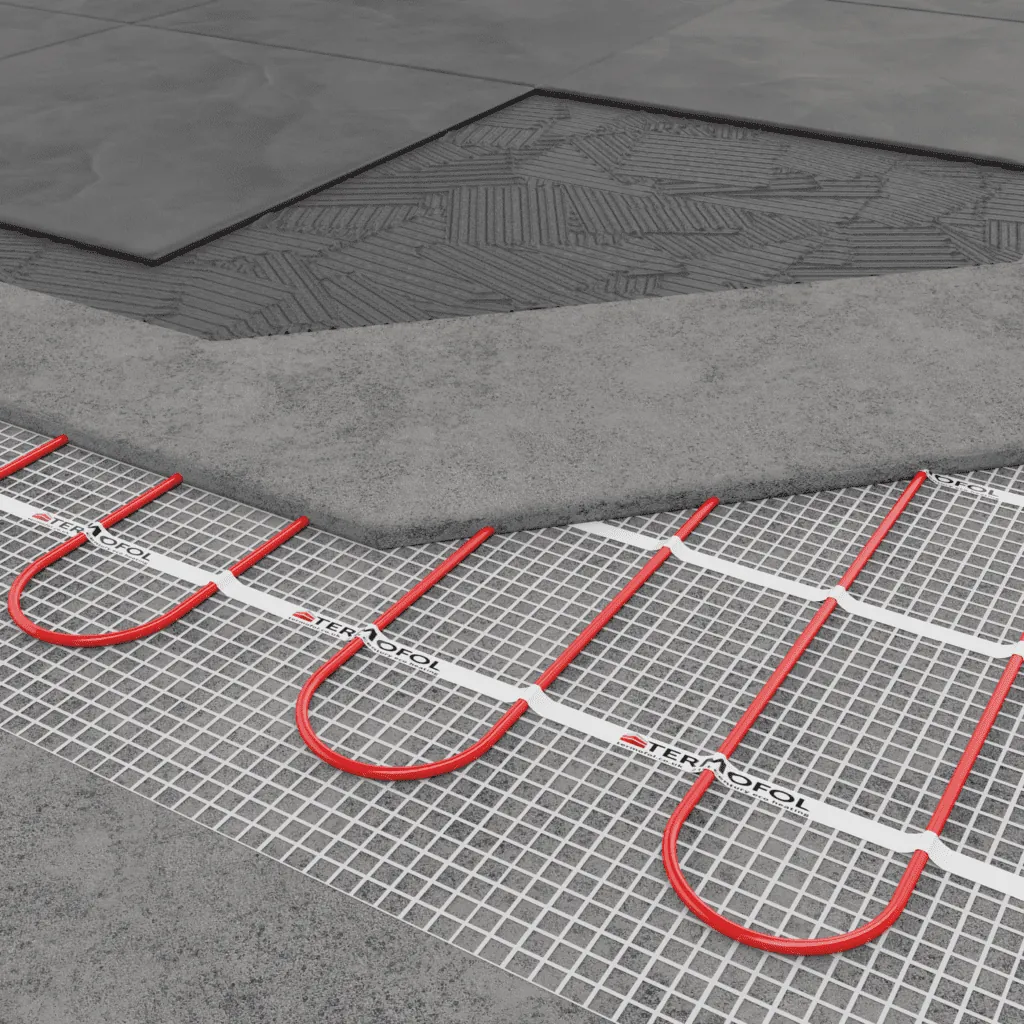
Space-saving is also significant. The volume and functionality of living spaces are greatly compromised by protruding radiators. The space under the windowsill becomes blocked, and the traditional heating devices leave much to be desired in terms of aesthetics. The electrical installation hidden in the floor eliminates such problems. Nothing disrupts the arrangement possibilities anymore, and moving around on a warm floor provides pleasant sensations (especially in winter).
Is underfloor heating worth it in a single-family home?
Among many other locations, single-family homes are the quintessence of the answer to the question, is it worth investing in underfloor heating. Operating a house generates significantly higher costs than in the case of apartments in multi-family buildings. Heating mats fully spread their "wings" in properties for single families, where several generations often reside.
Increasing the temperature through radiation makes life easier for allergy sufferers and reduces the risk of problems with dry nasal mucosa. Purchasing radiators for the entire house is an investment that will need to be repeated in a few or several years. Meanwhile, installing heating cables in the floor provides components with a life cycle of several decades. Modern mats feature stable operation and autonomous functions. Wi-Fi control further enhances the usability of this type of heating in Smart Home properties.
Installing electric heating is one of the best decisions you can make during the construction of your home. If you combine this solution with photovoltaic installation, you will gain an efficient, complete, and almost cost-free heating system.
Is it worth installing electric underfloor heating in an apartment block?
It seems that the most interested in discussions about electric heating systems in the floor are single-family homeowners. However, nothing prevents members of a housing community from also benefiting from this ecological and health-promoting heating method. While water-based underfloor heating usually requires the consent of all residents due to interference with the common parts of the property, the electric heating system we recommend does not generate formal inconveniences.
The installation of heating cables can be planned already at the development stage and during subsequent operation. The advantages of this type of heating in apartments are becoming increasingly appreciated in the Polish market, as evidenced by the growing interest in purchasing efficient components.
More information from users can be found in the article “Opinions on underfloor heating.”
We hope that the above guide has clarified the most frequently asked questions about underfloor heating systems. We also encourage you to explore other articles in the Knowledge Zone of Termofol or directly contact our experts.
``````json
" \n
 +48 12 376 86 00
  Downloads
  biuro@termofol.pl


 Blog Termofol
 Published: February 20, 2023
  Reading time: 26 minutes