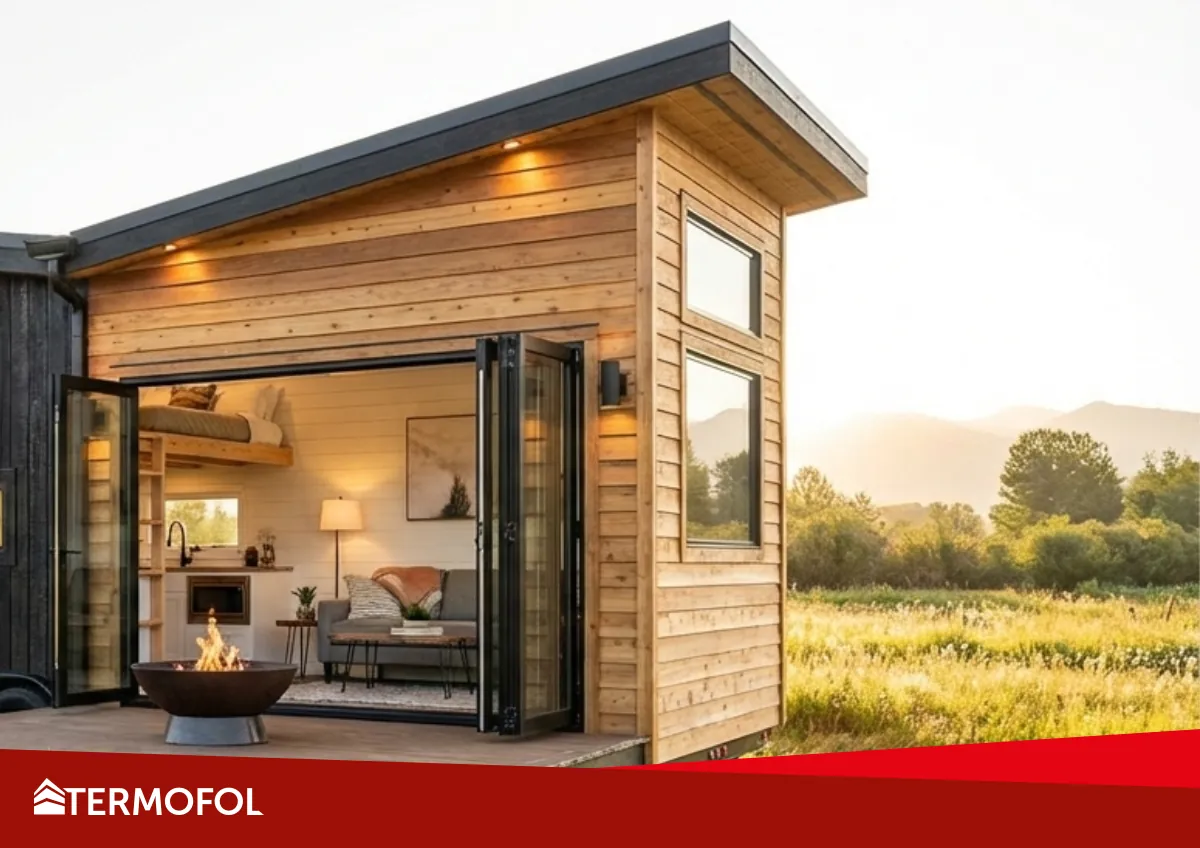
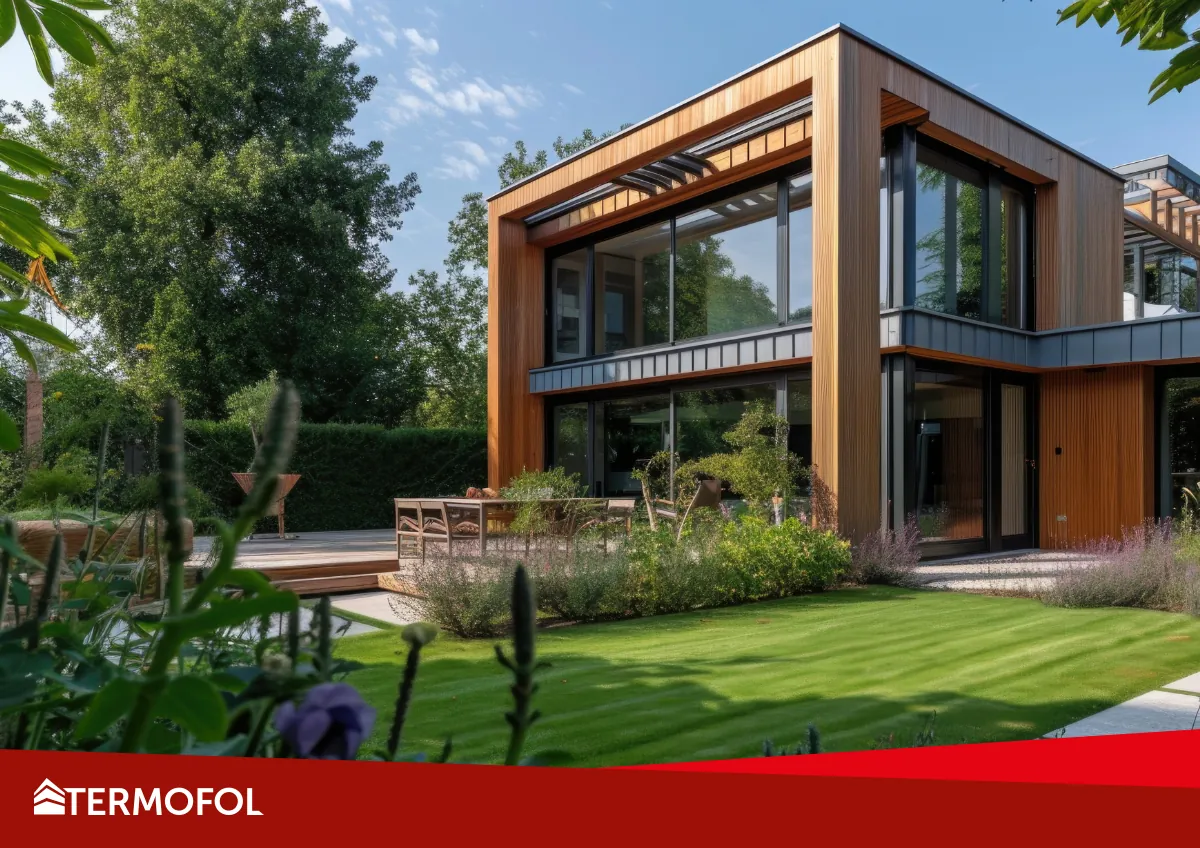
Building an energy-efficient or passive house today is not just about the thickness of insulation or the quality of window joinery. Investors are increasingly paying attention to details that truly impact the energy balance of the building. One such element is the floor.
In the case of buildings equipped with electric or water underfloor heating, the choice of finishing material has a direct impact on the efficiency of the entire system. Improperly selected panels can limit heat conduction, prolong heating time, and increase energy consumption.
Therefore, the question is no longer "are panels suitable for underfloor heating?" but:
which panels to choose to avoid blocking thermal energy in an energy-efficient home?
The Role of the Floor in the Energy Balance of the Building
In an energy-efficient home, it is crucial to minimize heat loss and maximize the use of energy supplied to the interior. While the insulation of the foundations prevents heat from escaping downwards, the finishing layer of the floor is responsible for transferring it to the room.
In the case of underfloor heating, energy must:
- be generated by the heating system,
- pass through structural layers,
- be released into the interior of the room.
If the finishing material has too high thermal resistance, it acts as an insulating barrier – limiting the efficiency of the system and prolonging the thermal response time.
In a building with a high energy standard, every loss of efficiency matters.
Thermal Resistance of the Floor – A Parameter That Cannot Be Ignored
One of the most important technical parameters is thermal resistance (R). It determines the extent to which a material resists the flow of heat.
In practice:
- the lower the thermal resistance,
- the faster and more efficiently thermal energy penetrates into the room.
In energy-efficient homes, where precise temperature control systems are used, low thermal resistance of the floor translates into:
- shorter heating time,
- smaller temperature fluctuations,
- better cooperation with the heating system's work schedules,
- more stable thermal comfort.
Why Do SPC Panels Fit Well with the Standards of an Energy-Efficient Home?
SPC Panels (Stone Polymer Composite) are characterized by a structure based on a mineral composite core. Compared to traditional laminate or wooden panels, they offer:
- dimensional stability with temperature changes,
- resistance to deformation,
- relatively low thermal resistance,
- good thermal conductivity in the context of underfloor heating.
In energy-efficient homes, where the heating system operates in a modulated manner, the stability of the finishing material is of operational importance – the floor should not react excessively to temperature changes.
The Floor and the Response Time of the Heating System
Modern underfloor heating systems – including electric systems – allow for zoned temperature control. In such a model:
- the living room can have a different temperature than the bedroom,
- at night, the temperature can be lowered,
- when the building is unoccupied, it can operate in economic mode.
For the system to operate efficiently, the floor must respond dynamically to changes. A material with high thermal resistance limits this flexibility.
Termofloor SPC Panels have been designed to work with underfloor heating – both electric based on heating films and water-based – which is crucial in buildings with a high energy class.
Energy-Efficient Home and Floor Durability with Heating
In a building where underfloor heating is the main source of heat, the finishing layer is subjected to cyclical temperature changes.
The choice of panels should take into account:
- permissible surface temperature,
- resistance to thermal expansion,
- stability of the installation locks,
- resistance to point deformations.
The SPC structure, due to its mineral core, reduces the risk of deformation caused by temperature effects.
System Consistency – Floor and Heating as One System
In an energy-efficient home, elements are not designed in isolation. Heating and flooring should be treated as one system.
Termofloor Panels have been designed to work with underfloor heating systems, including heating film technology. In practice, this means:
- temperature compatibility,
- predictable operating parameters,
- effective transfer of thermal energy to the room.
This solution is particularly important in timber frame, modular, and prefabricated homes, where energy precision plays a key role.
How to Choose Flooring for an Energy-Efficient Home?
When selecting panels for an energy-efficient home, it is worth paying attention to:
- The thermal resistance parameter.
- Dimensional stability with underfloor heating.
- Moisture resistance (especially in airtight buildings).
- Compatibility with the heating system.
- Declared permissible operating temperatures.
Choosing flooring in an energy-efficient building is not just an aesthetic decision – it is an element that affects long-term energy efficiency.
In an energy-efficient home, every structural element should support the efficiency of the heating system. The floor serves as the final layer transferring heat to the interior – its technical properties have a real impact on comfort and operating costs.
Termofloor SPC Panels, due to their construction and technical parameters, meet the requirements of modern energy-efficient construction, where underfloor heating is an integral part of the building's energy concept.
 +48 12 376 86 00
  Downloads
  biuro@termofol.pl


 Blog Termofol
 Published: February 25, 2026
  Reading time: 4 minutes
 General information