Heated driveway – why is it worth it?
The winter months can significantly hinder daily functioning, especially when it comes to getting to your home or business. Snow and ice can pose a considerable challenge, but there is a solution that effectively eliminates this problem. A heated driveway is a modern technology that prevents snow accumulation and ice formation, ensuring safety and convenience. By using proven systems, such as heating cables or heating mats, you can avoid time-consuming snow removal and the use of chemicals that can damage the surface.
How does the heated driveway system work?
Modern heated driveway systems use cables or heating mats installed beneath the surface. They emit heat that prevents water from freezing and snow from accumulating, ensuring safe and comfortable use of the driveway.
Types of heated driveway systems:
- Heating cables – installed directly in the substrate, allowing for the adjustment of heating power to specific requirements.
- Heating mats – ready for installation, quick to set up, and ideal for modernizing existing surfaces.
Each of these solutions can be automated using smart thermostats, such as the TF-ICE MASTER model, which works with temperature and humidity sensors. With WiFi functionality, users can control the system remotely, enhancing comfort and allowing for efficient energy management.
Advantages of a heated driveway
- Automatic operation – no need for manual snow and ice removal.
- Higher level of safety – elimination of the risk of slips and falls.
- Surface protection – no need to use salt and sand, which extends the lifespan of concrete, asphalt, or paving stones.
- User comfort – dry and clean surface regardless of weather conditions.
- Increased property value – this innovative solution enhances the attractiveness of the property.
How to install a heated driveway?
- Planning and system selection – determining the area and adjusting the appropriate power of the system.
- Preparing the substrate – stabilizing and thermal insulation of the substrate, for example, by using a sand bed.
- Installation of heating elements – laying cables or mats before the final surface is placed.
- Connecting the system – electrical installation and mounting the controller with humidity and temperature sensors.
Testing and commissioning – checking the system's operation before full use.
Costs of a heated driveway
The final cost of the investment is influenced by:
- The size of the driveway.
- The choice between heating cables and heating mats.
- The costs of electricity consumption.
- The complexity of installation and any modernization of the existing surface.
Frequently asked questions about heated driveway Bydgoszcz
- Does a heated driveway generate high electricity bills?
No, modern systems are energy-efficient. They only operate when they detect the appropriate weather conditions, optimizing energy consumption.
- Is it possible to install the system on an existing surface?
Yes, heating mats can be installed on existing driveways, for example, under a new layer of paving stones or asphalt.
- Which solutions are the best?
Automatically controlled systems with cables or mats from reputable manufacturers guarantee the best performance and durability.
- Can a heated driveway be powered by renewable energy?
Yes, it is possible to connect the heating system with photovoltaic panels, significantly reducing operating costs.
- How long does it take to install a heated driveway?
Depending on the size of the area and the type of surface, installation can take from one to three days.
Heated driveway Bydgoszcz – is it worth it?
By opting for a heated driveway, you gain convenience and safety, especially in challenging winter conditions. Intelligent control systems and energy-efficient heating elements make using such a solution comfortable and economical. The possibility of utilizing renewable energy sources further enhances the attractiveness of the investment.
If you are looking for a reliable way to ensure comfort in winter, a heated driveway is a solution worth considering!
 +48 12 376 86 00
  Downloads
  biuro@termofol.pl


 Blog Termofol
 Published: March 15, 2025
  Reading time: 3 minutes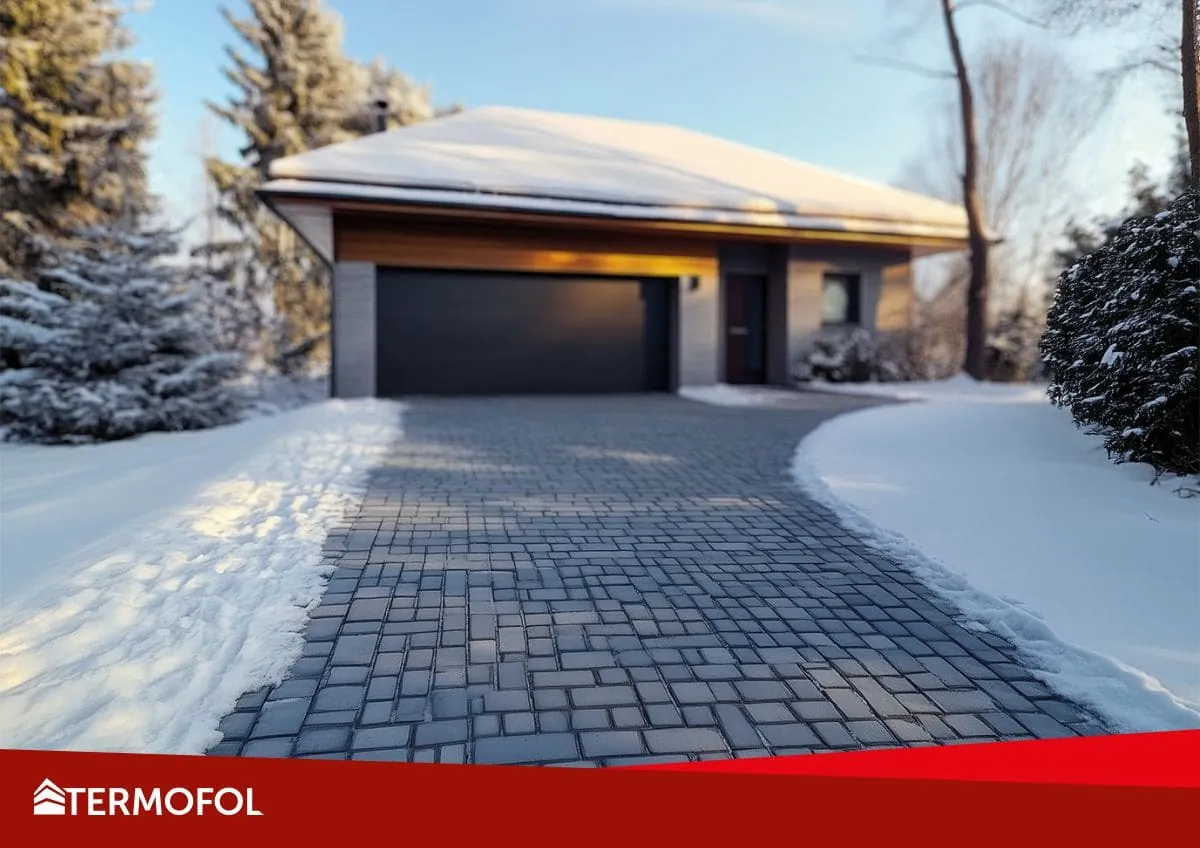
 General information