The heating season is a time when heating systems operate at full capacity – often after several months of inactivity. If the system has not been properly prepared, faults, reduced efficiency, and even failures may occur, which can be particularly costly and troublesome in the middle of winter.
Preparing the Heating System for the Season
Proper preparation for the heating season is not only a matter of comfort but also real savings and the safety of household members. Preparing heating before winter should be a mandatory task in every household. In the case of water heating – regardless of whether it is powered by a heat pump, gas boiler, or pellet boiler – the list of tasks to be performed is long: from bleeding the system, cleaning heat exchangers and burners, to checking for leaks, updating controllers, or replenishing glycol. These tasks require time, knowledge, and often the intervention of a specialized service.
In this context, electric underfloor heating stands out for its absolute maintenance-free operation. It requires no inspections, cleaning, or bleeding. It simply works – just set the thermostat, and the system immediately provides pleasant warmth. The absence of complicated mechanical components or water circulation makes it practically fault-free.
Heating with a Heat Pump
Scope of Preparatory Activities
Preparing the heat pump for the season is a process that should not be underestimated. Standard service includes:
- Checking the refrigeration system – the technician checks the tightness of the installation, pressure in the system, and any potential leaks. If necessary, they replenish the refrigerant.
- Cleaning filters and heat exchangers – dirty components can reduce efficiency by as much as 15–20%. In practice, this means disassembling covers, cleaning water and air filters, and checking the evaporator and condenser.
- Inspecting the compressor and circulation pumps – parameters of operation, energy consumption, and noise levels are checked.
- Bleeding the water system – if air accumulates in the heating loops, part of the floor may remain cold. This requires opening bleed valves and equalizing pressure throughout the system.
- Replenishing glycol – in systems exposed to frost, the technician checks the level and quality of glycol, which protects the installation from freezing. If the fluid has lost its properties, it needs to be replaced.
- Updating controllers – modern heat pumps have software that requires updates to improve efficiency and safety.
Amount of Work and Time
The entire preparation process usually takes from 3 to 5 hours and requires the presence of a specialist. This means the need to schedule an appointment in advance, plan the day, and incur costs of several hundred zlotys.

Water Underfloor Heating with a Gas or Pellet Boiler
Preparing a gas boiler and preparing a pellet boiler for the season involves similar activities.
Gas Boiler – Step by Step Preparation
- Inspection of the gas installation – checking the tightness of pipes, valves, and connections. Any leaks pose a serious safety risk.
- Cleaning the burner and heat exchanger – deposits and soot reduce efficiency and can lead to failures. This requires disassembling the casing and using specialized tools.
- Inspection of chimney ducts – according to Polish regulations, chimney inspections are mandatory at least once a year. Without it, using the boiler is unsafe.
- Testing safety and automation systems – checking flame sensors, thermostats, and safety valves.
All of this requires several hours of a technician's work and costs between 300 and 600 zlotys annually, plus the cost of a chimney sweep's visit.
Pellet Boiler – Even More Tasks
Preparing a pellet boiler and inspecting a pellet boiler is even more time-consuming:
- Cleaning the combustion chamber and heat exchanger – ash and soot must be thoroughly removed, which often requires using an industrial vacuum and special brushes.
- Inspecting and cleaning the feeder – pellets can create dust and clog the feeder screw, so the entire mechanism's flow must be checked.
- Inspecting the hopper – removing remnants of old pellets and replenishing with fresh fuel for the season.
- Inspecting the chimney installation and flue gas flow – neglecting this can lead to serious safety issues.
- Preparing storage for fuel – filling the hopper and storing a supply of pellets, which requires space and additional physical work. In the case of pellets, the storage space can be quite a challenge – several pallets of this fuel take up significant space!
In practice, this means not only the cost of service (usually similar to that of a gas boiler) but also the need for regularly adding pellets during the season.
Electric Underfloor Heating – The Simplest Preparation
What needs to be done?
Preparing electric underfloor heating for the season is a task that… actually does not exist.
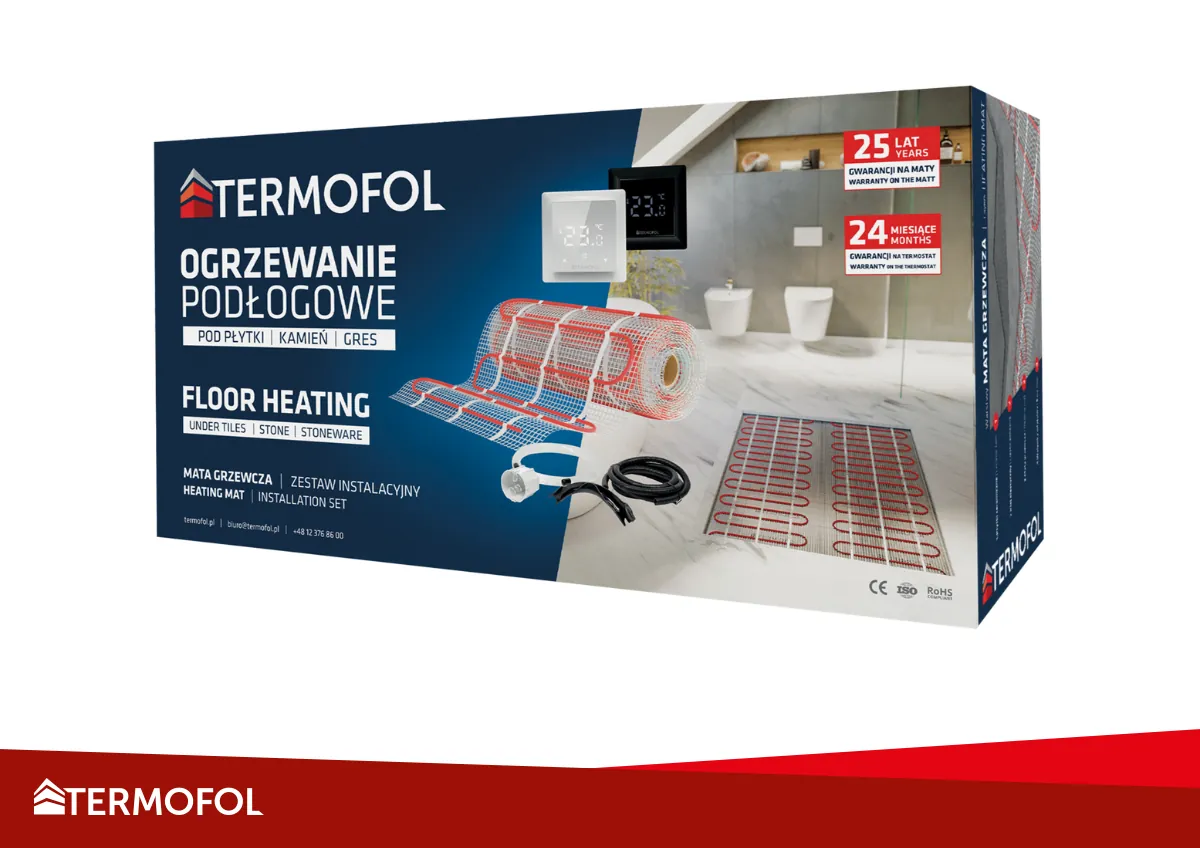
Systems based on heating films and heating mats are fully maintenance-free underfloor heating and do not require any complicated actions. Unlike water installations with a heat pump or boiler, there are no:
- circulation pumps that need to be checked,
- filters that require cleaning,
- glycol that loses its properties over time,
- burners or chimney ducts that must be monitored for safety reasons.
The only task worth performing before the first activation after a break is:
- checking the thermostat settings – to see if they match your preferences,
- a short test run – a few minutes of system operation to ensure everything is working correctly.
And that's all.
Preparing Heating for the Season – Their Absence Means Not Only Convenience but Also Tangible Benefits!
- No service costs
In the case of heat pumps or gas/pellet boilers, annual inspections cost several hundred zlotys. With electric heating, there are simply no such costs – the installation works for years without the need for additional maintenance.
- No risk of leaks or mechanical failures
Since the system does not use liquids or moving parts, the problems of leaks, air locks, or part wear are practically eliminated. This means peace of mind and reliability throughout the season.
- Immediate operation
Heating films and mats have very low thermal inertia. Just a few minutes after activation, the floor becomes pleasantly warm, and the room quickly reaches a comfortable temperature.
- Smart Wi-Fi control
Modern Wi-Fi thermostats allow not only temperature control from your phone but also optimization of energy consumption. You can program the heating to operate only when needed – for example, to turn on an hour before returning home.
- Safety and longevity
The lack of regular maintenance does not mean compromises in safety. On the contrary – electric underfloor heating without maintenance is a stable and failure-resistant system, often covered by a lifetime warranty from the manufacturer.
Why is this so important?
While owners of heat pumps or boilers must schedule service, plan maintenance work, and account for additional costs, users of electric underfloor heating can simply… press a button.
This solution is particularly appreciated by:
- people living in blocks and apartments,
- owners of holiday cottages who want to turn on the heating remotely before arriving,
- people who do not have time to deal with the technical side of the installation.
Preparing a heat pump or pellet or gas boiler requires a lot of work and regular expenses. These are tasks before the heating season that cannot be skipped.
Meanwhile, heating films and mats in an electric system are a 100% maintenance-free solution: they require no service, generate no additional costs, and provide warmth just minutes after being turned on.
That’s why more and more people are choosing underfloor heating – install once and forget – that is, electric underfloor heating from Termofol.
 +48 12 376 86 00
  Downloads
  biuro@termofol.pl


 Blog Termofol
 Published: August 7, 2025
  Reading time: 6 minutes
 General information