The photovoltaic market in Poland is still an area of many changes, even revolutions, especially in the settlement system. After several years of a boom in panels that generate electricity from the Sun, doubts about the profitability of this investment have emerged. So how does the 2023 energy report created by IEO present itself?
The photovoltaic market in Poland 2023 — an introduction
The IEO report – “The Photovoltaic Market in Poland 2023” presents a complete picture of the photovoltaic sector in our country. There is no doubt that in the past twelve months, it has experienced a huge period of euphoria, surpassing even the results of the previously record-breaking year 2021. During this year, photovoltaics in Poland maintained its position as a leader, continuing to drive the development of renewable energy. According to data from the Energy Regulatory Office, the capacity of photovoltaic installations at the end of 2022 reached over 12.4 GW, which means an impressive increase of 4.7 GW compared to the previous year (a jump of 61%).
The upward trend in the Polish photovoltaic market is not only a result of Poles' efforts to seek savings and achieve energy independence. Government and local programs co-financing the installation of photovoltaics have contributed to the development of this industry in Poland.
Mainly, the program “My Electricity” has been the driving force behind investments in PV installations among individual customers. In 2022, the government decided for the first time to subsidize energy storage devices. This is somewhat of a response to the introduction of the new net-billing settlement system. It assumes the implementation of the concept of so-called distributed energy. In short, it involves shifting part of the burden of energy production onto small producers. In the case of photovoltaics, these are prosumers.
Government plans indicate that self-consumption of produced electricity will continue to be promoted. This is essentially a copy of what already operates in Germany, where every new house has an energy storage system. These devices – although still expensive in Poland – will gradually become available at lower prices, as their installation is required by the Polish power system, which is already unable to accept such amounts of energy. And although the share of storage systems in the funding from the “My Electricity” program is currently small, it can be expected that as costs decrease, these devices will become common and more willingly purchased by prosumers.
The consistent work of the entire industry over the past few years is yielding results. In the first quarter of 2023, the total capacity in the photovoltaic market in Poland exceeded 13 GW. The current IEO forecast indicates that installed capacity may even double over the next three years.
It is projected that by the end of 2025, there will be 26.8 GW of PV installations operating in the energy system. Thus, Poland will find itself among the top three countries in the European Union in terms of total installed capacity, becoming the fourth largest producer of electricity from the Sun in Europe.
Photovoltaics in Poland — statistics
The statistics regarding photovoltaics in Poland at the end of 2022 are impressive. The number of prosumer photovoltaic installations exceeded 1.2 million, representing an increase of over 41% compared to the previous year.
It is worth emphasizing that prosumers continue to play a key role. In 2022, they accounted for as much as 68% of the annual increase in installed capacity. This success is partly a result of the introduction of the net-billing system, which encourages increased self-consumption of produced electricity. As a result, photovoltaic installations are optimally tailored to user needs, which promotes an increase in the self-consumption ratio.
At the beginning of 2023, the installed capacity in PV had already exceeded 13 GW. Prosumers accounted for 74% of this share, small installations (50-1000 kW) exactly 21%, while large PV farms accounted for about 5%. Photovoltaics has become a more important source of energy in Poland. Its share in electricity from renewable sources increased from 3% in 2019 to over 23.3% three years later. Currently, it constitutes 4.5% of total energy generation, which is significant progress compared to just 0.4% four years earlier. Poland also demonstrated impressive growth in installed capacity in the photovoltaic sector in 2022, ranking second in the European Union, just behind Germany.
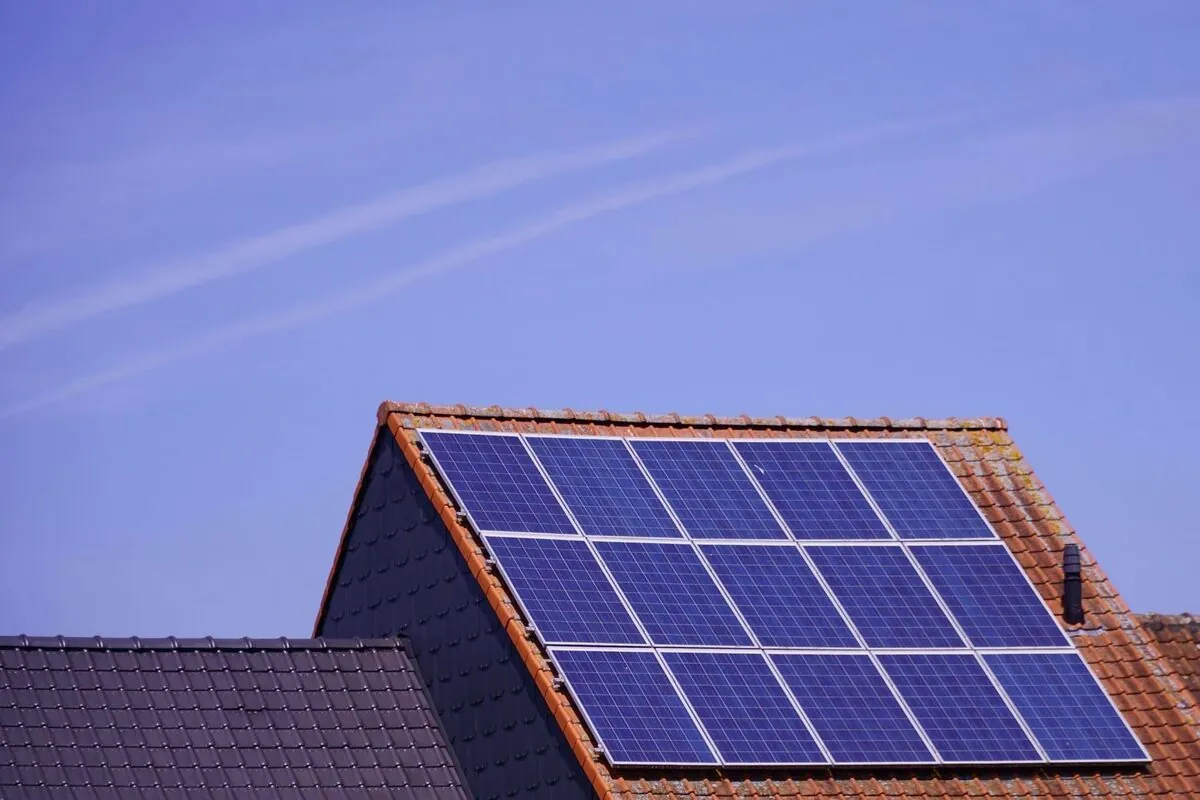
The energy report for the first quarter of 2023 presents interesting data about the photovoltaic sector. During this period, there were already 3,400 PV farms operating, with a total capacity of 3.35 GW, which accounted for an impressive 26% of the total installed capacity in this industry. It is worth noting that 2022 brought a record increase in capacity, especially in the case of large PV installations exceeding 1 MW, whose market share is likely to continue to grow in the coming years. It should also be noted that the industry's results in 2022 were shaped by several factors:
- increased production costs of components,
- higher transportation costs,
- energy crisis related to the war in Ukraine.
The above factors led to an 11% increase in installation prices, while remaining below the inflation rate. Compared to 2021, the prices of new projects under development, especially those with already obtained grid connection conditions, increased by as much as 32%.
Forecasts for the photovoltaic industry
Forecasts regarding the development of the photovoltaic industry and limitations related to the expansion of the power grid in Poland highlight several key aspects. The International Energy Agency (IEO) predicts that the global growth rate of photovoltaic capacity from 2022 to 2027 will be 10.7%, which will translate into an increase in total capacity from 1.1 to 2.3 TW.
According to IEO, by the end of 2023, the capacity of all installed photovoltaic sources will exceed 18 GW, and its growth may reach even 6 GW year-on-year, which will be another record. The value of the PV investment market is estimated at 20 billion PLN, and the trading volume of photovoltaics is projected to be nearly 29 billion PLN.
However, despite positive forecasts, the situation regarding the development of the power grid in Poland remains a challenge. Data indicates that the total connection capacity available for renewable energy investors over the next five years (2023–2028) will increase slightly. This, in turn, results in growing difficulties related to refusals of connection conditions for new photovoltaic projects. In 2022, the total number of refusals for issuing connection conditions for PV was nearly six times greater than the issued connection capacity, reaching a level of 30.4 GW.
Summary
The photovoltaic market in Poland will continue to develop without major obstacles, despite the new settlement system. Although the connection capacity for the coming years will be lower than planned, the popularization of energy storage systems should bring back the boom in PV installations. However, it is uncertain when devices that allow for the storage of electricity will be affordable for the average single-family homeowner.
Statistics show that Poles are eager to produce electricity from the Sun. However, the data do not account for virtual and collective prosumers. In the coming years, they may become the driving force of the photovoltaic industry in Poland.
Achieving a leading position in the European Union or the domestic energy market means that the photovoltaic industry and administration still have many important commitments ahead. In the face of difficulties related to supply chain disruptions, rising component prices, the energy crisis, and the introduction of photovoltaics into an unstable energy market with existing network limitations, the industry will need to acquire new competencies and develop innovative business models.
The time has come to create an industry strategy that will combine past successes in the development of the photovoltaic market with the pursuit of innovation in the industry.
 +48 12 376 86 00
  Downloads
  biuro@termofol.pl


 Blog Termofol
 Published: November 13, 2023
  Reading time: 6 minutes
 Photovoltaics