The term resistive heating is increasingly appearing in articles about heating systems. This concept is not widely known, so in our text, we briefly explain what resistive heating is, which heating systems utilize this phenomenon, and whether it is a good way to provide warmth to our homes.
Resistive heating involves the use of electric current flowing through a material with high electrical resistance. Systems based on this phenomenon are widely used in both industry and households.
What is resistive heating?
In short, it is any heating system that uses electric current to operate. One type of resistive heating includes infrared films and mats as well as heating cables. Infrared heaters and electric radiators, even the popular "fan heaters," are also a form of resistive heating. Although all the mentioned devices operate on the same principle, their efficiency varies. What causes this difference? The answer lies in the principle of operation.
How does resistive heating work?
In a resistive heating system, the source of electric current supplies energy to the conductor. In the case of Termofol heating systems, this is an ultra-thin carbon matrix printed on a PET protective film. One of its properties is high electrical resistance, which causes the matrix to heat up and emit infrared waves. These waves, in turn, heat the water molecules in the air and all objects they encounter. This is the same phenomenon we experience daily when warmed by sunlight.
It is worth noting that the sunlight we see does not actually warm us. It is the infrared radiation that reaches the Earth that warms us. Therefore, infrared heating films are the most natural way to provide warmth to our homes.
What is electrical resistance?
How does it happen that the current encounters the carbon matrix and is converted into infrared? This results from its extraordinary property. The current passing through the matrix encounters its resistance, resulting in friction that converts into infrared radiation. This is similar to a dynamo on a bicycle. It encounters the resistance of the tire, creating friction that generates electricity.
The sensation of warmth in infrared heating
Essentially, this is a topic for a separate article. It can be briefly explained that heating films and mats do not heat the air. Instead, they provide warmth to every piece of furniture and every person that the infrared rays encounter. Thus, the thermal sensation with infrared heating is entirely different from that of traditional heating systems. You can experience this firsthand. How?
Infrared heating is the only heating system whose installation does not require a renovation throughout the entire house. You can choose to install infrared film in just one room. However, that’s not all the possibilities. Don’t want to remove the flooring even in one room? In our online store, you can buy one of many available infrared heaters and mount it on the wall. This is the cheapest way to experience firsthand how infrared heating works.
Types of resistive heating
There are many heating devices available on the market that operate based on the phenomenon of electrical resistance. From the simplest "fan heaters" to infrared radiators and the aforementioned infrared films. Termofol also offers infrared radiators that utilize the discussed phenomenon. However, their principle of operation is somewhat different, but that is a topic for another article.
Advantages of resistive heating
When discussing the advantages, we must start with the fundamental issue of thermal insulation. Without proper insulation of the building, even the most efficient and modern heating system will not operate effectively. It is worth keeping this in mind when choosing heating.
The primary advantage of resistive heating is the lack of maintenance. Electric heating devices do not require installation inspections, chimney cleaning, or flue gas checks. Thus, they do not generate additional costs as traditional systems do.
Electric heating also does not require servicing. For example, infrared heating films have no mechanical components, so essentially, there is nothing to break. This is a significant advantage over other systems. It provides peace of mind, as it does not require any intervention from the user.
Disadvantages
However, resistive heating has some disadvantages. The biggest one is the inability to prepare domestic hot water (DHW). This issue can be resolved in many cost-effective ways. Even installing a regular boiler, when calculating costs, is feasible – with proper management of DHW.
Resistive heating is also very sensitive to any leaks in the building's structure. Therefore, when opting for infrared films, this should be taken into account. Fortunately, this problem can be eliminated in a relatively simple, albeit somewhat time-consuming way. The solution is thermal modernization, which will not only improve the heating comfort of residents but also lower heating bills.
In conclusion
Although resistive heating may still be considered a "bad thing" today because it consumes electricity, with proper preparation of your home, it can serve as a primary and cost-effective source of heat. Infrared heating films can also complement a heating system, as they do not need to be installed throughout the entire house.
Resistive heating is a system whose cost-effectiveness will increase in the coming years due to upcoming EU regulations on harmful emissions. It should be noted that no device operating on the principle of electrical resistance emits any harmful compounds into the atmosphere.
 +48 12 376 86 00
  Downloads
  biuro@termofol.pl


 Blog Termofol
 Published: October 5, 2023
  Reading time: 5 minutes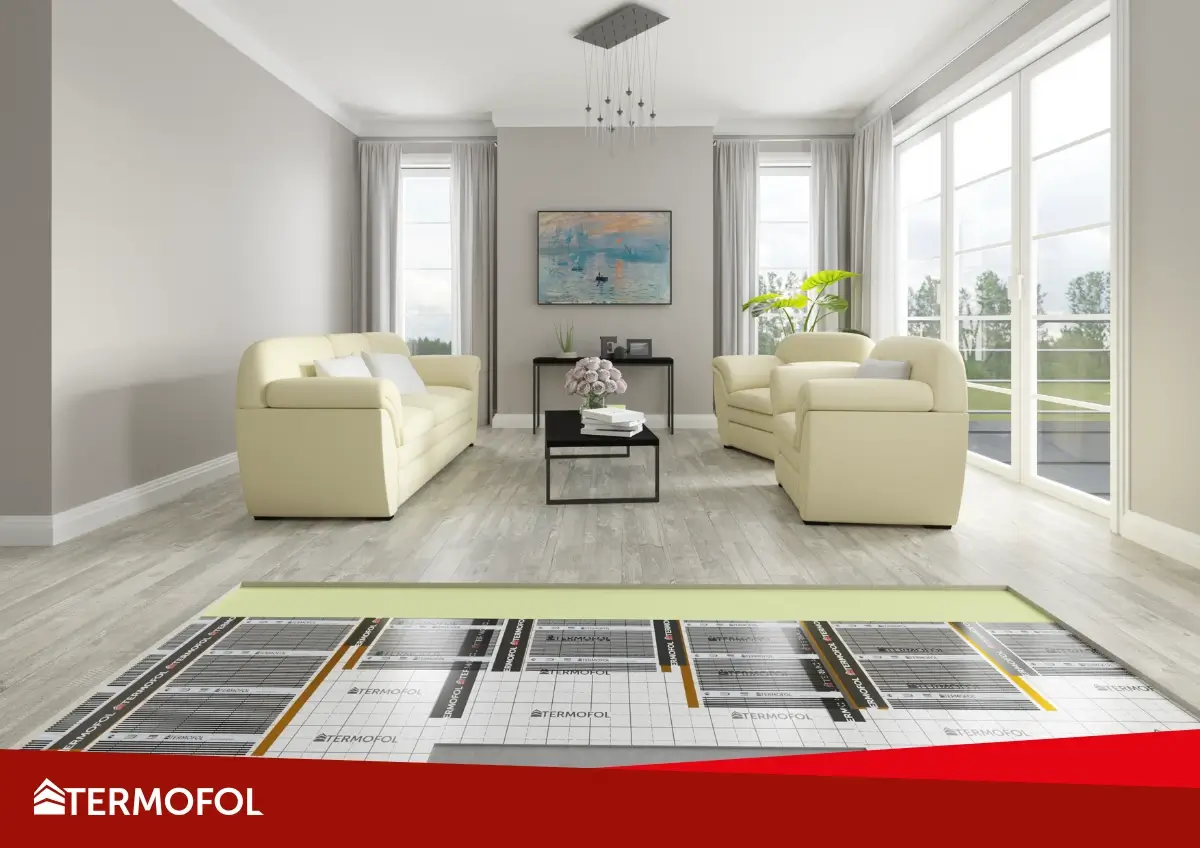
 General information