What is the IP code? Why is it worth knowing?
The IP code (from English Ingress Protection or International Protection) is a standard defined by the IEC 60529 / EN 60529 norm, which defines the degree of protection of electrical devices against the ingress of solid bodies (dust, dirt, objects) and liquids (water, moisture) through the enclosure.
In practice, this means: the manufacturer declares what external conditions the device can withstand – from dispersed dust to intense water spray. This is especially important for devices installed outdoors or in humid, dusty conditions.
The IP code consists of the letters "IP" and two digits (sometimes with an additional letter). Examples: IP55, IP31, IP68.
- The first digit (0–6) – protection against solid objects / dust / access to internal parts.
- The second digit (0–9) – protection against water (drops, spray, immersion).
- The additional letter (e.g. "X", "K") – in some variants, it supplements information (e.g. resistance to high-pressure washing).
For example:
- IP20 means: protection against touch and larger solid objects, no protection against water.
- IP55 – full protection against dust (but minor deposits allowed) + protection against water sprayed by a stream.
- IP68 – the device can withstand continuous immersion in water under specified conditions (depth and time determined by the manufacturer).
How do the individual IP protection levels work?
First digit: solid objects / dust / touch
Digit |
Meaning |
Protects against |
0 |
No protection |
no protection |
1 |
> 50 mm |
access by large surface of the hand |
2 |
> 12.5 mm |
fingers, thin tools |
3 |
> 2.5 mm |
screwdriver, wire |
4 |
> 1 mm |
small wires, tools |
5 |
Limited protection against dust |
small amount of dust allowed |
6 |
Dust-tight |
no dust ingress, full contact protected |
Second digit: water protection
Digit |
Type of protection |
Example of test / action |
0 |
No protection |
device not protected against water |
1 |
Vertical drops |
drops falling vertically do not cause damage |
2 |
Drops at an angle of 15° |
works at a slight angle |
3 |
Spraying at an angle of 60° |
rain / light mist |
4 |
Splashing water |
protection against splashes from all sides |
5 |
Low-pressure water stream |
e.g. from a garden hose |
6 |
High-pressure water stream |
intense sprays from a hose |
7 |
Immersion up to 1 m |
short-term immersion below 1 meter |
8 |
Immersion >1 m |
more advanced protection in immersion |
Note: a higher water number does not always replace a lower one — the device must be certified for both modes if the manufacturer declares it.
Additionally, the IP69K standard is an extension for very high pressure and temperature (high-pressure stream washing) — used, among others, in the automotive industry.
Examples of application — choosing IP for different scenarios
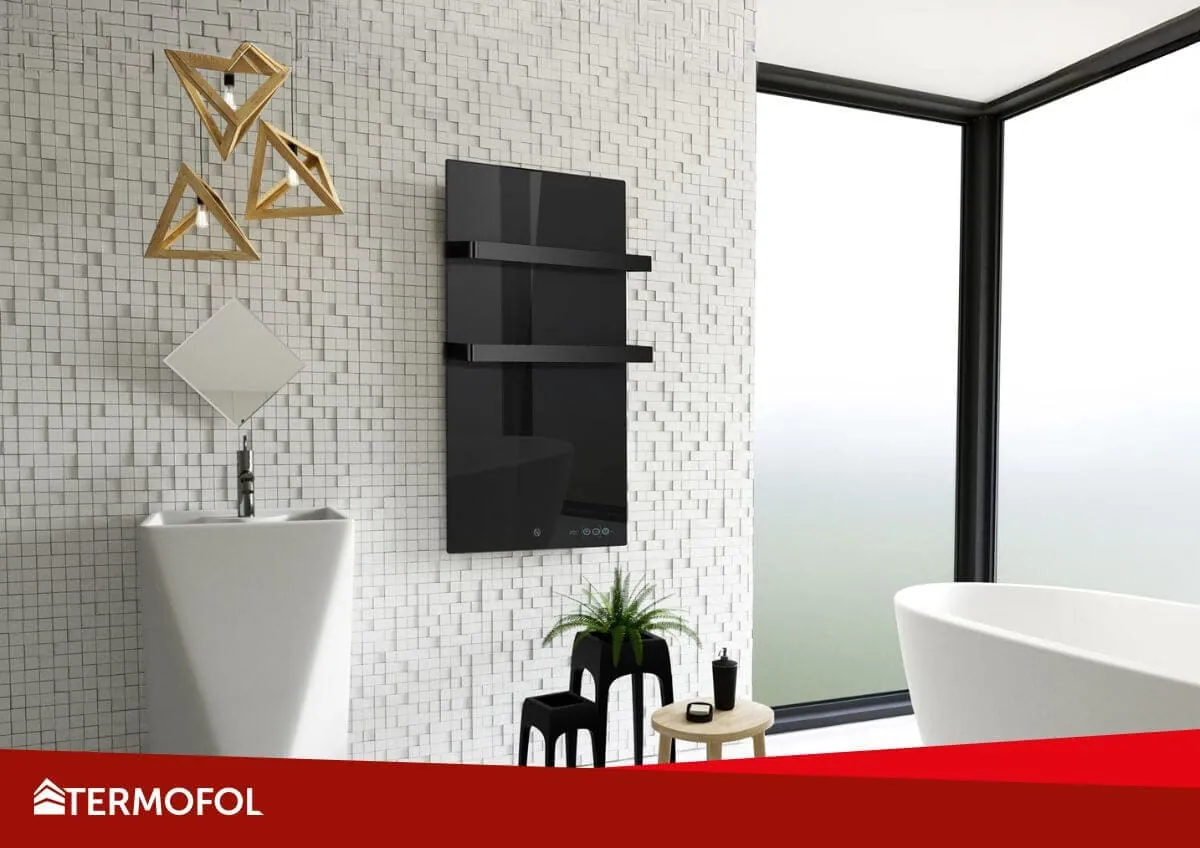
- Installation inside a building (living room, bathroom, room)
Here, the requirements for water protection are moderate. Usually:
- controllers = IP20, IP21,
- heaters for indoor use = IP44 or higher (if moisture is expected).
- Areas with high humidity / external parts
In humid zones (bathrooms, terraces, verandas):
- devices require IP ≥ 44 or IP55 to ensure protection against water splashing and moisture.
- external heaters Termofol have IPX4 (for terrace heating projects).
- Installations exposed to intense spraying / harsh conditions
In industrial halls, workshops, transport stations, where pressure washing and dust are the norm:
- IP65 / IP66 or IP69K is recommended,
- especially for devices mounted close to the ceiling, external walls, or in hard-to-reach places.
What to pay attention to when choosing IP in heating devices
- Working environment: will the device be used outdoors or indoors? Will it be exposed to rain, splashes, workshop dust?
- Matching IP to the product: an external controller requires a higher IP than an internal controller.
- Don't "overdo" it with IP: higher certifications than required — more expensive, sometimes unnecessary. For enclosed environments, excess protection may be redundant.
- Connectors, seals, and wires must also meet the matched level of protection — the "IP of the entire system" is only as good as its weakest element.
Why understanding IP matters for the customer?
- Safety: an inappropriate protection level = risk of device damage, short circuit, fire.
- Durability: devices with the correct IP will last longer — more resistant to dust and moisture.
- Choosing the right product: an external customer must look at IP to avoid failures.
- Installation compatibility: knowing what IP is required in a given location (bathroom, terrace, hall), it is easy to select Termofol devices.
 +48 12 376 86 00
  Downloads
  biuro@termofol.pl


 Blog Termofol
 Published: October 16, 2025
  Reading time: 4 minutes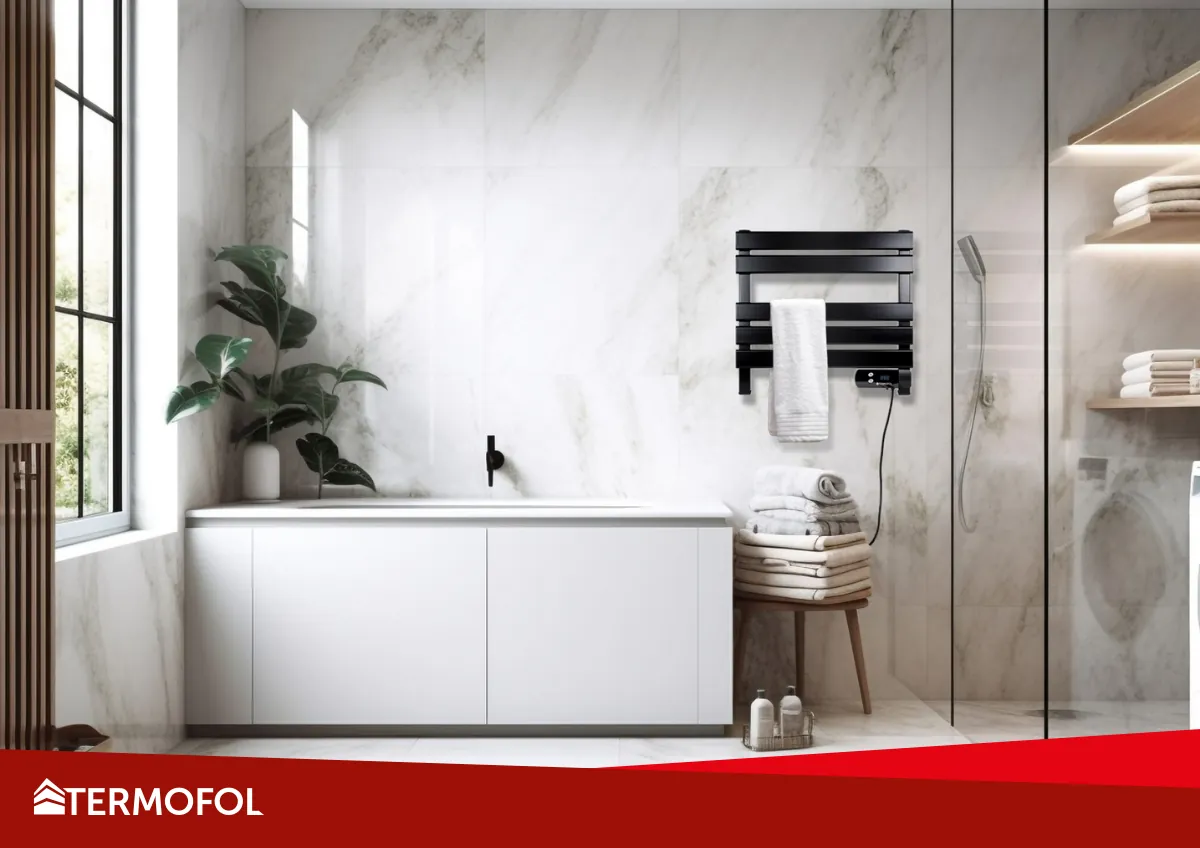
 General information