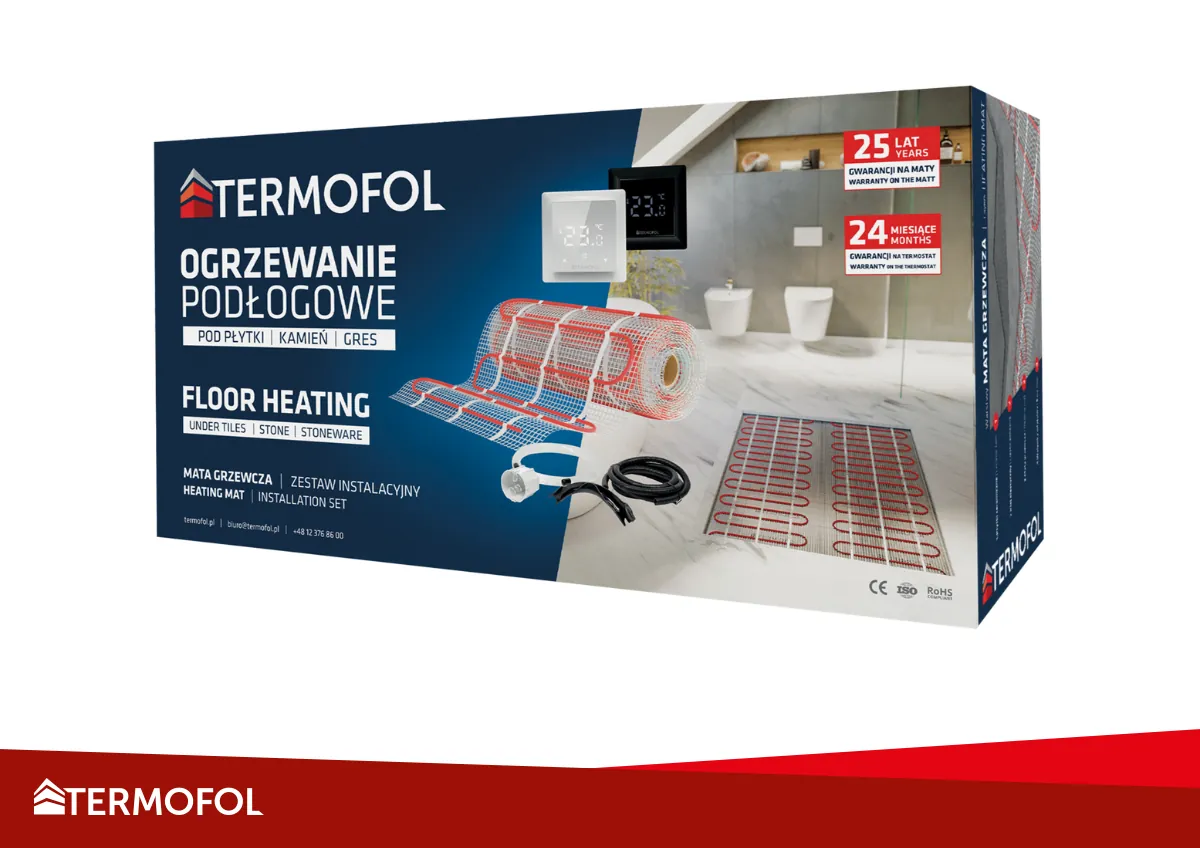
Maintaining the surfaces around your home during the winter season is crucial for the safety of residents and the comfort of using the property. The simplest method that many people still resort to is spreading road salt. Although it is an easy and relatively inexpensive solution, in the long run, it causes more harm than good — both to the surroundings, the surface itself, and the natural environment. Homeowners are increasingly looking for alternatives to salt, and eco-friendly solutions and installations that allow for de-icing the driveway are gaining popularity.
Below, we present a complete analysis of why salt is not a good choice and what methods provide effective winter protection for the driveway.
Why Does Using Salt on the Driveway Cause Harm?
Damage to the Surface
Road salt reacts with:
- concrete,
- paving stones,
- stone,
- metal elements.
It accelerates cracking, crumbling, and erosion of the material. It only takes a few seasons for visible damage to appear on the driveway. Salt seeps into the surface, and in the freeze-thaw cycle, it exacerbates structural damage.
Corrosion of Metal Elements
Salt causes corrosion of:
- driveway gates,
- fittings,
- fences,
- drainage systems and grates,
- car rims.
In practice, the costs generated by corrosion are significantly higher than the cost of the salt itself.
Damage to Gardens and Greenery
Plants do not tolerate chlorides — soil salinity disrupts the water management of plants. The effects include:
- browning lawns,
- dead plantings,
- soil degradation,
- the need to replace plants in spring.
Risk to Pets
Salt irritates the paws of dogs and cats. Contact with mucous membranes can cause inflammatory and allergic reactions.
Environmental and Installation Threats
Runoff water with salt enters the sewage system and soil, disrupting its structure. It also accelerates the corrosion of drainage systems and grates.
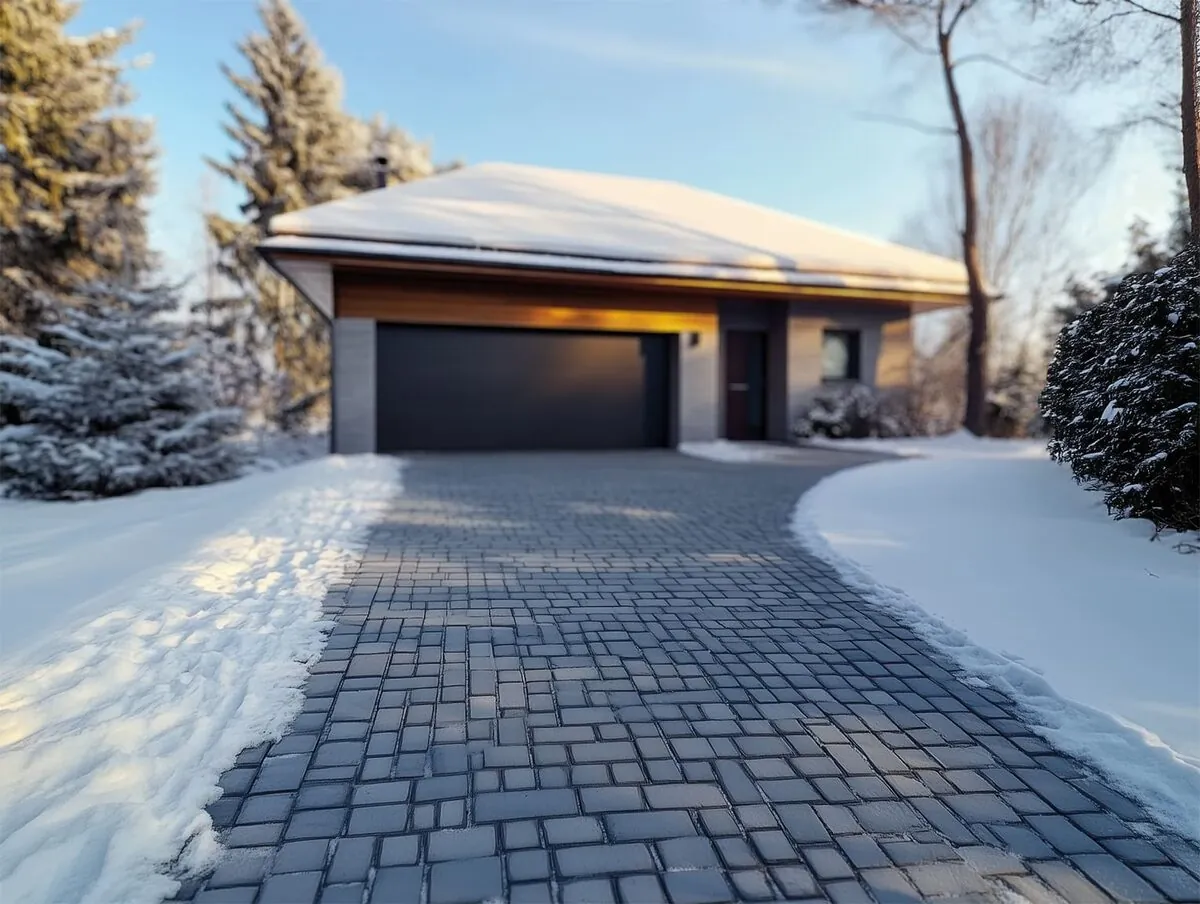
Alternatives to Salt — What Can Be Used?
Homeowners are increasingly abandoning traditional salt in favor of more environmentally friendly and effective methods. Below, we present the most popular solutions.
Gravel or Sand
They provide better traction, but do not remove ice.
This is a temporary solution, often requiring later cleanup.
Eco-Friendly Granulate
Available on the market are products:
- based on calcium acetate,
- magnesium chloride,
- calcium carbonate.
They have a lesser impact on plants and surfaces, but act slower and for a shorter duration than mechanical or electric systems. The cost is higher than that of salt, and effectiveness depends on temperature.
Rubber Mats and Anti-Slip Mats
Used as temporary solutions. They improve pedestrian safety but are not effective on large driveways or garage entrances.
The Most Effective Alternative to Salt — Electric De-Icing System
Increasingly, the chosen method is electric driveway heating, which provides complete protection against ice and snow without the use of salt and without impacting the environment. It is a durable, effective, and practically maintenance-free solution.
How Does the Electric Driveway Heating System Work?
The system consists of:
- external heating mats,
- heating cables,
- temperature and moisture sensors,
- an automatic controller.
The heating elements are installed under paving stones, concrete, or terrace slabs.
Sensors detect moisture and temperature drops to around 0°C, and the controller activates the heating only when there is a real risk of icing.
This solution is significantly more energy-efficient than continuous operation or manual ice removal.
Advantages of the Electric System
- no salt → no damage to the surface,
- no need for manual snow removal,
- full automation, the system operates entirely without your involvement,
- effective winter protection for the driveway,
- no impact on plants, gardens, or car bodywork,
- longevity of the installation (20–30 years).
These systems operate reliably in harsh weather conditions and are currently considered the most advanced form of de-icing. Modern external controllers with WiFi functionality, humidity, and temperature sensors are no longer science fiction but a reality available at affordable prices.
Costs and Profitability — Is Driveway Heating Economical?
Contrary to popular belief, the de-icing system for the driveway does not generate high costs.
Why?
- The heating operates only under specific conditions (moisture + temperature).
- The system is automatically controlled, eliminating unnecessary work.
- Modern mats and heating cables consume energy only when necessary.
In practice, the annual energy consumption for a typical home is often lower than the cost of annual salt purchases and surface repairs.
What to Choose in Winter Instead of Salt?
Although road salt seems like a quick solution, its use leads to corrosion, surface degradation, and damage to gardens. Therefore, homeowners are increasingly opting for safer and more eco-friendly alternatives.
The most effective method that provides lasting winter protection for the driveway is the installation of external electric heating systems — particularly in the form of mats and heating cables controlled by temperature and moisture sensors. This solution completely eliminates the need to spread salt, ensuring full comfort and safety for many years.
 +48 12 376 86 00
  Downloads
  biuro@termofol.pl


 Blog Termofol
 Published: December 5, 2025
  Reading time: 4 minutes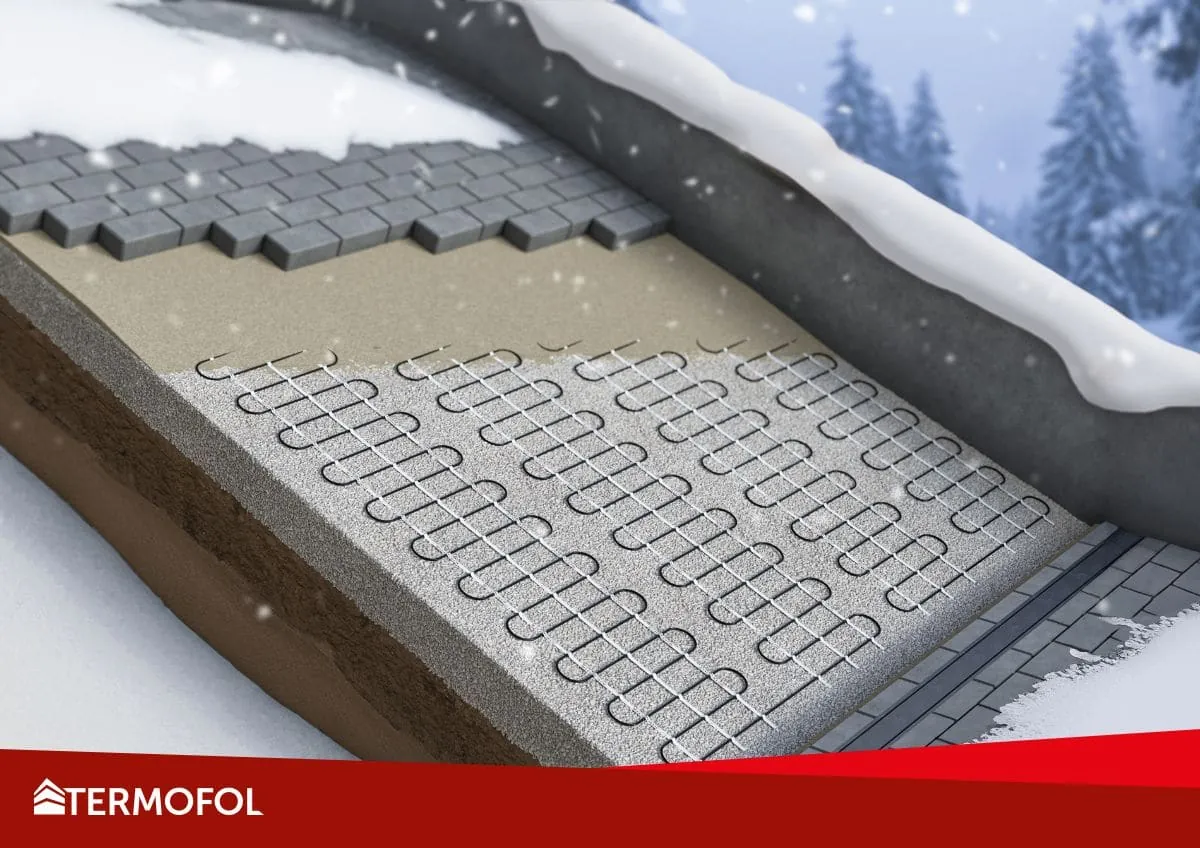
 General information