Flooding rooms can lead to serious damage to buildings and interior decor, as well as increased humidity, which promotes the growth of mold and fungi. Effective drying of rooms after flooding is crucial to prevent further damage, and modern technologies such as electric heaters and infrared heaters play a significant role in this process.
How to dry a room after flooding?
Flooding rooms, whether due to floods, water system failures, or even heavy rainfall, is always a serious problem. Water can seep into walls, floors, and foundations, causing long-term damage if not removed quickly and effectively. Drying rooms after flooding is the first and key step to prevent structural damage and moisture-related issues such as mold and fungi, which can develop within days of flooding.
The first thing to do is remove excess water. This can be done using water pumps or industrial vacuums designed for liquid suction. Ultimately, water can be removed from rooms manually using simple tools – snow shovels, buckets, etc. After removing the water, focus on drying the surfaces and air in the room.
Key stages of the drying process include:
- Removing water from floors and other surfaces.
- Ventilating the rooms – opening windows and doors to improve air circulation.
- Using devices for drying rooms, such as dehumidifiers, electric heaters, and infrared heaters.
Remember that moisture can settle deep in walls, floors, or masonry, which means the drying process can take several days or even weeks. Quick intervention and the use of appropriate methods will help limit damage.
How to quickly and effectively dry walls?
Drying walls is one of the most challenging and important stages of restoring buildings to usability after flooding. Moisture can penetrate deep into the structure of building materials, leading to their degradation and creating a risk of mold and fungi development. Therefore, quick and effective drying of walls is crucial for maintaining the building's integrity.
Drying walls can begin with preliminary drying of the surfaces using towels, cloths, or other absorbent materials. Then, to dry the interior of the walls, it is necessary to use appropriate devices such as dehumidifiers and infrared heaters.
Stages of effective wall drying:
- Preliminary drying – first, remove water and moisture from the wall surfaces. This is a simple step that prevents moisture from spreading.
- Using dehumidifiers – dehumidifiers are a key tool for removing moisture from the air in the room. They work by sucking in humid air and then condensing the water vapor, which reduces air humidity and allows walls to dry faster.
- Infrared drying – infrared dehumidifiers are a modern and effective method for drying walls and masonry. Infrared radiation penetrates deep into materials, causing moisture to evaporate from both the surface and deeper layers of the wall. This is a quick and efficient way to dry even hard-to-penetrate structures.
- Monitoring moisture levels – during drying, it is important to monitor the moisture level in the walls using specialized meters. This allows you to track the progress of the process and ensure that the room is completely dry before proceeding with repairs or finishes.
Drying walls after flooding, especially in older buildings, may take longer, so it is worth investing in appropriate equipment or using the services of professional companies specializing in building drying.
What to use for drying rooms after flooding?
To effectively dry rooms after flooding, it is essential to use devices that will solve the problem quickly and effectively. Among the best solutions are electric industrial heaters, steel infrared heaters, and hybrid infrared heaters. Each of these devices has its unique properties that accelerate the drying process and help remove moisture that has penetrated deep into the walls or floor.
Electric industrial heaters
Electric heaters are an ideal solution in situations where it is necessary to quickly raise the temperature in the room, which promotes moisture evaporation. These devices work by converting electrical energy into heat, allowing for rapid heating of the air and substrate in the damp room.
Benefits of using electric industrial heaters:
- Rapid temperature increase – allows for effective drying of walls, floors, and air in a short time.
- Ease of use – these devices are simple to operate and can be used in various conditions. They feature compact dimensions that facilitate transport and placement. Their strong, durable construction ensures reliable operation even in difficult conditions.
- No exhaust fumes – electric heaters are safe for indoor use as they do not generate harmful substances. They do not require any additional installation steps before starting. Simply plug them into the power supply.
Infrared heaters
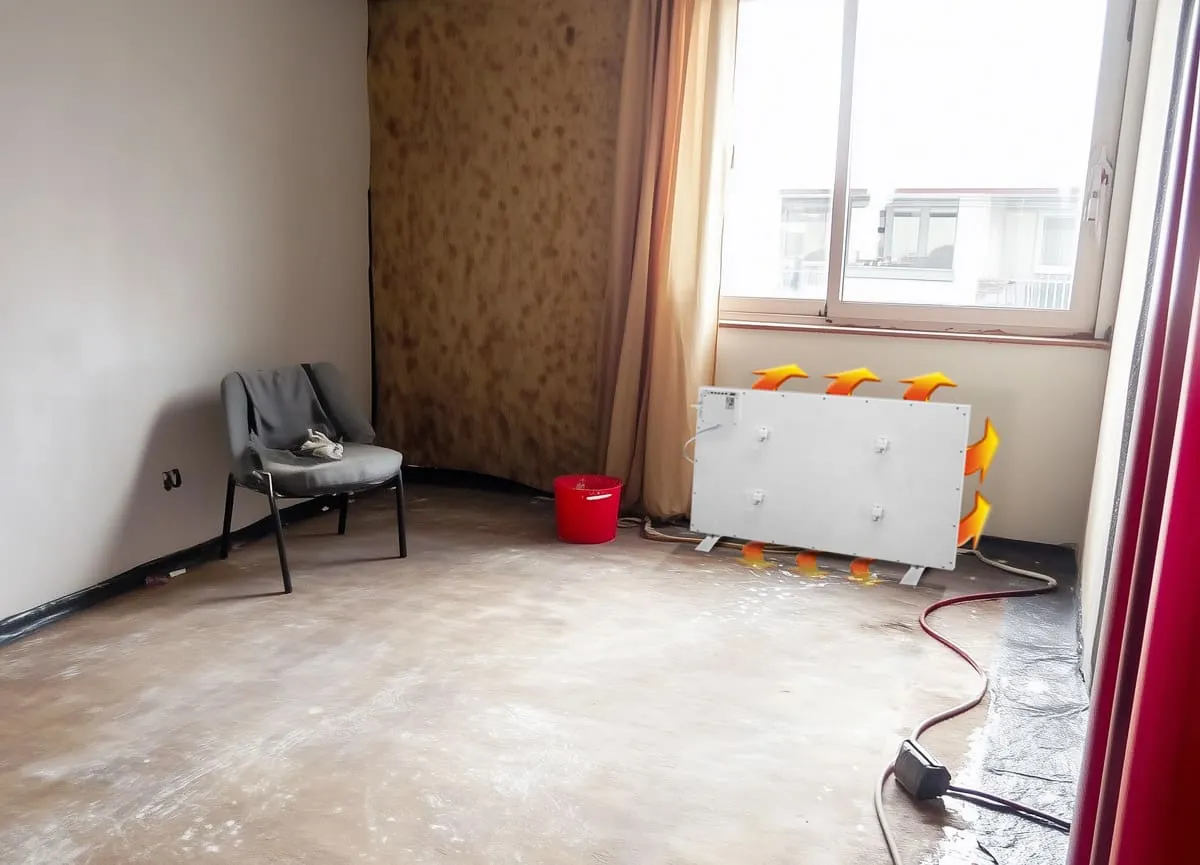
How do infrared heaters work? Unlike traditional heating methods that raise the air temperature in the room, infrared radiation heats objects and surfaces in the room. This makes heaters particularly effective in drying walls.
- Emission of infrared radiation: The heater generates infrared radiation that penetrates walls, floors, or ceilings.
- Material penetration: The radiation heats the surface and interior of the walls.
- Evaporation of moisture: Moisture migrates outward and then evaporates from the surface.
- Moisture removal: Moisture is removed by circulating air. You can additionally use dehumidifiers to collect moisture from the environment.
Advantages of infrared drying
- Effective drying of deep layers of building materials
- Infrared heaters act directly on building materials, penetrating their structure. This is particularly important for walls made from moisture-absorbent materials such as concrete, plaster, brick, or wood.
- Faster drying process
- Because infrared radiation directly heats surfaces and the interior of materials, the drying process occurs much faster than with traditional heating methods that first warm the air.
- Low energy consumption
- Infrared heaters are significantly more energy-efficient than traditional heaters because they heat surfaces directly rather than the air.
- Quiet and safe operation
- Unlike dehumidifiers or heaters, infrared heaters operate almost silently. They do not emit harmful substances or exhaust fumes, making them a safe solution for indoor use.
- Mobility and ease of installation
- Infrared heaters are lightweight and portable, making them easy to move between different rooms.
- Effectiveness in various conditions
- Infrared heaters can be used in cold and damp rooms. They work just as well in places with limited air circulation.
Take advantage of the TERMOFOL offer
If you need effective solutions for drying rooms after flooding, TERMOFOL offers a wide range of devices that will help you quickly and efficiently remove moisture from your home or office. From electric industrial heaters to hybrid infrared heaters – we have everything you need to restore your rooms to usability.
Contact us today to learn more about our products and services. Our specialists will advise you on which devices will be best for your situation.
Don't wait for moisture to cause serious damage – invest in modern technologies and restore your rooms to full functionality!
 +48 12 376 86 00
  Downloads
  biuro@termofol.pl


 Blog Termofol
 Published: September 17, 2024
  Reading time: 6 minutes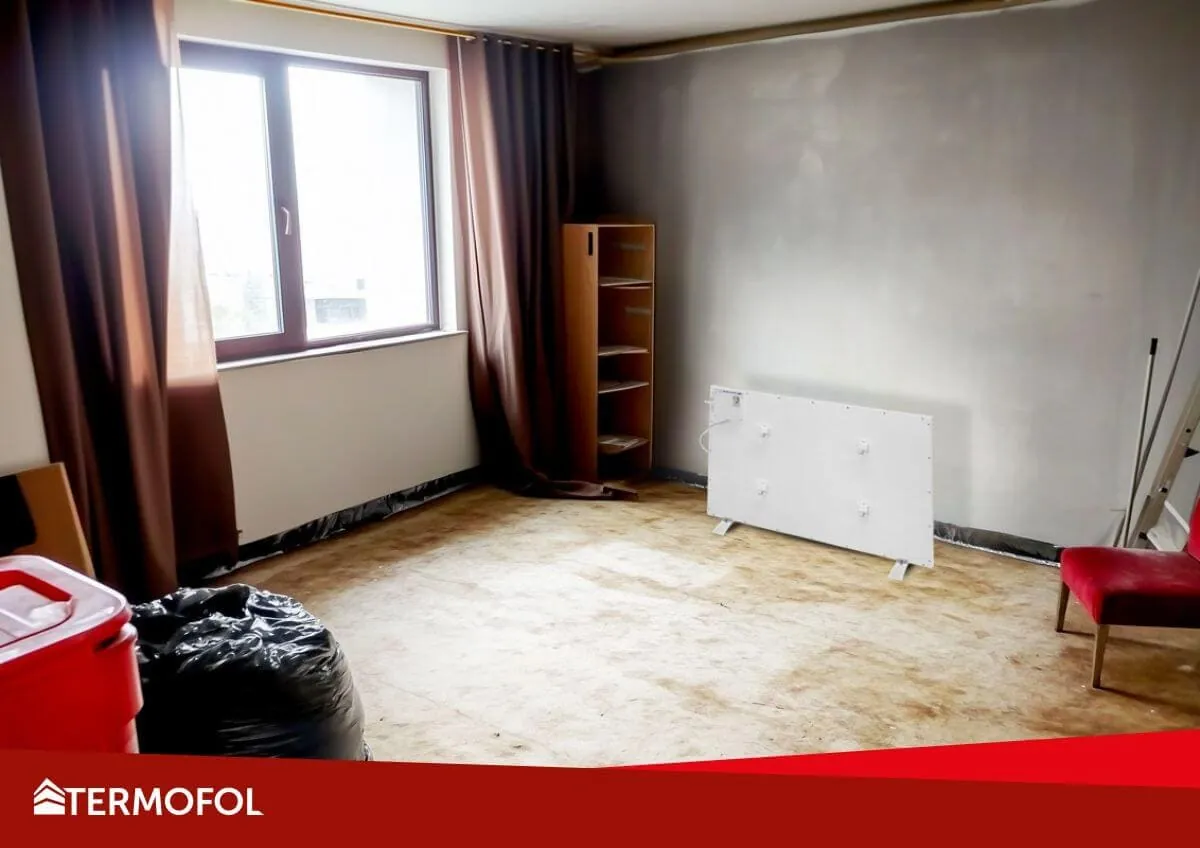
 General information