Energy saving and the use of renewable energy sources are becoming increasingly important in our society. In this context, photovoltaics is gaining popularity as an effective solution in single-family homes, enabling real savings on electricity consumption. However, innovative technologies go further — infrared heating films powered by energy produced by photovoltaic installations are ushering us into a new era of efficient and emission-free heating. Discover the role, benefits, and potential of these solutions that support our pursuit of a sustainable energy future. Photovoltaics in Single-Family Homes
Photovoltaics is a technology that uses panels made of silicon crystals to convert solar energy into electricity. Installed on roofs or near buildings, they absorb sunlight and generate direct current, which can then be used to power various electrical devices in the home, including heating systems. Having a photovoltaic installation allows for self-generation of electricity and reduces dependence on traditional energy suppliers.
Are you considering installing photovoltaics on your roof? Learn more about it in the article “How Photovoltaics Work”?
The introduction of the new net-billing photovoltaic settlement system has raised concerns about the profitability of installations producing electricity from the Sun. It turned out that photovoltaics are still profitable, and there is nothing to prevent their use. How does the settlement work in the new system? You can find out more in the article: “New Settlement Rules for Prosumer 2022. Photovoltaics – When Do the Changes Take Effect?”
The Role of Infrared Heating Films
Infrared heating films are an innovative solution in the field of heating that perfectly aligns with renewable energy. The films operate based on infrared radiation, which is an emission-free source of heat. The main feature of infrared heating films is that they can be applied directly under various surfaces, such as floors, walls, or ceilings, allowing for even and efficient heating of rooms. Additionally, a significant advantage of this type of heating is the possibility of self-installation under floating floors such as:
- laminate panels
- vinyl panels
- engineered wood flooring
Want to learn more about infrared heating? Read our article “Infrared – Principle of Operation”
The benefits of heating with infrared heating films are numerous:
- Firstly, it is a source of heat that does not emit harmful substances into the atmosphere, contributing to environmental protection.
- Secondly, infrared heating does not generate operating costs, as there is no need to replace mechanical parts or purchase fuel.
- Thirdly, the heating film is also very durable, reliable, and performs its functions for many years.
Infrared heating is very quick and efficient because infrared radiation heats objects and surfaces directly, rather than warming the entire air in the room. This is also an important feature for allergy sufferers, as infrared does not cause air movement, thus not stirring up dust and mites as is the case with traditional heating systems.
Calculation of Electricity Consumption and Energy Production
Now let’s take a look at a sample calculation of electricity consumption by infrared heating film in a single-family home with an area of 150 m2 insulated according to the WT2021 standard. The usable energy coefficient Euco is 40W/m2/year. However, the area we are heating is 120 m2. For such a building, a heating film with a power of 80W per m2 is sufficient. Annually, heating with infrared film will consume 4800 kWh. Assuming that the average electricity price is currently 0.94 zł/kWh, we can easily calculate that we will pay 376 zł per month for heating.
Let’s compare this with a photovoltaic installation with a capacity of 10 kWP (kiloWatt Peak). Assuming that the installation operates for 6 hours a day, the total energy production would be: 10 kWP * 6 hours = 60 kWh.
Here we can pause for a moment and explain how to calculate the profitability of photovoltaics in the net-billing settlement system. The premise of this system is the sale of electricity by the prosumer for złotys. The rates are determined based on data from the Energy Regulatory Office (URE). Until June 30, 2024, there is a transitional period in settlements. During this time, the electricity sale rate is determined based on the RCEm index, which is set monthly by the Polish Power Networks (PSE). These rates, of course, depend on each month and are usually higher in summer than in winter. For example, in January 2023, the RCEm price was 594.59 zł/MWh. This means that 1 kWh of energy obtained could be sold for 0.59 zł. If our system obtains 60 kWh daily, the amount we will receive will be around 1000 zł monthly.
It is worth noting that the above data is approximate, as each building requires individual calculations. Nevertheless, they provide some insight into the possibilities offered by the combination of photovoltaics and electric infrared heating.
The results of the calculations show that a photovoltaic installation with a capacity of 10 kWP would be able to produce more energy than the consumption of infrared heating film in the discussed single-family home. This means that not only can the heating film be powered by renewable energy, but additional energy can also be generated for other purposes, such as powering other devices in the home or supplying energy to the grid.
In this context, it is important to note the advantage provided by the net-billing settlement system. It allows for the conversion of energy sent to the grid into złotys and, more importantly, does not require installation at the place of residence. This means that even apartment owners in city centers can afford electricity from photovoltaics. The condition is to have a plot or a piece of land where panels can be installed.
Summary
Renewable energy, including photovoltaics, plays a key role in the energy efficiency of single-family homes. Photovoltaics enable real savings on electricity consumption, and photovoltaic installations can be used to power innovative solutions such as infrared heating films. Heating with infrared heating films offers many benefits, including an emission-free source of heat, no operating costs, and quick heating of rooms. Thanks to the synergy between photovoltaics and infrared heating films, renewable energy can be used for efficient heating of single-family homes while also generating additional electrical energy.
Energy saving and the use of renewable energy are key steps in building a sustainable future. Utilizing innovative solutions such as infrared heating films allows for maximum use of renewable energy and minimization of conventional energy consumption.
 +48 12 376 86 00
  Downloads
  biuro@termofol.pl


 Blog Termofol
 Published: June 28, 2023
  Reading time: 5 minutes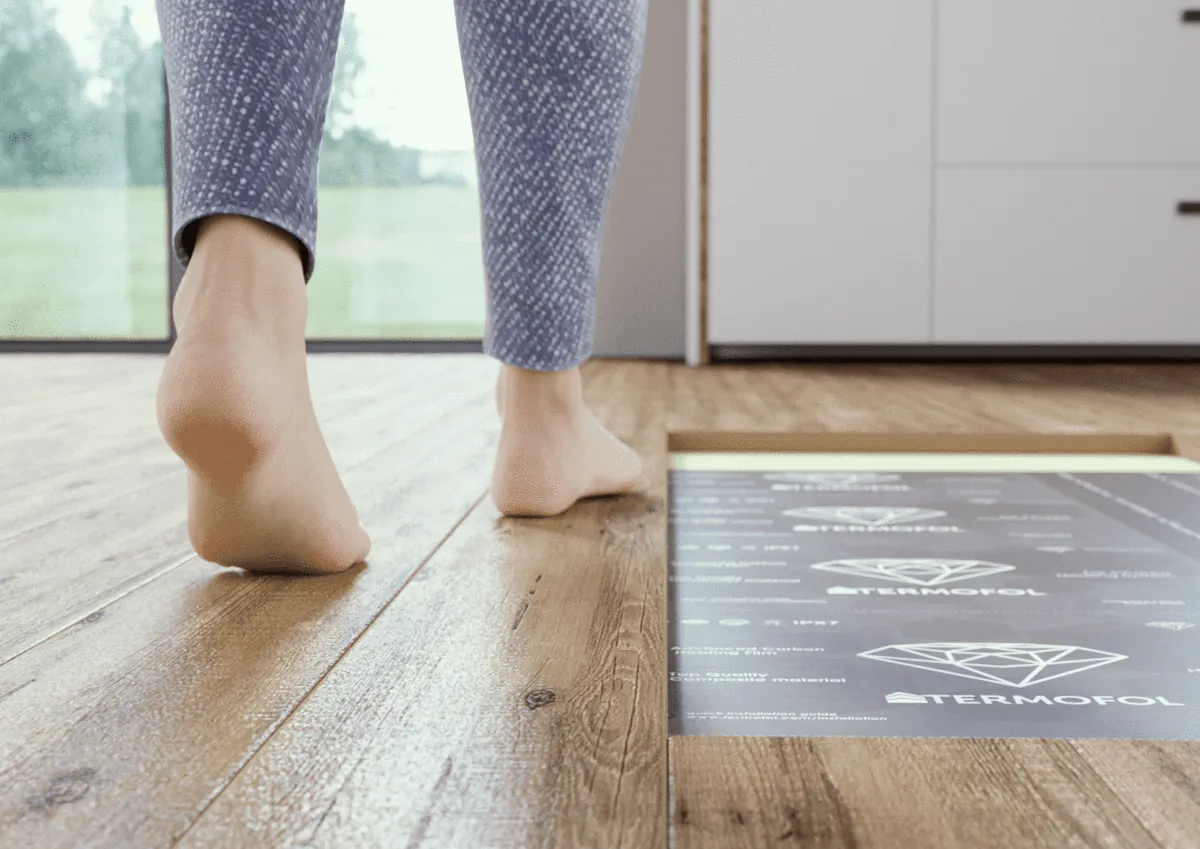
 General information