Underfloor heating is a system that has so far been mainly associated with water-based underfloor heating connected to a central heating boiler. However, devices have appeared on the market that operate on a completely different principle.
Underfloor Heating – Is It Worth It?
For several years now, underfloor heating has effectively been replacing traditional radiators in our homes. It is a much more convenient system, and it also takes up significantly less space. For this reason, as well as many others, homeowners, as well as apartment dwellers in blocks or tenement houses, are increasingly opting to invest in underfloor heating. Currently, the main reason for this trend is easy availability and much lower costs.
Just a few, or even several years ago, underfloor heating was associated with high costs and was inaccessible to most homeowners in Poland. Nowadays, underfloor heating systems are much cheaper. One undeniable advantage of underfloor heating is its placement. Regardless of whether a water-based underfloor heating, heating cables, or infrared films are used in the home, this system remains invisible. This gives us additional space under the window, where radiators are usually placed.
The main advantage of underfloor heating is the feeling of a warm floor. Walking barefoot on winter evenings becomes a pleasant experience that quickly wins the favor of all household members. Other benefits resulting from such heating systems depend on the specific type of underfloor heating. In the case of water-based underfloor heating, the greatest advantage is the ability to connect it to an existing boiler. If there is a gas boiler, an outdated coal, oil, or induction boiler in the house, the installation of water-based underfloor heating will be limited only to the installation of appropriate pipes under the floor, through which the heating medium will circulate. Water-based underfloor heating also allows for the connection of an additional heat source, such as a heat pump. However, it is worth remembering that not all types of pumps are adapted for water-based underfloor heating.
For example, high-temperature pumps are designed for homes with radiators that require water at a higher temperature than underfloor heating. And what advantages do other types of underfloor heating have? Essentially, the only alternative available on the market is infrared films and mats. These devices belong to the same family, although their purpose is completely different. Infrared is the best choice among all other types of underfloor heating. Heating films installed under the floor create what is known as a large-surface radiator. As a result, they do not consume large amounts of electrical energy to generate heat. Many people may argue that electric heating consumes a lot of electricity, which makes them fear high bills. But in reality, infrared heating films consume much less energy than traditional radiators. This is all thanks to the fact that a heated floor has a large thermal inertia – once heated, it will maintain its temperature for long hours. Meanwhile, the film itself does not have such a large inertia and can heat a room to the desired temperature in just a few minutes. As a result, the system only turns on when the floor and air in the room start to cool down, thus consuming electricity only for short intervals, not continuously.
The advantage of infrared heating films is the way they emit heat. This device heats the water molecules present in the air, and thus also the air itself. This system does not cause circulation, so it does not lift dust and mites. Allergics will particularly appreciate this, as they often suffer from hay fever during the winter months caused by traditional heating devices.
How Does Underfloor Heating Work?
The principle of operation of underfloor heating depends on its type. Water-based underfloor heating does not differ much from a radiator. The only difference lies in the placement of the device. In radiators mounted on walls, there are pipes through which hot liquid circulates – usually water mixed with substances that prevent freezing. In water-based underfloor heating, it is similar, but the pipes are not located in a radiator but are hidden in the floor. In this way, the heat from the heated medium warms both the floor and the air in the entire room.
In the case of infrared heating, the situation is completely different. It all starts with a phenomenon called electrical resistance, which occurs in an ultra-thin carbon matrix, the heart of the infrared film. When current passes through the matrix, it emits infrared waves. These are responsible for the sensation of warmth that accompanies us on a sunny day. It must be remembered that it is not the sunlight itself that warms the Earth, but the infrared waves that are part of the radiation sent by our star. Infrared heating is therefore the most natural way to provide warmth in our homes. Infrared waves heat all objects and people they encounter. In addition, they heat the water molecules present in the air, which is particularly important for allergy sufferers. Why?
To answer this question, we must present the operation of conventional heating. Radiators, heaters, and water-based underfloor heating warm the air, which then circulates around the room, thus lifting dust and mites. For allergic individuals, this means a stuffy nose, runny nose, and cough.
What to Pay Attention to When Choosing Underfloor Heating?
When investing in any type of heating, the most important thing is to insulate the building. If the house has poor thermal insulation, regardless of whether it will be water-based underfloor heating, radiators, or infrared films, no heat source will work properly. The lack of proper thermal insulation causes the temperature to escape outside, and heating bills keep rising.
When choosing underfloor heating, attention should also be paid to the installation method. Water-based underfloor heating requires a specialized team and quite significant interventions in the home. The installation of the system is usually associated with a complete renovation of the building. In the case of infrared heating, the situation is completely different. Firstly, the installation of this system can be done independently – the presence of a qualified electrician is only required when connecting it to the network. Secondly, only films and heating mats allow for installation in individual rooms, which enables gradual implementation without the need for immediate intervention in the building's facade.
When choosing infrared heating films, a key parameter to consider is the power, which should be adjusted to the size of the room. Even without precise calculations, one can roughly determine the required energy. Let’s remember that all films have the same power consumption, but they differ in the speed of reaching a comfortable level of heat. It is also important to determine the amount of film needed to cover the floor. It is recommended to do this over the entire surface, omitting areas with furniture, to avoid inefficient heating.
Which Heating to Choose?
Considering the fact that the heating system is supposed to work and provide warmth for the coming years, one should opt for the one that will cause fewer problems. Water-based underfloor heating is cheaper to purchase, but in case of a failure, it requires quite a significant expense for repair. In the case of heating films, it is the opposite. They are slightly more expensive to purchase, but they do not generate any operating or maintenance costs. There is no need to clean the chimneys of soot and other contaminants, and the lack of mechanical parts means that there is nothing to break in infrared films.
Regardless of whether you are planning to build a house or renovate an old building, heating films will provide you not only with comfort but also peace of mind for the coming years and decades. Therefore, it is worth familiarizing yourself with the possibilities of our systems. Answers to all questions can be found on the Termofol website. Other issues can be clarified by contacting our experts, who will answer all your questions in a simple and accessible way.
 +48 12 376 86 00
  Downloads
  biuro@termofol.pl


 Blog Termofol
 Published: October 20, 2023
  Reading time: 7 minutes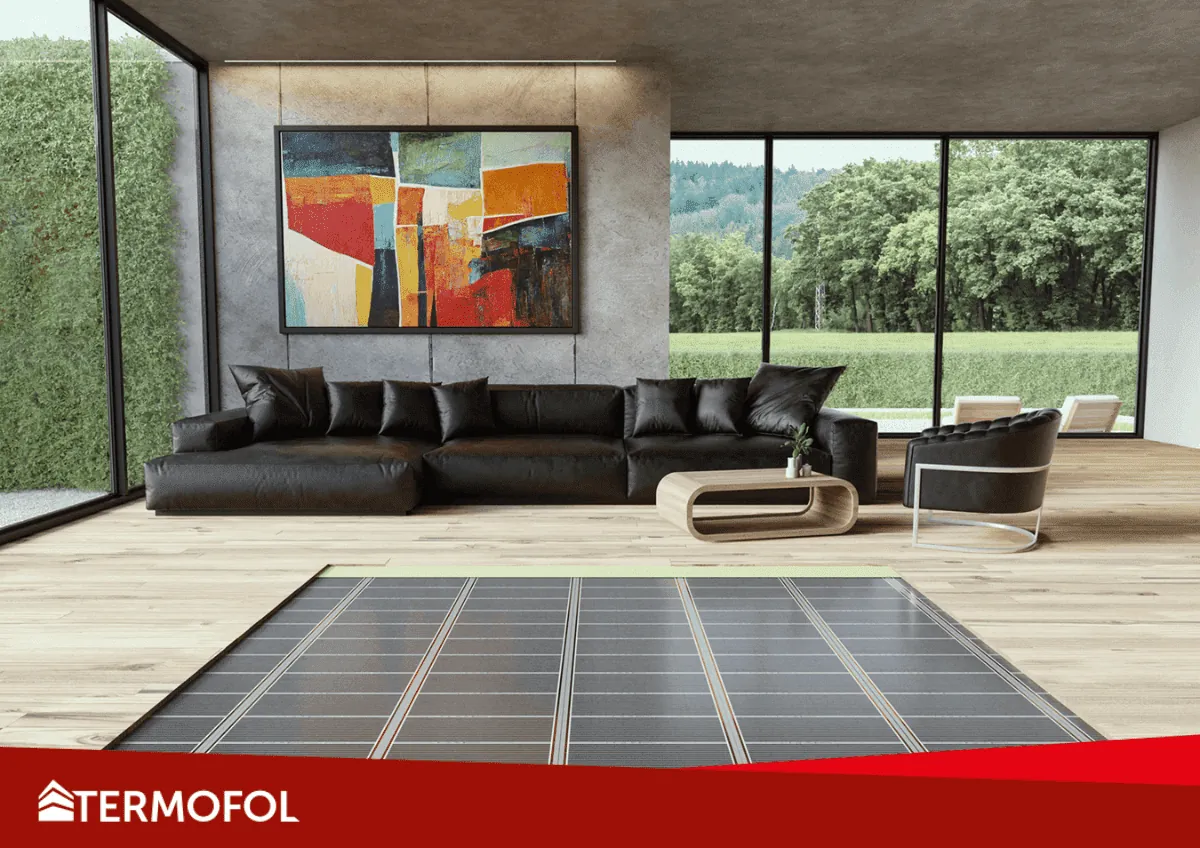
 Heating