99% of orders shipped the same day!
Free delivery from €70 ★★★★★
99% satisfied customers
99% of orders shipped the same day!
Free delivery from €70 ★★★★★
99% satisfied customers
99% of orders shipped the same day!
Free delivery from €70 ★★★★★
99% satisfied customers
What are Termofol TF-KGJZ heating cables and what are they used for?
Heating cables are resistance wires placed in insulation, sold in ready-made sections of a given length and specified power. They are primarily used for the installation of electric underfloor heating. Underfloor heating based on heating cables has many advantages: it does not require expensive installations such as building a boiler room, installing a furnace, bringing in pipes, and mounting radiators. The installation process itself is definitely cheaper and less labor-intensive. When designing underfloor heating, it is enough to determine the thermal power that needs to be supplied to heat the room by establishing the heating power per 1m2 of surface area. Next, determine the type of flooring material and specify the unit power that should be applied for that particular flooring. Finally, we calculate the spacing between heating wires, taking into account only the area free from permanent elements such as furniture or a bathtub.
A
Admin
Published: August 22, 2022
Reading time: 4 minutes
General information
Heating cables are resistance wires placed in insulation, sold in ready-made sections of a given length and specified power. They are primarily used for the installation of electric underfloor heating. Underfloor heating based on heating cables has many advantages: it does not require expensive installations such as building a boiler room, installing a furnace, bringing in pipes, and mounting radiators. The installation process itself is definitely cheaper and less labor-intensive. When designing underfloor heating, it is enough to determine the thermal power that needs to be supplied to heat the room by establishing the heating power per 1m2 of surface area. Next, determine the type of flooring material and specify the unit power that should be applied for that particular flooring. Finally, we calculate the spacing between heating wires, taking into account only the area free from permanent elements such as furniture or a bathtub.
To control the heating, we use thermostats, programming them to maintain the appropriate temperature in the room at all times. The thermostat reads the temperature from internal and external temperature sensors. Even the most basic models have several operating modes: measuring room temperature, measuring floor temperature, and room temperature with floor temperature limitation. More advanced models have the ability to program a weekly work schedule. The entered schedule is repeated every week, so we do not have to remember to manually set the temperature. The ability to temporarily change the temperature is essential. The thermostat protects household members from potential overheating of the heating system and informs about irregularities related to the installation. In the event of a failure of the external temperature sensor, the thermostat displays a message and turns off the heating system, ensuring that the installation is always safe. Additionally, the most advanced thermostats work with smartphone applications via a local Wifi network.
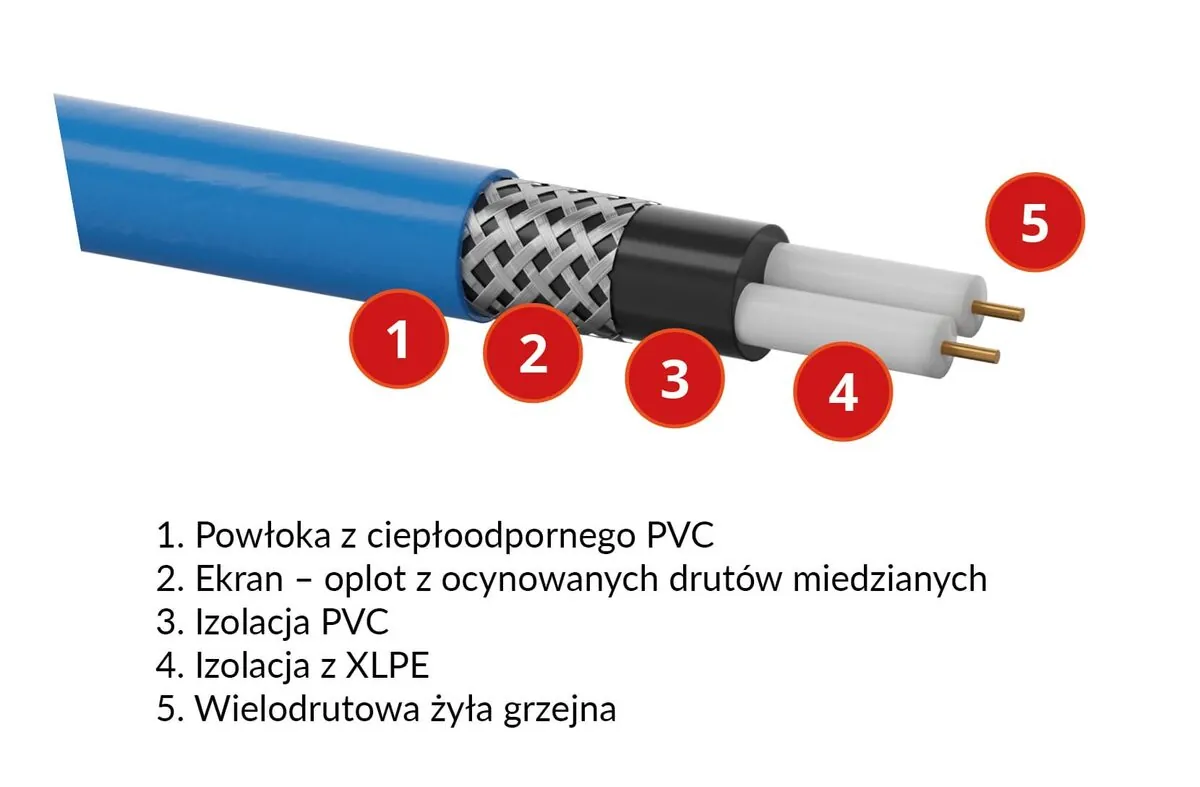
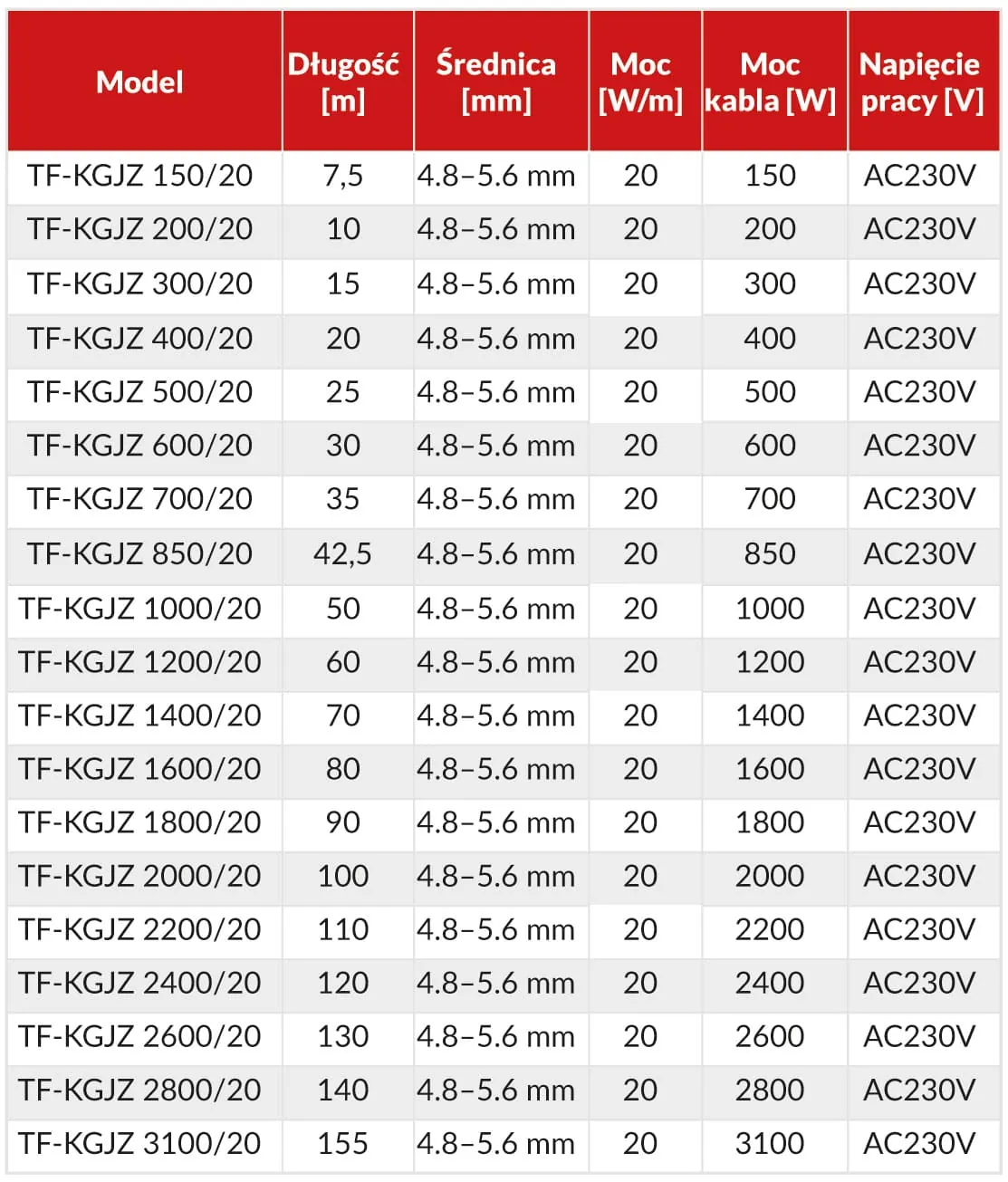
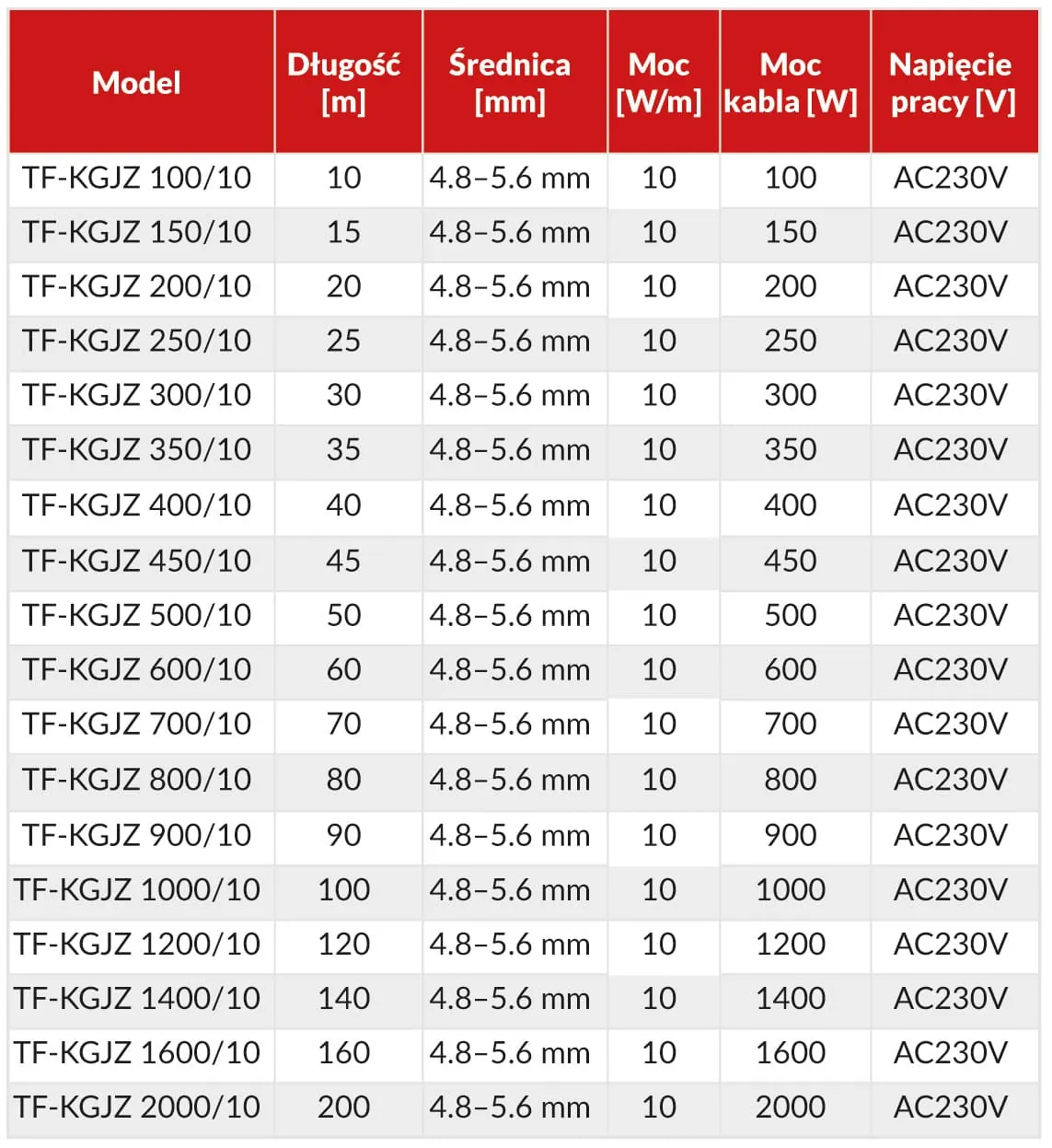
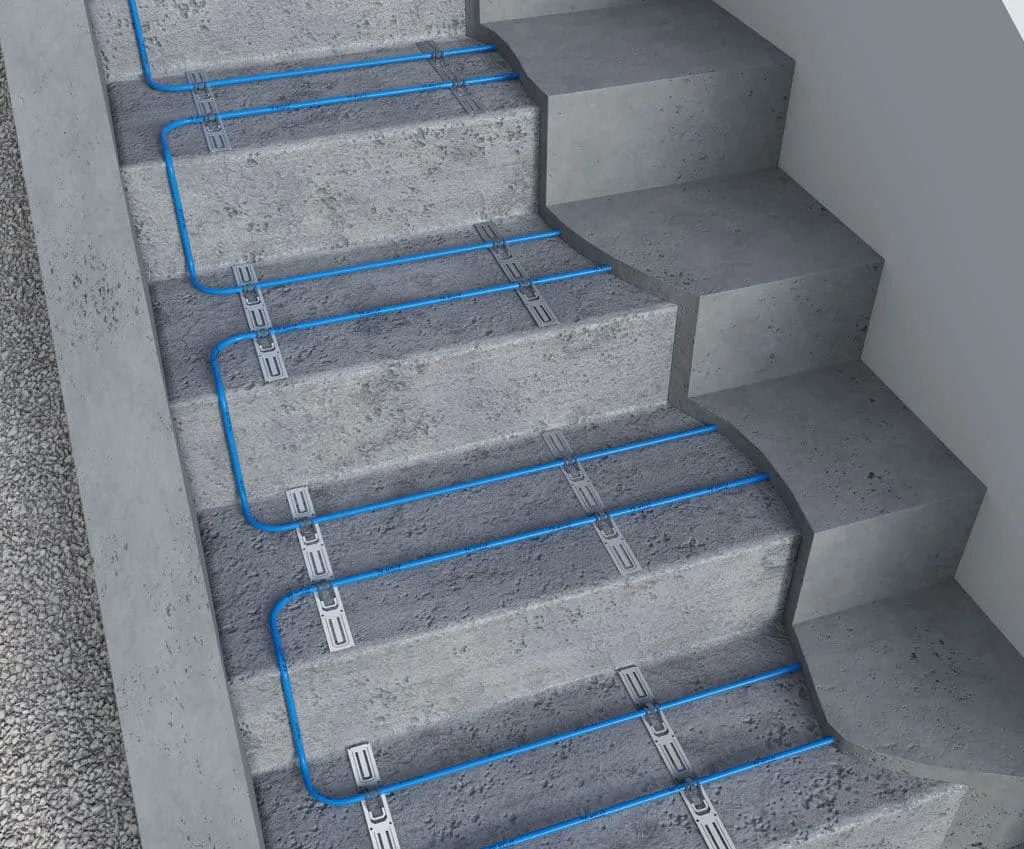
The underfloor heatingsystem can also be programmed for specific days of the week or times of day. This leads to significant energy savings, as in a room where no one is present, the temperature can be lowered by several degrees and then quickly raised when needed. Electric heating using underfloor cables works well in apartments, shops, warehouses, commercial spaces, or large sports facilities. In Termofol's offer, the Termofol TF-KGJZ heating cables are designed for accumulation underfloor heating in residential buildings as well as public utility buildings. The heating wires are installed in a layer of concrete or anhydrite screed. Depending on the investor's preferences, the possible finishing layer of the floor can be: gres tiles, stone, marble, layered floorboards, laminated floor panels, or vinyl floor panels. Termofol TF-KGJZ heating cables have a larger diameter compared to typical cables used in heating mats, measuring 4.8–5.6 mm compared to 3.6 mm in diameter. We have models ranging from 10 to 200 meters in length and with a power of 10W/m and from 7.5m to 155 meters with a power of 20W/m. The decision to choose TF-KGJZ heating wires as underfloor heating should be made at the construction stage (before the screed is laid). They are laid on the ceiling or concrete substrate containing a layer of thermal insulation. This significantly reduces heat loss and translates into lower operating costs. The laid wires are covered with a cement or anhydrite screed. Termofol TF-KGJZ heating wires can serve as the primary heating system for rooms and buildings, being the only, self-sufficient source of heat. They can also serve as a supplementary heating system, installed to achieve the effect of warm floors.
Accumulation underfloor heating is characterized by high thermal inertia, allowing us to take advantage of cheaper electricity available in the G12 tariff during the hours from 22:00 to 06:00 as well as from 13:00 to 15:00. Electric accumulation heating must be properly programmed to ensure a comfortable temperature in the room.
Differences between accumulation and direct underfloor heating
Direct underfloor heating is characterized by a short heating time and low thermal inertia, allowing for dynamic changes in floor temperature as well as precise scheduling. Heating films installed under floating floors and heating mats mounted in a layer of flexible adhesive are referred to as direct underfloor heating, while heating cables embedded in a screed layer are part of the accumulation floor system. Accumulation underfloor heating is characterized by high thermal inertia, resulting in a long heating time as well as a long time for heat release into the room. The choice of system should be tailored to the individual preferences of the investor as well as their lifestyle and, above all, the insulation of the building.
Check out ready-made kits
Related articles
General information
Types of Heating Mats. An Overview of TERMOFOL Systems for Indoor and Outdoor Applications
Heating mats today are much more than just underfloor heating for bathrooms. A few years ago, most investors associated heating mats solely with comfortable underfloor heating installed beneath ceramic tiles. Today, the market looks completely different. Modern heating systems include both mats designed for residential interiors and advanced outdoor solutions used to protect driveways, stairs, or […]
How to Choose a Heating Mat for a Room? A Practical Guide
Choosing the right heating mat is more important than many investors realize. The selection of an appropriate heating mat should not be based solely on the area of the room. In practice, other factors also play a significant role: the heating function, type of flooring, insulation standard of the building, actual heating area, and the way the interior is used. That is why a well-chosen underfloor heating system operates comfortably, efficiently, and energy-saving for many years […]
Installation of Heating Mats Step by Step – Can You Do It Yourself?
Modern underfloor heating without complicated renovations. A few years ago, installing underfloor heating was mainly associated with major renovations, thick screeds, and complicated hydraulic installations. Today, modern heating mats allow for comfortable underfloor heating to be installed much faster and significantly less invasively. It is the simplicity of installation that has made electric heating mats very popular: during renovations […]
Heating Mats in Different Types of Properties – Where Do They Make the Most Sense?
Termofol Expert: “Today, heating mats are chosen not only for comfort but primarily for the simplicity and flexibility of the entire system.” Just a few years ago, heating mats were mainly considered an additional solution — most often for bathrooms. Today, from the market perspective, it is clear that their role has significantly changed. Investors increasingly view electric underfloor heating as a conscious element of modern construction, rather than just a comfortable addition.
 +48 12 376 86 00
  Downloads
  biuro@termofol.pl


 Blog Termofol
 Published: August 22, 2022
  Reading time: 4 minutes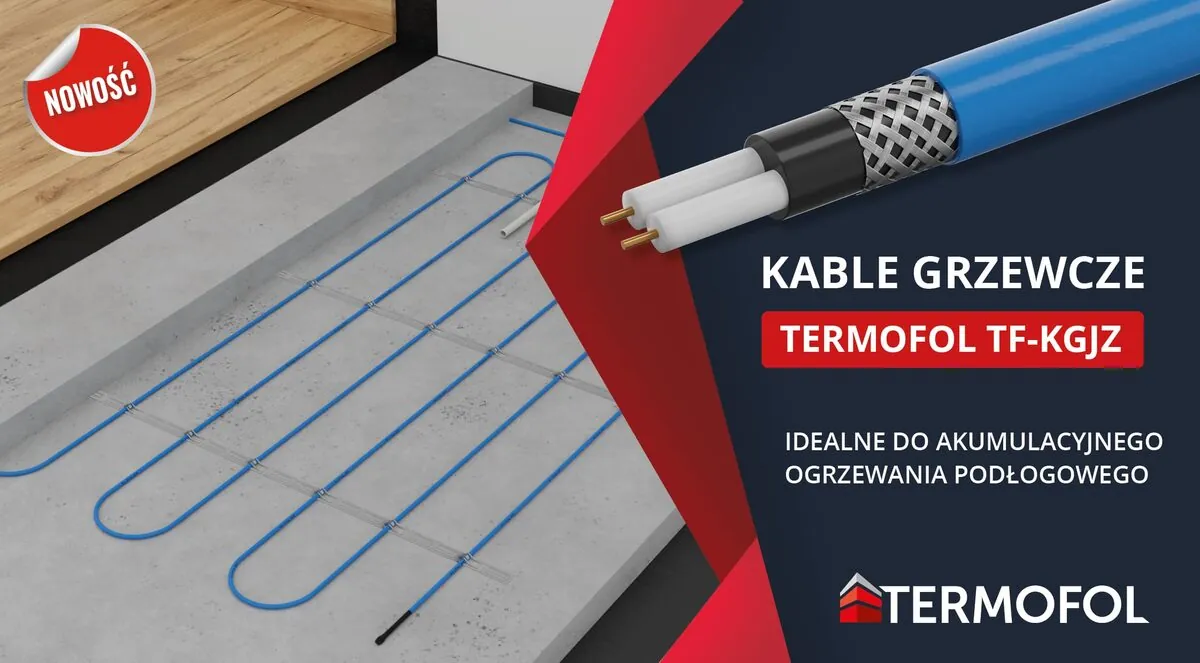
 General information