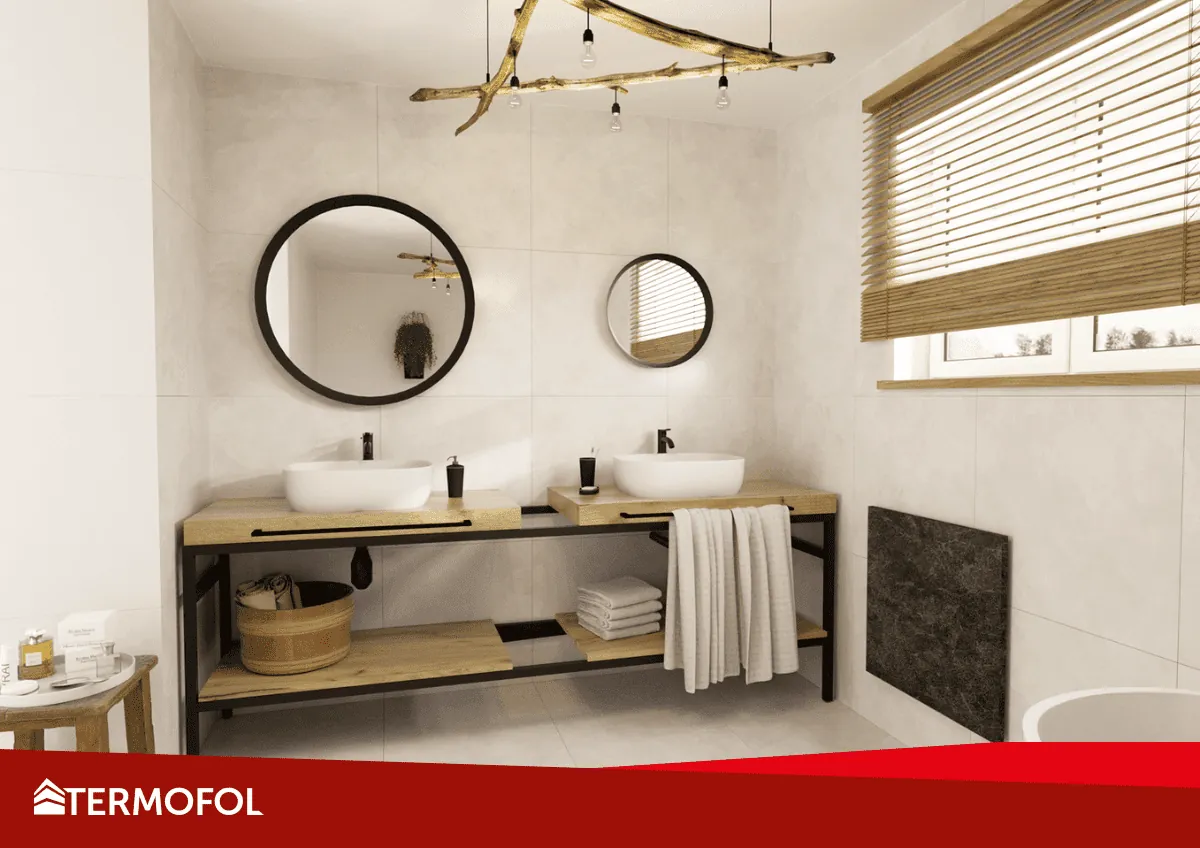
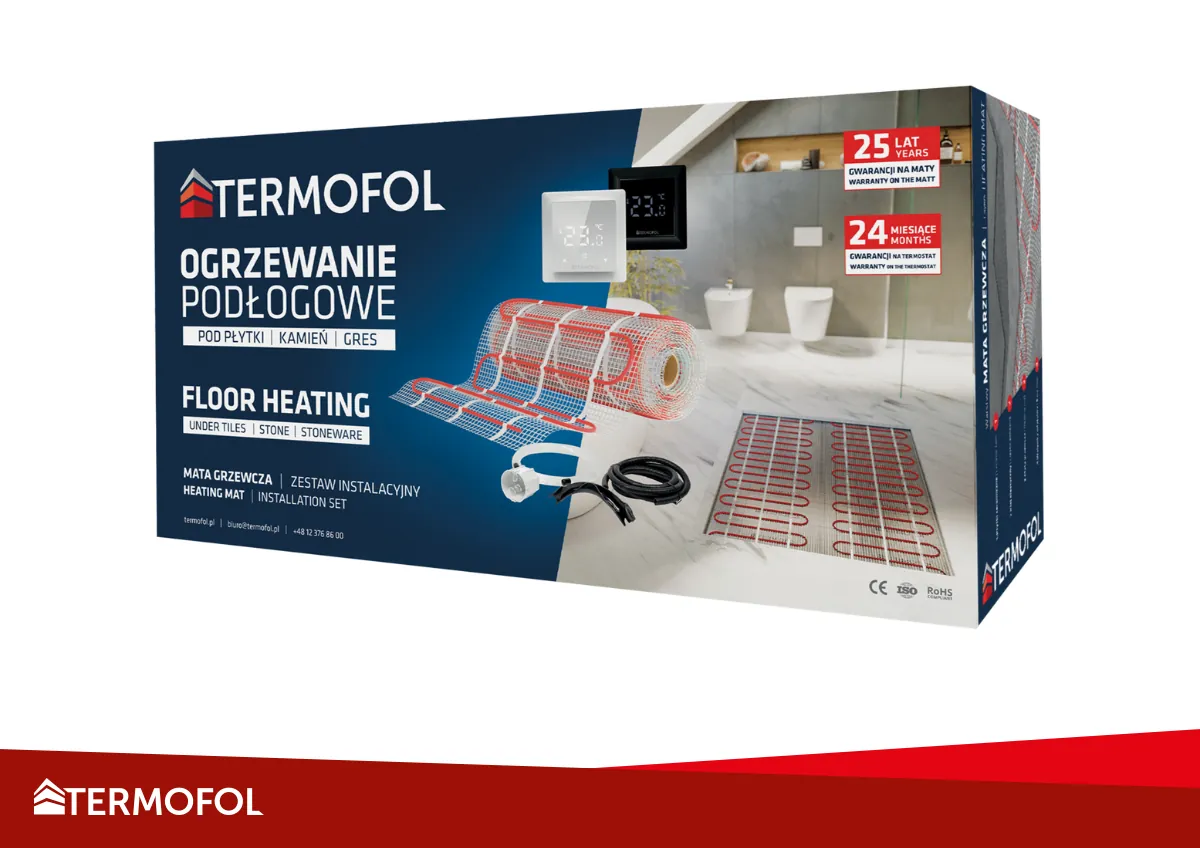
Radiator or infrared? This question troubles many homeowners and apartment dwellers looking for the optimal solution for their heating system. Both heating methods have their advantages and disadvantages, and the choice depends on individual preferences, needs, and building conditions. Read on to discover the differences between these two systems and find out which might be the better solution for your home.
When it comes time to choose a heating system for your home, the question arises – do traditional and widely known radiators still maintain their leading position, or are modern infrared heating films a worthy competitor? Both solutions have their supporters and opponents, but which one will ultimately win in the battle for the most efficient and comfortable heating method? Let’s find out what the arguments are on both sides in this incredibly interesting battle for warmth and comfort.
How does a radiator work?
The process of heating with traditional radiators is relatively simple. It all starts in the boiler room, where there is a furnace that generates heat. Depending on the type of heating system, this could be a gas furnace, an oil furnace, a solid fuel boiler (e.g., coal, wood), or a heat pump. In the boiler room, thermal energy is transferred to water, which circulates in a closed loop.
The water is heated to a specific temperature. It is then sent through pipes to radiators located in various rooms of the building. The radiator acts as a heat exchanger, where the water transfers its heat to the metal body of the radiator.
The main mechanism for transferring heat from the radiator to the surroundings is conduction. When the hot radiator comes into contact with the cooler air in the room, thermal energy transfers to it. The heating process in the radiator also relies on convection. The heated air around the radiator becomes less dense and rises. The warm air lifted from the radiator spreads throughout the room, raising its temperature. Through this process, the radiator heats the room it is in, thus contributing to maintaining comfortable warmth throughout the building.
Advantages of heating with traditional radiators
Heating with radiators has many advantages, which is why it is commonly used in many residential buildings, offices, and other facilities. Here are the main advantages of this type of heating:
-
Low operating costs: Radiators operate on the principle of heat conduction, which means they require less energy to heat a room compared to systems that rely on infrared radiation.
-
Well-known and proven system: Radiator heating is one of the most popular and proven heating systems, used in many buildings around the world. It is widely available and easy to access in case of repair or replacement needs.
-
Safety: Radiators are not associated with the direct combustion of fuels indoors, which reduces the risk of gas leaks or other potentially dangerous situations. They are also stable and durable devices.
-
Ability to use various heat sources: The radiator heating system is flexible, allowing the use of various heat sources such as gas, oil, solid fuel, electricity, etc., depending on availability and user preferences.
Disadvantages of radiators
Despite its advantages, radiator heating also has certain disadvantages that are worth considering. Here are some potential drawbacks of this type of heating:
-
Uneven heating: Radiator heating can cause uneven heat distribution in rooms. There are often areas near windows where the air is cooler than in other parts of the room, which can result in the creation of "cold spots."
-
High costs with low efficiency: Rooms may require high temperatures to achieve a comfortable temperature near windows, which increases heating costs. This can lead to lower efficiency compared to more advanced heating systems, such as underfloor heating.
-
Take up a lot of space: Radiators occupy wall space, which can limit the arrangement and placement of furniture close to the heat source.
-
Delay in temperature regulation: The radiator heating system may have a delay in delivering heat to the room after changing the temperature settings on the thermostat. This can be particularly inconvenient if we need to quickly adjust the temperature in the room.
-
Risk of overheating: If a radiator is blocked by furniture or other objects, it may lead to overheating and hinder heat dispersion, which in turn can affect the efficiency and safety of the system.
-
Lack of individual control in systems without thermostats: In some older radiator heating systems, there is a lack of individual thermostats in each room, making it difficult to regulate the temperature at a local level.
-
High thermal mass: Radiators have a high thermal mass, meaning they can retain heat for a long time after the heating is turned off. In practice, this can mean that the temperature in the rooms remains too high for too long, leading to excessive energy consumption.
-
Dry air: The radiator heating system can contribute to drying out the air in rooms, which can negatively affect comfort and health, especially during periods when humidity is already low.
What is infrared?
Infrared is a type of electromagnetic radiation with wavelengths between visible light and microwaves. These waves, invisible to the human eye, have the ability to carry energy in the form of heat, making them an effective tool for heating. Heating using infrared-generating films or mats is an increasingly popular and innovative method that is gaining traction among users of residential buildings, offices, and other spaces.
The heating process using infrared is based on the principle of emitting thermal radiation from heating films. The infrared waves then reach surrounding objects and air, heating them. Unlike traditional radiators, which heat the air in rooms, infrared directly heats surfaces, resulting in faster and more efficient heat distribution.
Heating using infrared has many advantages, among which it is worth mentioning:
-
Quick heating: Infrared systems reach full heating power in a very short time, allowing for rapid temperature increases in rooms.
-
Energy efficiency: By heating surfaces rather than air, infrared minimizes heat loss and allows for more efficient energy use.
-
No air movement: Infrared heating does not cause air movement, which can be beneficial for allergy sufferers and people with respiratory issues.
-
Maintenance-free: Infrared systems have no moving parts, which reduces the need for maintenance and repairs.
-
Increased space: Installing infrared panels on the ceiling or walls saves space in rooms.
-
Thermal comfort: Infrared heating warms objects and surfaces, resulting in even and pleasant heat distribution.
-
Control options: Infrared systems are often equipped with thermostats, allowing for easy temperature regulation and energy savings.
Infrared heating is a modern and efficient heating method that offers many advantages, including quick heating, energy efficiency, and thermal comfort. It is an interesting alternative to traditional heating systems and is gaining increasing recognition among those seeking innovative solutions for their home or office.
Disadvantages of infrared heating
Despite many advantages, infrared heating also has certain drawbacks that are worth considering before deciding on this type of heating system. Here are some potential disadvantages of infrared heating:
-
Limited heat storage capability: An infrared panel heats surfaces directly but does not have the ability to store heat. As a result, when the panel is turned off, the heat can dissipate quickly.
-
Sensitivity to obstruction: If infrared panels are covered by furniture or carpets, this can reduce their efficiency and lead to heat loss.
-
Requirement for thermal modernization: Infrared heating (like any other heating system) is particularly sensitive to proper thermal modernization. In a building that is not well insulated, the infrared heating system will not be effective.
If you are considering how your home will be heated, it is worth reading our article "How much does electric underfloor heating cost?"
Infrared heating is an innovative and effective solution, but it has its drawbacks, such as high initial costs, limitations related to obstructions, and a lack of ability to heat the air. Before making a decision about the heating system, it is important to carefully consider these factors and tailor the solution to individual needs and building conditions.
Battle of the Giants: Radiator or Infrared
Which heating system will emerge victorious from this clash? Radiators, which are connected to a traditional coal boiler or other solid fuel, are a well-known system, and this is their greatest advantage. However, such solutions are slowly becoming obsolete due to increasing awareness regarding environmental protection, as well as many other factors. A modern house built according to WT2021 standards is a house prepared for infrared heating.
Electric heating systems are undoubtedly the heating of the future. They require no intervention from us and do not generate operating costs. Infrared heating films have no mechanical parts, allowing them to operate for many years without the need for replacement. Infrared heating films are for those who do not want to think about heating every winter. Hidden beneath the floor, they will provide the right thermal comfort for all family members.
 +48 12 376 86 00
  Downloads
  biuro@termofol.pl


 Blog Termofol
 Published: July 18, 2023
  Reading time: 8 minutes
 General information