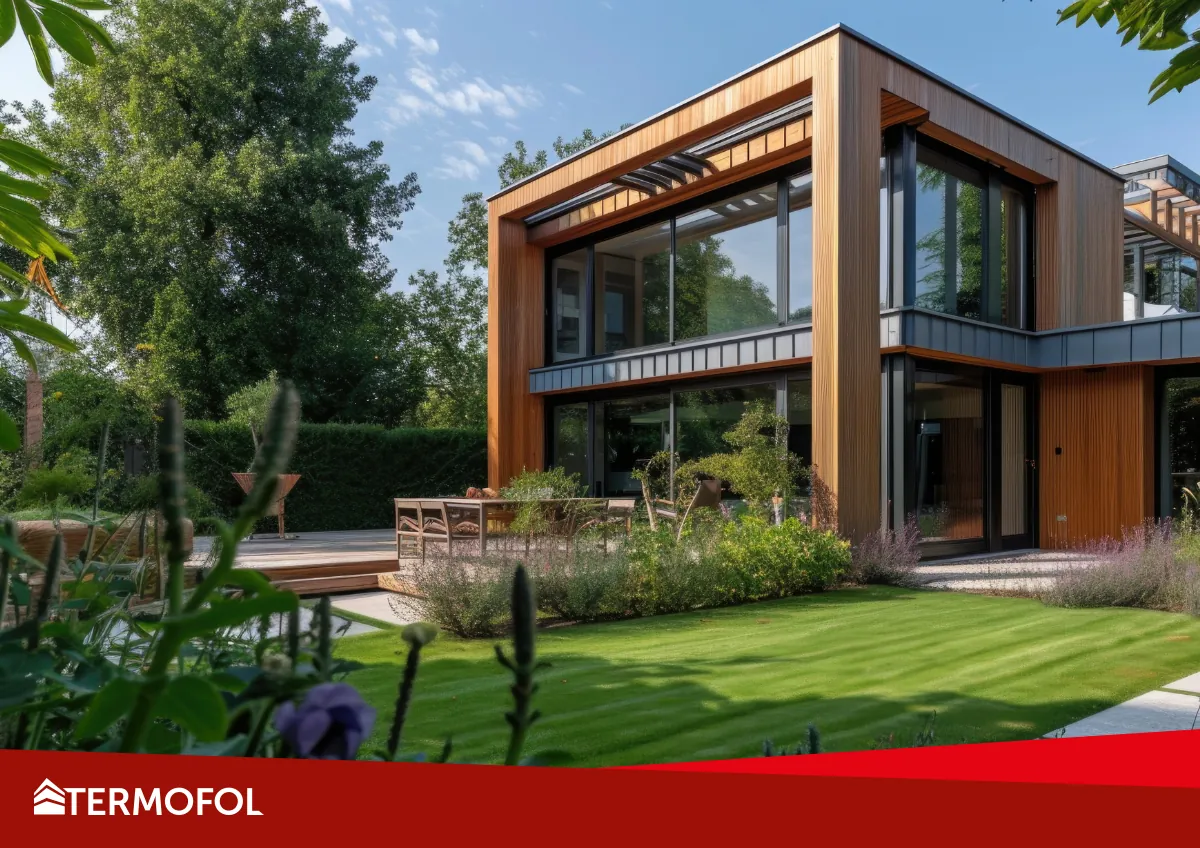
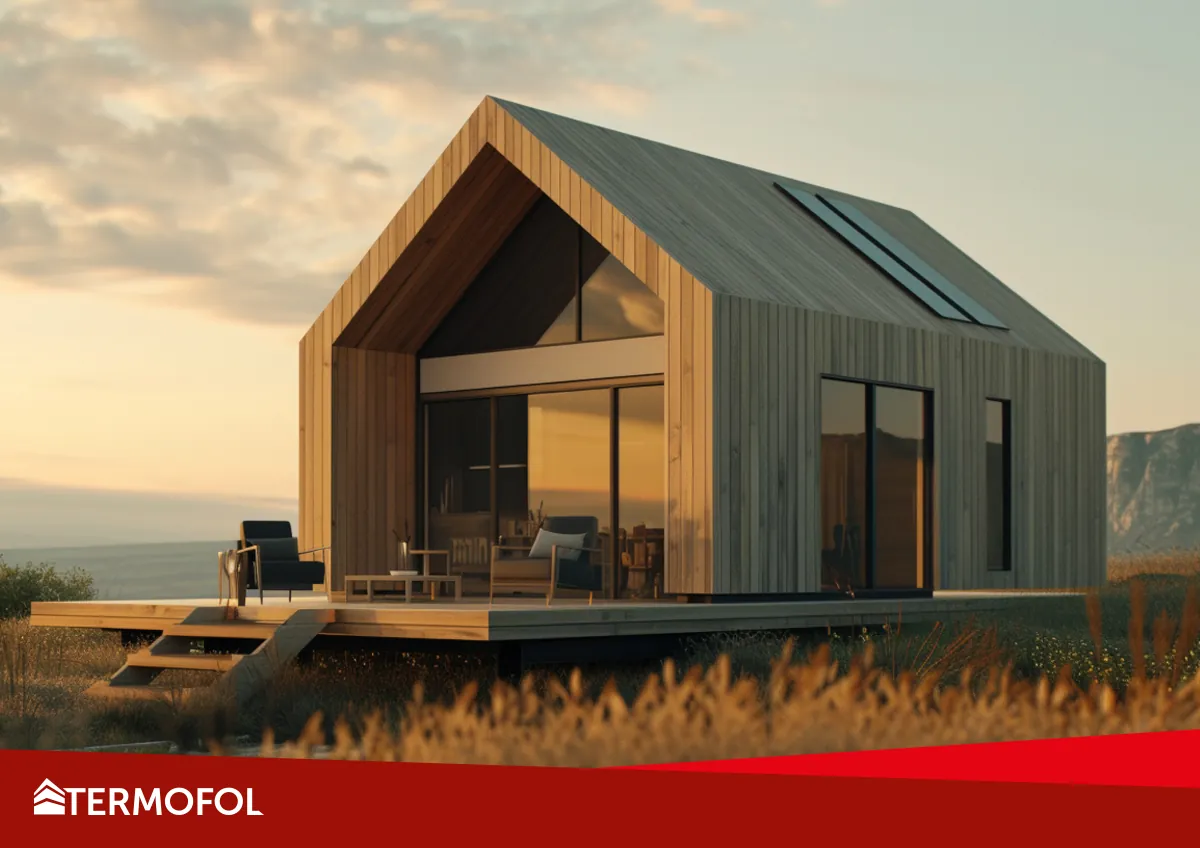
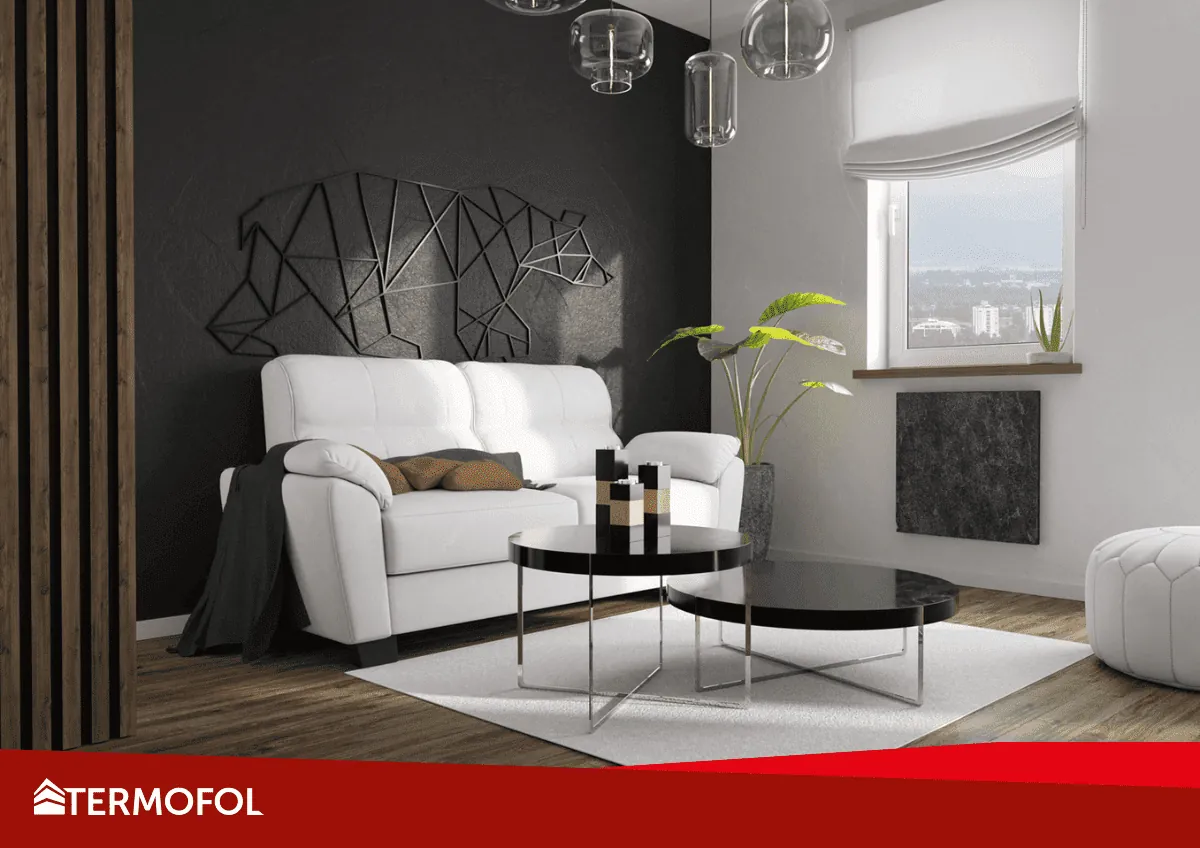
The TERMOFOL ceiling heating film works exactly like the Sun – infrared radiation is emitted towards the floor, releasing heat by being absorbed by humans and objects in the room. This is a modern heating technology that significantly differs from traditional convection heating based on thermal conduction.
How Does Electric Ceiling Heating Work?
Thermal radiation from the ceiling allows the surface to heat up to about 35 degrees Celsius, subsequently radiating towards the walls, floor, furniture, and also reaching the human body. A person can simultaneously regulate the thermostat to change this temperature by 1 to 3 degrees Celsius. In the modern heating system offered by TERMOFOL, this temperature drop does not translate into a decrease in comfort for the user in the given room. Lowering the temperature while maintaining the same level of comfort also results in savings related to heating costs. According to commonly accepted estimates, a reduction in temperature by 1 degree Celsius corresponds to a decrease in such costs by about 8%.
Surface Ceiling Heating
Heating with ceiling heating film is an example of surface heating, where the required thermal power is obtained by laying it over a large heating surface characterized by low temperature (so that no one gets burned when touching the surface). Ceiling heating is safe for all household members under these conditions, and its beginnings were recorded in Scandinavian countries nearly three decades ago. Since then, it has been installed in many facilities (hospitals, kindergartens), as well as in apartments and houses. This method of heating rooms generates almost no convective air movements, which is particularly important for the comfort of people suffering from allergies. Moreover, the installation of heating film, whether it is ceiling or floor heating, does not impose any restrictions on the user regarding the arrangement of the interior of the room. The ceiling film is invisible and does not negatively affect the aesthetic qualities of the room. The user does not have to worry about making space for a boiler room, which is necessary, for example, with traditional convection heating.
See: Electric floor mats
Advantages of Electric Ceiling Heating
Among the other advantages of ceiling heating using the proposed solution, the following should be mentioned:
- the film adheres to any material used to cover the ceiling;
- this solution has been tested for many years in the harsh Scandinavian climate with scientifically confirmed beneficial effects on the health of room users;
- relatively low investment costs for this solution (about 80 PLN/m²);
- simplicity of temperature regulation and ease of changing desired temperature values during the day and night;
- easy installation, friendly to the home and natural environment;
- heating efficiency reaching nearly 100%, surpassing the efficiency of traditional convection systems, with no losses from fuel combustion due to the absence of boilers;
- the possibility of lowering the temperature in the room by up to 3 degrees Celsius while maintaining the same thermal comfort for the household members;
- elimination of air convection in the room, which means no dust being stirred up;
- even vertical temperature distribution between the floor and the ceiling;
- the safety of thermal radiation;
- reduction of air drying and the phenomenon of dry dust distillation, which positively affects the comfort of household members;
- this type of energy is considered ecological and clean for the environment.
In response to the question about the general operation of the ceiling heating film, it should be emphasized that this film heats evenly across the entire surface and allows for the emission of heat, characterized by quickly warming the room in a manner similar to how the Sun heats. It is highly durable and resistant to mechanical damage. Its efficiency is relatively stable, covered by a 15-year warranty. The most commonly offered models have a power between 80 and 400 W/m². Films with higher power can be used in rooms with suspended ceilings that exceed a height of 3 meters. For the film to operate efficiently, an aluminum screen must be placed underneath it, which allows for blocking the upward flow of heat, i.e., towards the ceiling. This way, the flow of infrared waves can be directed throughout the entire room. The width of the film is adapted to the standard spacing of lightweight construction frames made of plasterboard, which are generally used to create suspended ceilings, and measures 33.3 cm.
 +48 12 376 86 00
  Downloads
  biuro@termofol.pl


 Blog Termofol
 Published: April 6, 2020
  Reading time: 4 minutes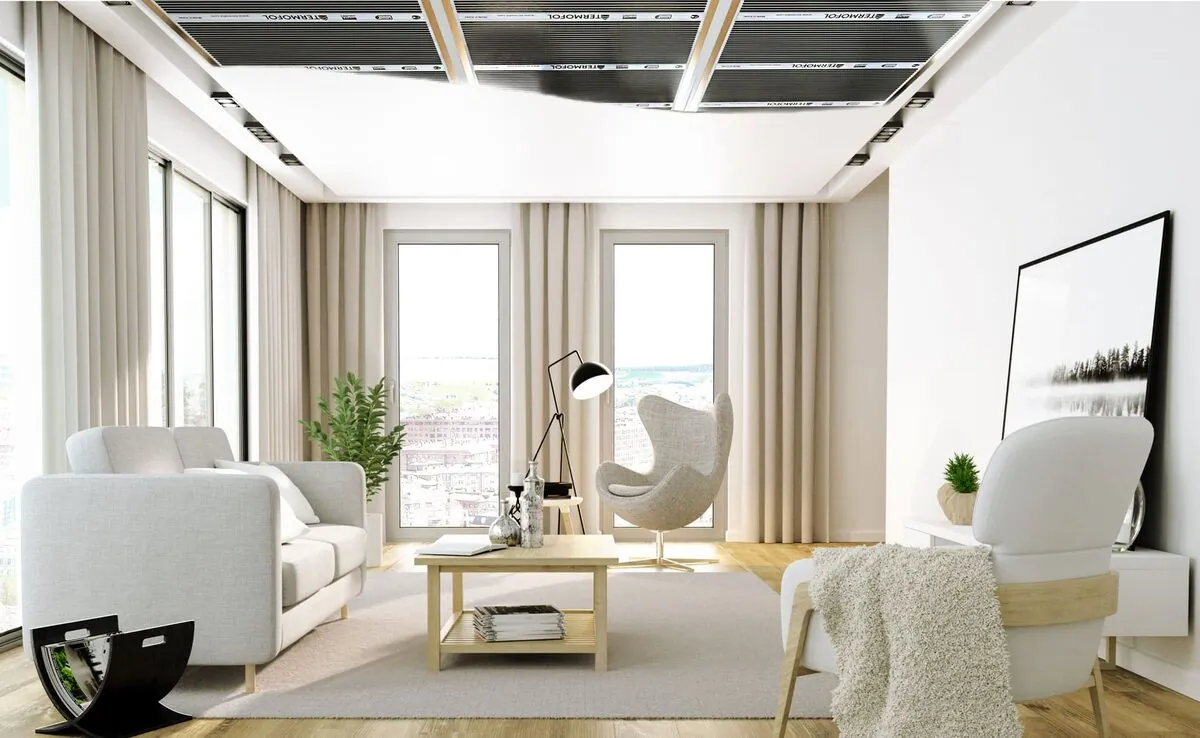
 Heating