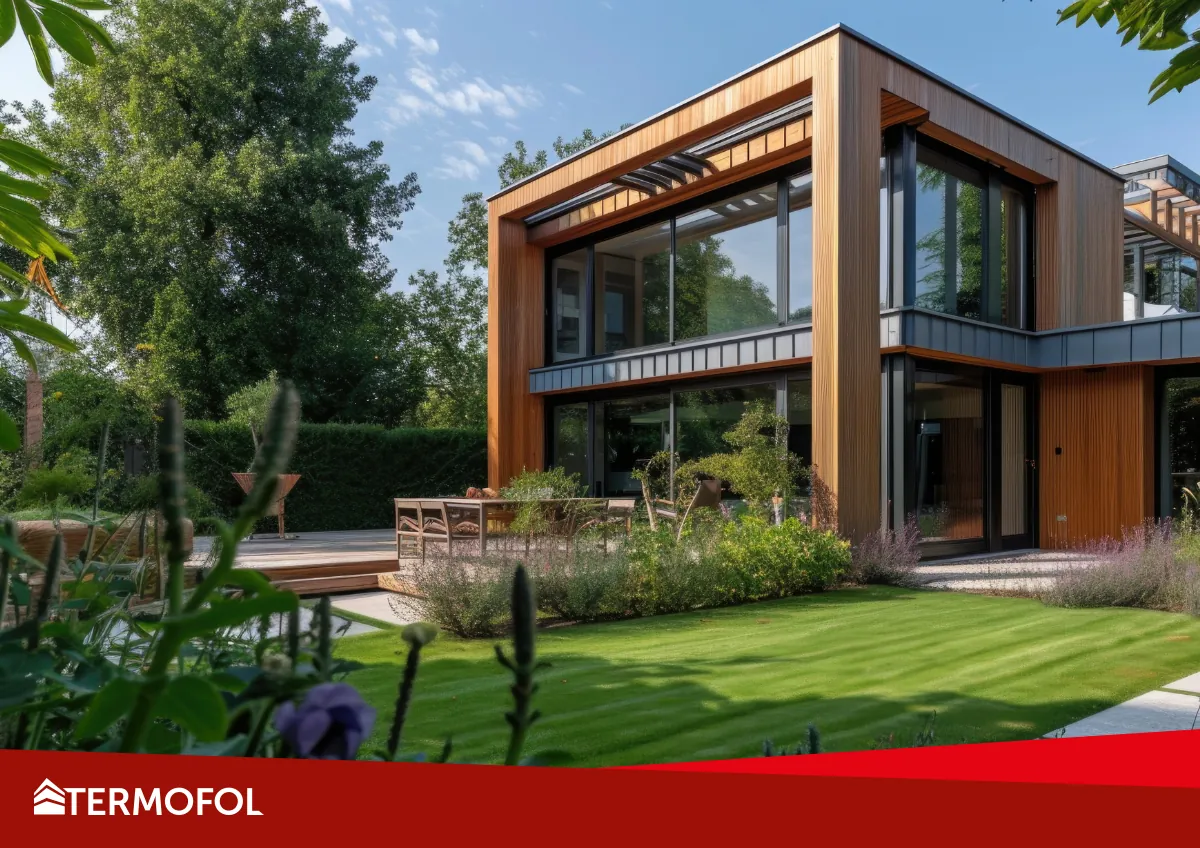
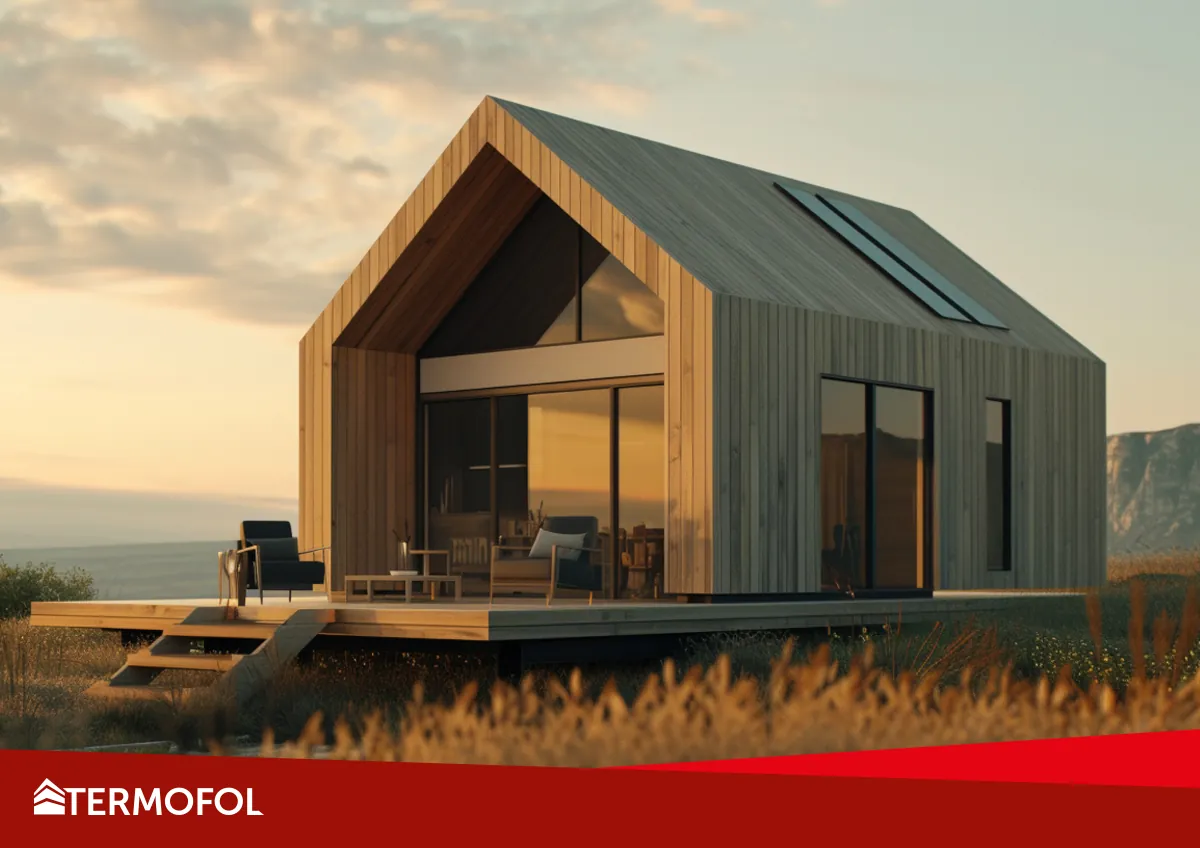
EU officials want all new buildings in the member states of the Community to be zero-emission. The regulations are set to come into effect from 2030 and will also apply to renovated homes.
What is the EPBD directive?
In December 2019, the European Union published a comprehensive package of climate regulations called the “European Green Deal.” Its goal is to reduce greenhouse gas emissions on the continent by at least 55% by 2030. One of the initiatives included in the new policy is the “Fit for 55” package. One of the leading directives it introduces is the directive on the energy performance of buildings (EPBD). However, EU officials want to accelerate the implementation of changes.
The EPBD directive constitutes a commitment by the European Union regarding the energy efficiency of buildings, that is, how they consume energy for heating and cooling. Its main goal is to significantly reduce greenhouse gas emissions and energy consumption in the EU construction sector by 2030. In the long term, by 2050, all buildings are to be completely climate-neutral, meaning they do not emit any greenhouse gases.
Mandatory photovoltaics
Additionally, from 2028, new buildings should be equipped with photovoltaics, provided that it is technically feasible and cost-effective. For residential buildings undergoing major renovations, this rule will apply from 2032.
In terms of energy efficiency, residential buildings will have to achieve at least energy class E by 2030, and class D by 2033. Non-residential and public buildings will have to meet the same classes from 2027 to 2030, respectively. Furthermore, there are plans to introduce a ban on the use of heating systems based on fossil fuels in new buildings and those undergoing major renovations from 2035.
EU member states should ensure that the use of fossil fuels in heating systems in new buildings and buildings undergoing renovation or modernization of heating systems will not be allowed from the moment this directive is implemented. “These fuels should be completely phased out by 2035, unless the European Commission grants permission for their use until 2040,” reads the Commission's website.
The goal? Accelerate the work
To accelerate the implementation of the proposed changes, national modernization plans should include measures such as free information points and modernization programs that do not generate costs for beneficiaries. Particular emphasis should be placed on thermal modernization, especially in the case of buildings with the worst energy parameters. Households in difficult financial situations should have access to targeted grants and subsidies.

For the average resident of Poland, the acceleration of these regulations means additional requirements that a new building will have to meet. Should we be concerned about the new law? Of course not. If the regulations are accelerated and from 2030 every new building must meet additional energy requirements, this will translate into the comfort and safety of residents. Moving away from the use of fossil fuels is already improving air quality in cities. A prime example is Kraków, where officials introduced a ban on coal heating four years ago. However, EU plans go a step further, and in the near future, new homes will not be heated with gas, pellets, or eco-coal either.
Many homeowners or those considering building their own home are certainly worried about the new regulations. However, there is no need to fear, as they actually compel owners to invest in more efficient, and therefore more cost-effective sources of heat.
Changes for the better
The ban on heating with fossil fuels such as gas or coal in new buildings only seemingly limits the choice of heating sources. The fact is, giving up gas is unimaginable for many people, as it is a known and proven source. However, there are other heating technologies on the market that not only successfully replace gas boilers but also provide greater thermal comfort. Infrared heating, which is gaining popularity, is one of those technologies that serves as an alternative to traditional radiators.
More about heating with heating films can be found in the article “Application and advantages of heating films.”
Opinions among Polish experts regarding the “Fit for 55” package are divided. In 2021, the Polish Association of Professional Heat Plants (PTEZ) presented a report estimating the costs of implementing the changes.
As estimated by PTEZ experts, meeting the requirements of the EU Fit for 55 package will require, in the case of Poland, depending on the scenario, expenditures at the level of:
- from 94 billion PLN to 178 billion PLN – for generation infrastructure;
- from 76 billion PLN to 100 billion PLN – for transmission and distribution infrastructure;
- from 106 billion PLN to 140 billion PLN – for the modernization of consumption installations;
- which totals – from 276 billion PLN to 418 billion PLN for the decarbonization of the district heating sector.
Looking at the above calculations, it is hard not to be frightened. However, it should be remembered that these statistics only concern district heating, such as municipal heating plants. Homeowners rarely have access to these networks, so they must choose other sources of heat. Such individuals are left with alternatives like heat pumps or infrared heating films.
And although heat pumps have been number one in heating devices in recent years, infrared heating is convincing an increasing number of people. The reason is simple: the convenience and durability of this system.
Let’s not be afraid of changes
The proposed regulations aim to reduce harmful gas emissions into the atmosphere, but from the perspective of the average resident, they will bring a very important effect. This is the possibility of switching to a heating system that requires no intervention. No chimney means no visits from the chimney sweep several times a year. Zero emissions means safety for the residents of the house. No boiler means extra space.
Moreover, investing in infrared heating means additional space in rooms where traditional radiators are replaced by underfloor-mounted films. As you can see, the new law is not only about requirements but also an opportunity for a more peaceful life without worries about warmth in winter.
 +48 12 376 86 00
  Downloads
  biuro@termofol.pl


 Blog Termofol
 Published: October 11, 2023
  Reading time: 5 minutes
 Heating