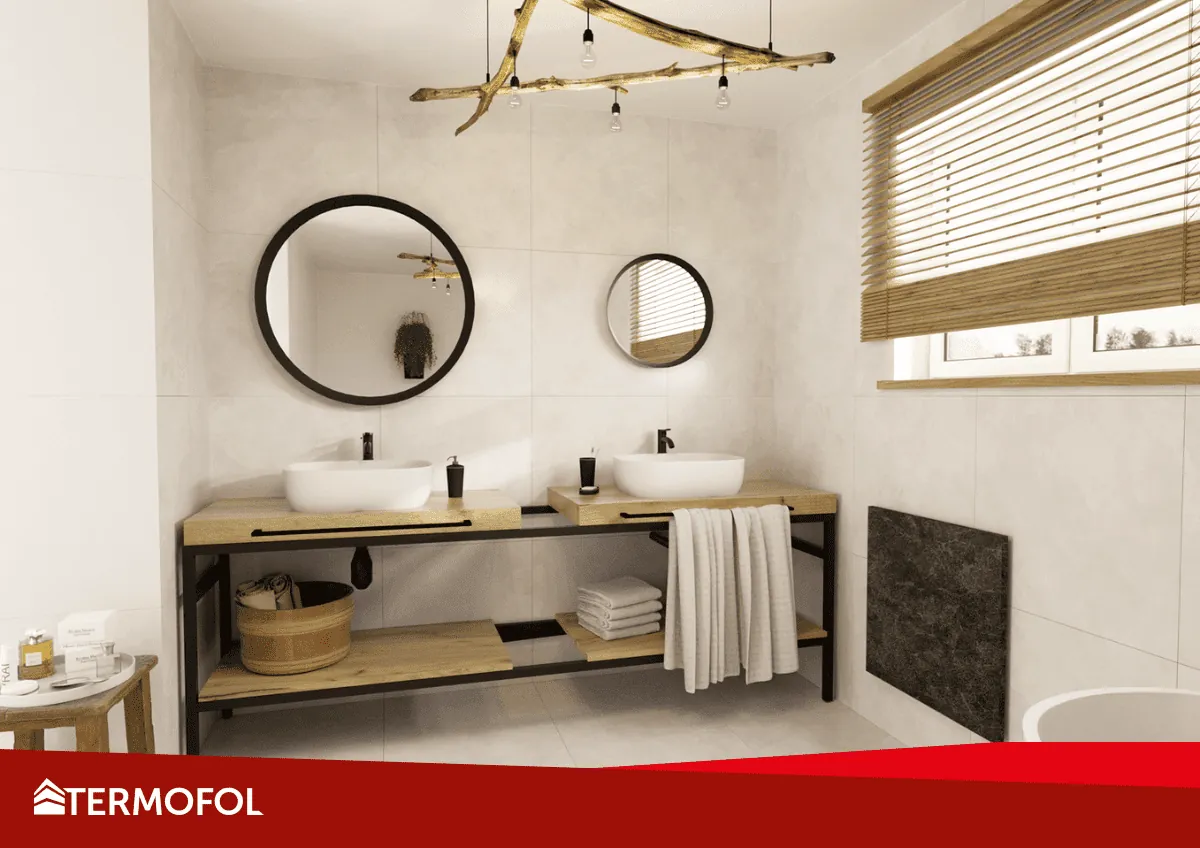
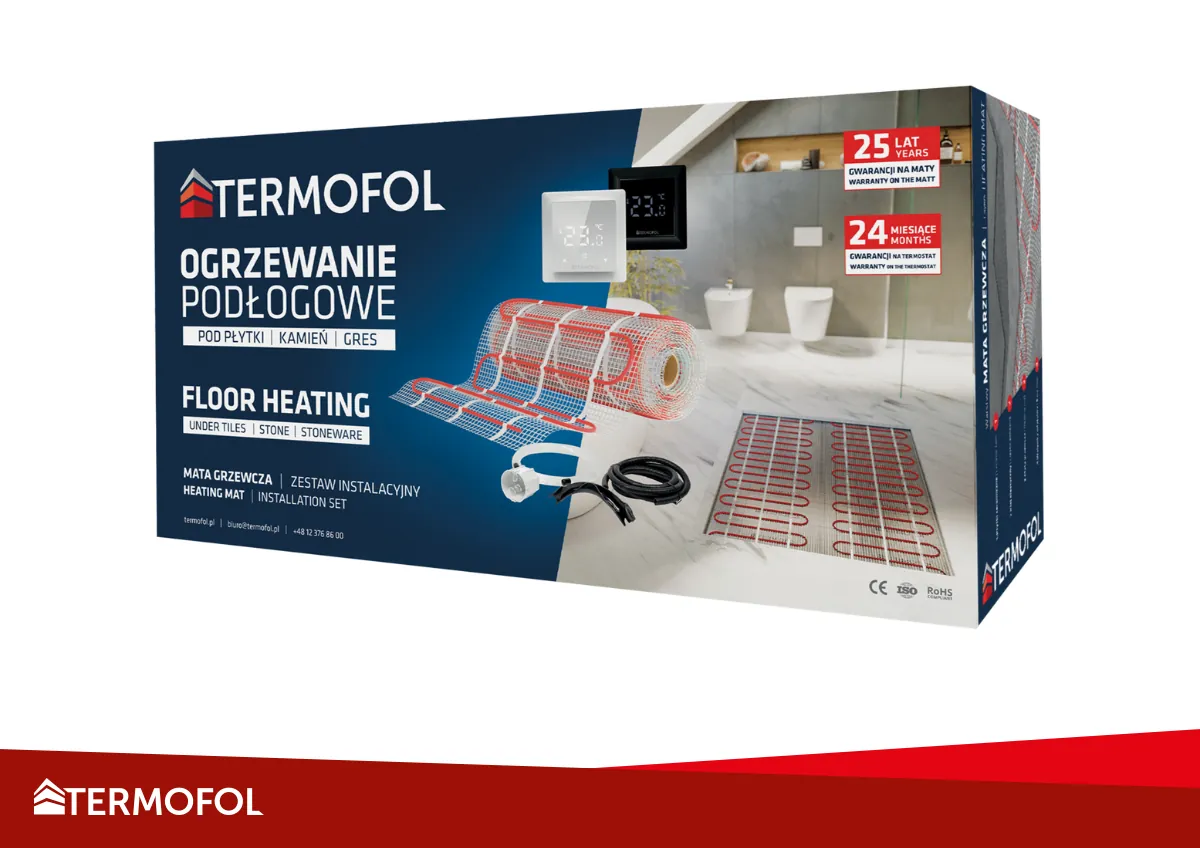
Electric underfloor heating is a solution that not only provides thermal comfort. It also eliminates the need for traditional radiators, allowing for greater freedom in interior design. One of the popular types of underfloor heating is the heating mat. The installation of the mat can be done independently, without the need to engage a specialist, which is not possible with other systems.
Warm floors are not just a luxury, but also a practical solution that ensures thermal comfort in our homes. Underfloor heating with a heating mat is one of the popular ways to achieve this effect. In this article, we will present a practical guide that will show you step by step how to install underfloor heating based on heating mats by yourself.
What are Heating Mats?
A heating mat is an electric surface heater made of heating cables placed on a fiberglass mesh. It can be installed directly under the floor, and its heat spreads evenly across the entire surface.
Electric heating mats can be installed directly on a concrete screed or on thermal insulation made of XPS boards, which are coated with adhesive. The installation process of the mat is extremely simple, as the fiberglass mesh, on which the heating wires are located, has a self-adhesive surface, making it easy to stick to the substrate. The heating mat can be laid in different directions by cutting the fiberglass mesh. To secure the heating mats, flexible adhesives should be used.
Underfloor heating is controlled by an electronic thermostat, which regulates the air temperature in the room and the floor temperature. This creates a complete heating system that operates without the need for manual intervention.
Planning and Preparation
Before starting the installation of the heating mat, it is important to make a detailed plan. First of all, draw a sketch of the room, identifying the areas where the mats should be placed. Also, remember to measure the area accurately to choose the right amount of mats needed. Prepare the substrate by removing the old floor and ensuring that the surface is clean, dry, and smooth. In the case of a concrete floor, it should be leveled to ensure even distribution of the mat.
Before starting the installation, prepare all necessary materials, such as the heating mat, adhesive, thermostat, cables, and tools (e.g., knife, pliers, drill, screwdriver).
Installation of the Heating Mat
We recommend taking frequent resistance measurements of the mat to easily locate any potential damage.
Before starting the installation, insulation should be laid down. Included in the DIY heating mat kits available in our store is the Termofol Termoterm board.
This is an XPS board that provides better thermal insulation and protection against moisture. In the floor, create a groove where a protective tube will be placed, and later in the process, a floor sensor will be installed.
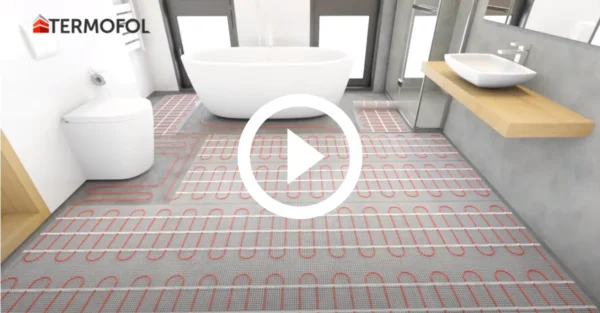
Start the installation of the heating mat by laying it on the floor and adjusting it to the shape of the room. Remember that the mesh can be cut if you need to fit the mat to a specific area. The heating mat should be laid according to the manufacturer's instructions. The mat should be laid evenly, taking care not to damage the heating cables. After laying the mat, cover it with a layer of adhesive or self-leveling compound.
Connection and Testing
The external sensor should be slid into the previously prepared protective tube.
This is necessary because it will allow us to control the heating. Proceed to connect the heating wires to the thermostat. Choose a suitable thermostat that will meet your needs and preferences. Ensure that the connection is in accordance with the manufacturer's instructions. After connecting the wires, conduct tests to ensure that the system is functioning correctly. Check if the thermostat responds correctly to the temperature settings.
What Type of Adhesive Should Be Used for Installing Tiles on Underfloor Heating?
When choosing the right adhesive for tiles on underfloor heating, there are several important factors to consider.
For electric underfloor heating, the surface created by laid ceramic tiles, stoneware, or natural stone should have a high thermal conductivity coefficient. It is important that the adhesive used for tile installation is flexible. High flexibility of the adhesive will help avoid cracking and detachment of tiles from the substrate due to thermal movements. Adhesives of class C2S1 are recommended. Cement adhesive from this class is characterized by enhanced parameters and the ability to deform. This feature is important because materials can change their volume due to high temperatures. The layer of adhesive that connects the tiles to the substrate must be deformable and resistant to heating.
The thickness of the adhesive for tiles on underfloor heating and the method of application also matter. The adhesive should be evenly spread on the substrate and on the tiles to ensure full coverage of the space between them. This will help avoid the formation of "voids" that could later fill with water or air, negatively affecting the operation of the underfloor heating. The thickness of the adhesive for tiles on underfloor heating should be uniform across the entire surface.
To properly carry out the gluing process, after unrolling the heating mat, the flexible adhesive mortar should be evenly applied using a plastic trowel. The heating wires should also be carefully covered. Then, leave the prepared heating mat to dry.
How Much Area Should the Heating Mat Cover?
When installing the heating mat under the tiles, it should cover the entire area of the room, except for areas designated for fixed installations, such as bathtubs, shower cabins, kitchen furniture, built-in wardrobes with wooden substrates, and other furniture or appliances that directly touch the floor and do not have legs allowing free heat flow.
Summary
As you can see, self-installation of a heating mat is not much different from infrared film. Although it is an easy process for anyone with basic manual skills, it is important to remember that in case of problems or questions, you should contact the advisors at Termofol, who will provide all the answers and advice.
 +48 12 376 86 00
  Downloads
  biuro@termofol.pl


 Blog Termofol
 Published: May 17, 2023
  Reading time: 5 minutes
 General information