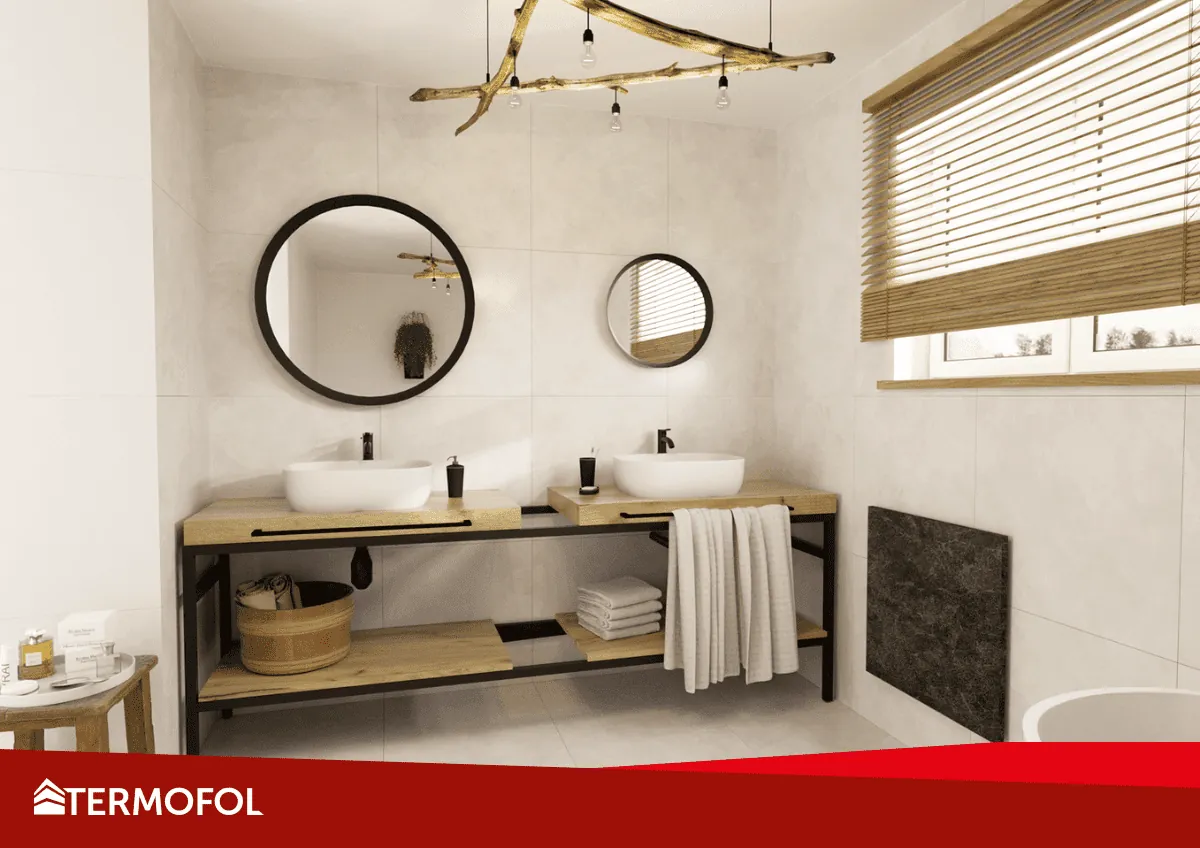
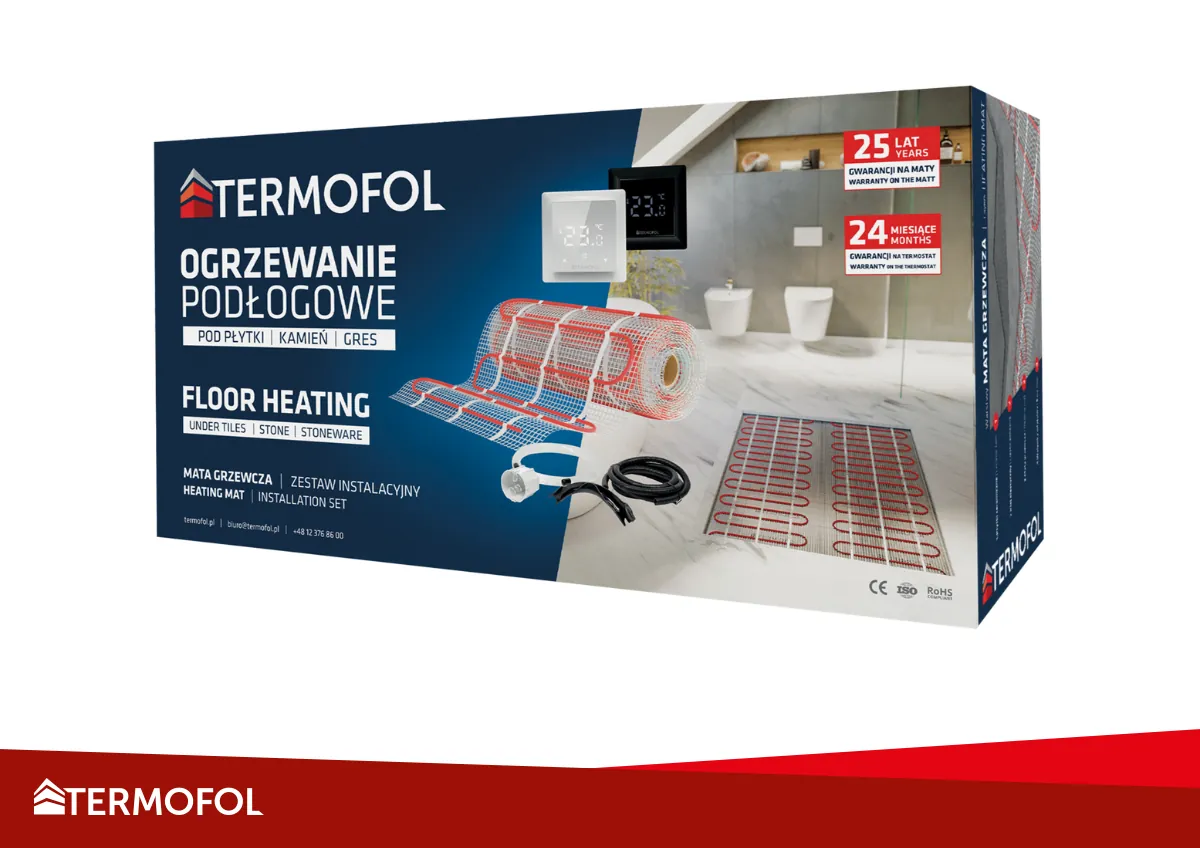
Deciding on electric water and home heating raises questions about costs and comparisons of different solutions. In this article, we will focus on a case of a house that uses infrared heating films. We will consider how to prepare hot water, and how much we will pay for its preparation. Electric water heating is gaining popularity, but does it make sense from the perspective of economics, functionality, and ecology?
How to prepare hot water when heating with infrared? Heating with infrared heating films is becoming increasingly popular. One of the characteristics of infrared is the fact that it is not suitable for preparing domestic hot water. Therefore, when opting for infrared heating, one must plan investments in devices for hot water. Is it expensive? It turns out, it is not.
The factors influencing the choice of heating film have been widely discussed in the article titled "Everything You Should Know About Underfloor Heating". The choice of a device for heating domestic hot water (DHW) is as important for homeowners as the choice of a heating system. When choosing a device for DHW, one should pay attention to slightly different aspects related to its use compared to heating.
When choosing a system for preparing domestic hot water, three significant factors should be considered. The first is the fact that the demand for DHW occurs throughout the year, regardless of the season, unlike home heating. The second factor is that the power of the DHW device depends on water consumption, not the size of the house. This means that estimating the amount of water consumed is more important than the area of the house. The third factor that requires clarification is the availability of water at the desired temperature.
For most residents of a house, the temperature of hot water is more important than the amount of water or flow rate. For example, it is better to have 100 liters of water at 40°C than 200 liters at 20°C. A moderate flow of noticeably warm water is also preferred over a plentiful but cool shower.
Considering the above factors, one can make the right choice of a system for preparing domestic hot water.
What Do We Have to Choose From?
Hot water is prepared by devices that we divide into:
-
Flow heaters
-
Storage heaters
Flow Heaters
There are two types of flow heaters available on the market, which are usually installed at the water draw-off point, i.e., under the faucet:
-
Electric flow heaters: This type uses electric energy to heat water in real-time as it flows through the device. They are relatively simple to install and do not require much space. Electric flow heaters are ideal for those who need quick access to hot water at the right temperature, especially in places where there is no need to store water in a tank.
-
Gas flow heaters: These heaters use gas (usually natural gas or propane-butane) to heat water as it flows. They are more energy-efficient than electric heaters and provide quick access to hot water. However, installing a gas flow heater can be more complicated and requires an appropriate gas source and safety measures.
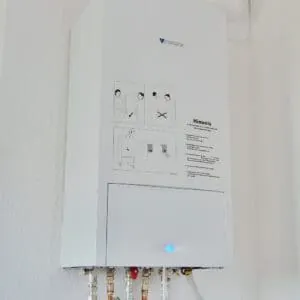
The choice between an electric flow heater and a gas one depends on preferences, fuel availability, energy efficiency, and local installation conditions. Additionally, flow heaters can be divided based on the control method. This way, we obtain heaters that are usually installed under the faucet. They are divided into two types:
-
Hydraulically controlled flow heaters: They turn on when the water flow passes through the device under the appropriate pressure. Hydraulically controlled heaters respond to water pressure and activate when it is suitable. However, they have some disadvantages, such as higher cold water consumption and the need for a three-phase power supply if we choose a higher power model. Additionally, if the distance from the water draw-off point is large, it may happen that the hot water cools down before it travels from the device to the faucet.
-
Electronically controlled flow heaters: These heaters do not respond to water pressure but to its flow, allowing them to operate efficiently even at low pressure. They have many advantages, such as unlimited access to hot water, a short waiting time for hot water at the faucet, and the ability to heat water to 40°C in just a few seconds. Costs associated with flow heaters.
The prices of local water heaters installed under the faucet start from around 500 PLN (as of June 2023). To estimate the operating costs of domestic hot water (DHW) prepared by a flow heater, we must consider several assumptions:
-
The temperature of the water supplying the faucet is 10°C.
-
We aim to heat the water to a temperature of 40°C.
-
We have a single-phase local heater with a power of 5.5 kW.
-
The device's flow rate is 2.7 liters per minute.
-
The average electricity price in the G11 tariff is 0.94 PLN per kilowatt-hour (kWh).
Based on the above data, the cost of one hour of operation of a small flow heater installed, for example, under the kitchen faucet will be around 5 PLN. In one hour, such a heater can deliver about 160 liters of hot water, heating it by 30°C. However, it should be emphasized that these calculations pertain to a small flow heater that is used at a kitchen faucet or bathroom sink.
Cost of Using a Flow Heater in the Bathroom
Other parameters concern a heater with a higher flow rate, which will be used in the shower or bathtub. Assuming the following:
-
The temperature of the water supplying the faucet is 10°C.
-
We aim to heat the water to a temperature of 40°C.
-
The heater has a power of 21 kW.
-
The device's flow rate is 10 liters per minute.
-
We are heating 150 liters of water.
-
The average electricity price in the G11 tariff is 0.94 PLN per kilowatt-hour (kWh).
According to these assumptions, we are heating 150 liters of water, which is the average volume of a bathtub. The most efficient flow heaters for the bathroom have a flow rate of around 10 liters per minute, so an average-sized bathtub will fill with hot water at 40 degrees in about 15 minutes. The cost of one bath will be around 6 PLN. When choosing flow heaters, it should also be considered that each water draw-off point must be equipped with a separate device, so the final costs should be multiplied by the number of faucets.
Storage Heaters
An alternative solution to flow heaters is storage devices. They have an electric heater and a tank in which the water is heated and thermally insulated from the environment. Unlike flow heaters, the supply of hot water in the tank is limited. The category of storage heaters includes:
A special case is the boilers for central heating, which require access to electricity but heat water using an external heat source. This can be a central heating furnace, gas or oil boiler, solid fuel boiler, water jacket fireplace, or solar collector. The speed of heating water using electricity depends on the number of heaters installed in the heat exchanger. Currently, most models have two heaters. This has many advantages as it extends the lifespan of the device and improves the functionality of the central heating boiler. In the event of a failure of one of the heaters, the other can still heat the water. The temperature of the heaters is controlled by a thermostat, and modern models use smart heater controllers.
In this detailed discussion, we will focus on the electric boiler, as this type of device can heat domestic water solely using electricity.
In the second type of devices (with coils), water is heated by an electric heater and an external heat source, such as solar panels for water heating or a heat pump for domestic hot water. In the case of double-shell boilers, domestic water is heated by a circulating heat transfer medium from the central heating system; however, for a house heated solely with infrared heating films, this type of water heating will not be used.
As important as the installation location of the flow heater is the proper placement of the electric boiler. The further away from the water draw-off point, the greater the heat loss and higher costs.
Choosing the right electric boiler involves estimating the water consumption by the residents of the house. Devices with capacities ranging from 15 to 150 liters, and even up to 300 liters, are available on the market. Each person or family can find something suitable according to their domestic hot water needs.
A boiler is a significantly larger device, which should also be taken into account when planning a purchase. For places where water is used relatively infrequently, smaller devices with a capacity of only 5 liters are available. However, their operating principle is the same as that of larger versions.
Modern devices available on the market often have additional useful features, such as a temperature limiter that prevents overheating of the water in the boiler. What are the main disadvantages and advantages of an electric boiler?
Disadvantages:
-
Requires space for boiler installation.
-
The availability of a continuous supply of hot water is limited and requires prior planning.
-
A failure of a low-quality device can cause flooding in the room where it is located.
Advantages:
-
Does not require additional connections, such as gas; only access to electricity is needed.
-
Can be connected to a standard electrical network using a socket.
-
Does not require special electrical installation (for boilers with a capacity of up to 150 liters).
Operating Costs of the Boiler
The operating cost of an electric boiler for heating water depends on its power. This directly affects the speed at which the water will be heated. When choosing a boiler, it is also important to pay attention to its capacity, as this determines how many people can use hot water simultaneously. For families consisting of several people, boilers with a capacity of 120 liters or more are recommended.
Boiler for One Person or Small Family
If we are looking for a boiler intended for one person or a small family, it is worth considering a model with a capacity of 80 liters. With a heater power of 1.5 kW and heating the water to a temperature of 40°C, heating 80 liters of water will take an average of 96 minutes. During this time, the energy consumption will be 1.5 kWh, which, at the average electricity rate, generates a cost of just under 1.40 PLN. If you decide to choose a larger boiler, keep in mind that these costs will be higher because a larger device requires a more powerful heater.
Boiler for an Average Family
If we are looking for a boiler suitable for an average family, consider a model with a capacity of 120 liters. With a heater power of 2 kW and heating the water to a temperature of 40°C, heating 120 liters of water will take about 144 minutes. During this time, the device will consume about 2 kWh of energy, which, at the average electricity rate, will cost about 1.9 PLN. This capacity of the boiler will allow other family members to use hot water in the shower or one person to take a longer bath in the bathtub. However, it is worth noting that there are also more efficient models of boilers dedicated to average families on the market, so it is worth considering such options when choosing.
Average Family and Plus Boiler
If we are looking for a boiler suitable for an average family, we can consider a model with a larger capacity, for example, 140 liters. With a heater power of 2 kW and heating the water to a temperature of 40°C, heating 140 liters of water will take about 168 minutes. The energy consumption in this case will be 2.5 kWh, which, at the average electricity rate, will still cost about 2.3 PLN. With such a boiler, filled twice to half, two people can bathe or the whole family can take turns in the shower.
Heat Pump for Domestic Hot Water
Although heat pumps are commonly associated with devices used for simultaneously heating the house and producing domestic hot water (DHW), they can also be used solely for preparing DHW. In this case, their price is significantly lower than heat pumps intended for heating the entire house.
If you are in the process of building a house, it will be easier for you to plan the appropriate location and type of heat pump for DHW. The most popular divisions include heat pumps integrated with a water tank and heat pumps without a tank.
A heat pump integrated with a water tank is similar to a boiler. Standard tank capacities usually range from 150 to 200 liters. Often, this tank is equipped with an additional coil to which an electric heater can be connected. The installation of these devices is simple enough that it can be done independently.
If you already have a tank, it is possible to purchase just the heat pump and connect it to the existing tank, which will certainly be a cheaper solution. However, if the tank and pump are in different locations, there may be some issues. In the case of split-type pump installations, appropriate qualifications are also required, so this should be done by a specialist.
Devices Supporting Domestic Water Heating
In addition to the basic source of domestic hot water, there is the possibility of investing in installations that will help reduce the costs of its production. One such solution is solar panels for water heating.
Solar panels, also known as solar collectors, are the most popular devices supporting the production of domestic hot water. Their operation is quite simple. The panels are usually placed on the roofs of buildings, where they collect solar energy and store it in the form of hot water. They are equipped with a so-called absorber, which absorbs solar energy and converts it into heat. The heat is then transferred to the pipes in the panels using a fluid that reaches the heat exchanger with a coil. In this way, solar energy is used to heat domestic water. In solar installations, heat exchangers with two coils are used. One coil can be connected to an electric heater, and the other to solar installations. This solution supports the supply of the house with domestic hot water.
Another solution is electric heating of water and the house. By choosing underfloor heating using infrared heating films, one can obtain a cheap source of domestic hot water. The savings resulting from the installation of underfloor heating are so significant that the cost of investing in a boiler is small in comparison. A set consisting of a boiler and heating films fully meets the demand for heat defined, among other things, by the EP index of the building. This index indicates the permissible consumption of primary energy, i.e., the amount of non-renewable energy needed for the operation of the building, taking into account heating, cooling, lighting, ventilation, and the production of domestic hot water.
Currently, renewable energy sources are promoted, so the permissible EP index for new investments is getting lower and lower. It is also important to take care of the quality of the installation – heating should not be a place for compromises. Investing in a boiler or heating film emitting far infrared is usually a solution for many years. Low-quality products can reduce efficiency and quickly become damaged, leading to servicing, repair, or complete replacement costs. Therefore, it is worth choosing proven solutions, such as Termofol heating films made from high-quality materials and the latest technologies, ensuring reliability. When combined with an efficient domestic hot water heating system, they guarantee peace of mind and certainty that the investment in heating is a one-time expense for many years.
 +48 12 376 86 00
  Downloads
  biuro@termofol.pl


 Blog Termofol
 Published: June 20, 2023
  Reading time: 13 minutes
 General information